
If you want to know how to fall asleep fast, you are not alone. Roughly 40 percent of American adults say they have trouble falling asleep at least a few times each month, according to the National Sleep Foundation, and most of them lie in bed cycling through tomorrow’s to-do list instead of drifting off. The good news is that falling asleep faster is a skill, and sleep scientists have measured exactly which habits shorten the time between lights-out and sleep.
In the video below, double board-certified sleep psychologist Dr. Michael Breus, known as The Sleep Doctor, walks through the practical steps he gives his own patients to fall asleep faster, starting tonight. Below the video, I break down his advice, add the research behind each technique, and share what actually works for me after years of trying to sleep in strange hotel rooms on the road.
In This Article
- Watch: The Sleep Doctor’s Tips for Falling Asleep Fast
- 1. Know what “normal” looks like
- 2. Work with your chronotype, not against it
- 3. Cool the room down
- 4. Take a warm shower 90 minutes before bed
- 5. Exercise earlier in the day
- 6. Shut the screens down
- 7. Keep the same bed and wake times
- 8. Dump tomorrow onto paper
- 9. Build a power-down hour
- My Take: What Works for Me on the Road
- Frequently Asked Questions
Watch: The Sleep Doctor’s Tips for Falling Asleep Fast

Dr. Breus opens with a reality check that most of us need to hear: there is no single “correct” amount of time it should take you to fall asleep, and beating yourself up about it only keeps you awake longer. What follows are the evidence-informed habits he recommends to his patients.
How long should it take to fall asleep? Most healthy sleepers drift off in about 10 to 20 minutes. If you are regularly out in under five minutes, you may be sleep-deprived; if it routinely takes more than 30, that is worth paying attention to.
Pay attention to your chronotype. Breus is famous for his sleep-chronotype work: whether you are naturally a morning person or a night owl changes when your body is actually ready for sleep. Fighting your biology by forcing an early bedtime when you are wired for late nights just creates more tossing and turning.
Lower your thermostat. Your core body temperature needs to drop for sleep to arrive. Breus recommends a cool bedroom, and the CDC’s sleep guidance lands in the same place: a bedroom between 60 and 67 degrees Fahrenheit, free of noise and light.
Take a warm shower. A warm shower or bath in the evening triggers the exact temperature drop your body needs afterward, which is why it shows up in nearly every sleep expert’s routine.
Exercise earlier in the day. Regular daytime movement is one of the most consistent predictors of faster sleep onset in the research literature. The catch is timing: finish vigorous workouts well before bedtime so the stimulating effects wear off.
Avoid electronics before bed. Screens emit blue light that suppresses melatonin, the hormone that tells your brain it is nighttime. Breus advises getting devices out of the wind-down routine entirely.
Keep consistent bed and wake times. Your circadian rhythm is a creature of habit. Going to bed and waking at the same time every day, weekends included, trains your body to get sleepy on schedule.
The power-down hour. Breus’s signature recommendation: spend the last hour before bed deliberately winding down, dimming lights, slowing activity, and giving your nervous system a clear signal that the day is over.
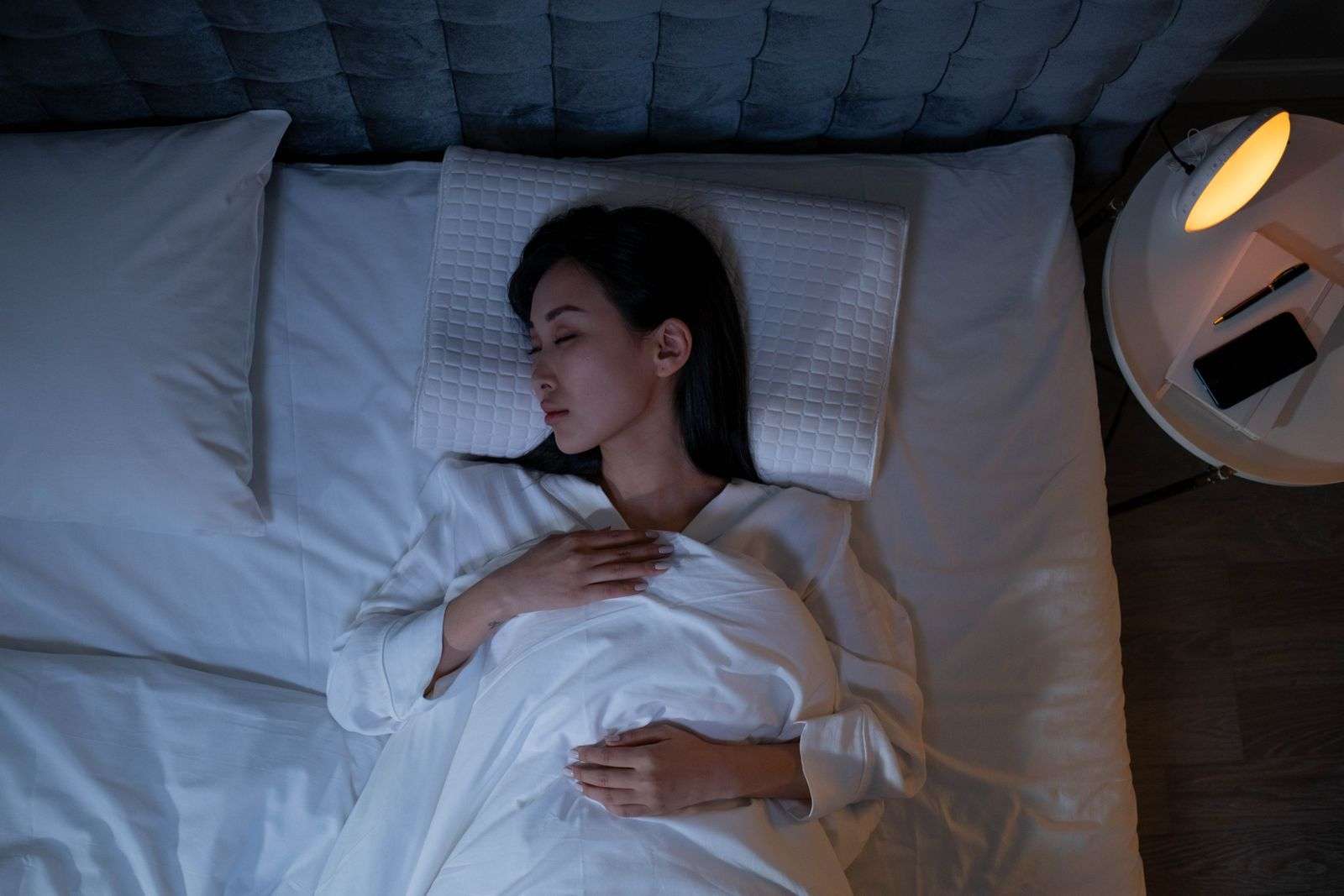
9 Science-Backed Ways to Fall Asleep Fast
Here is each technique in detail, with the research that backs it up.
1. Know what “normal” looks like
Sleep researchers call it sleep onset latency: the minutes between turning out the light and actually falling asleep. For most adults, 10 to 20 minutes is normal. Knowing that number matters because anxiety about not sleeping is itself one of the biggest causes of not sleeping. If you are at minute 12 and already frustrated, the frustration, not your mattress, is the problem. Give yourself a realistic window, and if you are still wide awake after about 20 minutes, get up, go to another room, and do something calm and boring until you feel drowsy. Training your brain to associate the bed with sleep, rather than with worrying, is one of the oldest and most effective principles in sleep therapy.
2. Work with your chronotype, not against it
A chronotype is your body’s natural preference for when to sleep and wake, and it is largely genetic. True morning types feel sleepy early and wake easily; evening types do their best thinking at midnight and suffer through 6 a.m. alarms. Dr. Breus’s point is practical: if you are a night owl forcing a 10 p.m. bedtime, you will stare at the ceiling for an hour because your melatonin has not even started rising. Shifting your schedule by 15 minutes every few days is far more effective than a sudden overhaul. You cannot change your chronotype, but you can stop scheduling your life against it.
3. Cool the room down
Sleep onset is, at its core, a cooling event. In the hour before your usual bedtime, your core body temperature drops about half a degree to a full degree Fahrenheit, bottoming out in the middle of the night. A cool room helps that process along; a warm, stuffy one fights it. The CDC recommends keeping the bedroom between 60 and 67 degrees Fahrenheit, dark, and quiet. If you cannot control the thermostat, the low-tech version works too: lighter bedding, a fan for air movement, and warm socks on cold feet, which helps blood vessels dilate and release heat. The National Sleep Foundation’s sleep hygiene guidance (republished in a CDC sleep resource: https://stacks.cdc.gov/view/cdc/216077/cdc_216077_DS1.pdf) puts room environment on the same level as keeping a consistent schedule.
4. Take a warm shower 90 minutes before bed
This is the most underrated trick on the list, and it has a meta-analysis behind it. Researchers at the University of Texas at Austin reviewed more than 5,300 studies on passive body heating and sleep (http://cockrell.utexas.edu/news/take-a-warm-bath-1-2-hours-before-bedtime-to-get-better-sleep-researchers-find/), and found that a warm bath or shower 1 to 2 hours before bedtime in water around 104 to 109 degrees Fahrenheit improved overall sleep quality and sped up falling asleep by an average of 10 minutes. The mechanism is the same cooling principle as above: hot water dilates blood vessels near the skin, and when you step out, heat dumps from your core, mimicking the natural pre-sleep temperature drop. Timing matters more than duration, so aim for roughly 90 minutes before you plan to sleep, not five minutes before.
5. Exercise earlier in the day
A 2019 systematic review of 11 studies found that exercise’s most consistent sleep benefit was reducing the time it takes to fall asleep, and a 2021 trial of a moderate training program in previously inactive adults found improvements in overall sleep quality as well. The key detail from the research is timing: regular daytime movement (https://thebiohack.org/walking-after-eating-benefits/) builds the physical tiredness your body needs at night, but a hard workout within an hour or two of bed raises core temperature and adrenaline when you want both falling. Finish vigorous exercise at least three hours before bed, and keep the evening for gentle stretching or a slow walk.
6. Shut the screens down
The light from phones, tablets, and laptops is rich in the blue wavelengths that suppress melatonin, the hormone that opens the gate to sleep. A 2022 systematic review found that evening blue-light exposure was associated with longer sleep onset and shorter sleep duration across multiple studies. Dr. Breus’s advice is blunt: get the screens out of the last hour. If that feels impossible, the minimum effective dose is switching devices to night mode, dimming brightness, and stopping all scrolling at least 30 to 60 minutes before bed. Replace the scroll with something analog: a paper book, light stretching, or simply sitting with your thoughts. And if you are wondering whether filtering glasses solve it instead, I went through the blue light glasses evidence trial by trial, and the lenses came up short.
7. Keep the same bed and wake times
Your circadian rhythm cannot tell time, but it can learn it. Going to bed and waking up at consistent times, including weekends, anchors your internal clock so melatonin rises and cortisol falls on a predictable schedule. People who keep irregular schedules, including chronic weekend “social jet lag,” consistently report longer sleep onset and poorer sleep quality. The wake time matters even more than the bedtime: getting up at the same hour every day, and getting daylight soon after, is the strongest signal you can give your clock. Shift gradually if needed, but protect the pattern.
8. Dump tomorrow onto paper
This one surprised even sleep researchers. In a 2018 study published in the Journal of Experimental Psychology (https://medicalxpress.com/news/2018-01-to-do-doze-jotting-tasks-dreamland.html), 57 young adults spent five minutes before bed either writing a to-do list of upcoming tasks or journaling about completed ones, while their sleep was measured with polysomnography, the gold standard. The to-do list group fell asleep an average of nine minutes faster, and the more specific the list, the faster they drifted off. Writing down tomorrow’s tasks appears to “offload” the mental looping that keeps people awake, giving the brain permission to stand down. Keep a notepad by the bed, spend five minutes being specific, and then close it.
9. Build a power-down hour
Dr. Breus’s signature habit ties everything together: treat the last hour before bed as a deliberate wind-down. Dim the lights in the whole house, not just the bedroom. Switch from stimulating activities (work email, intense shows, heated debates) to calming ones (reading, stretching, a warm drink, quiet conversation). Lower the stimulation step by step instead of going from full brightness to pitch black in sixty seconds. Think of it as a landing sequence for your nervous system. People who protect this hour consistently report that it is the single change that made the other eight work, because every technique above lands better when your body already knows sleep is coming.
My Take: What Works for Me on the Road
I have spent 27 years as a celebrity photographer, and a huge part of that life is the opposite of a sleep schedule: red-eyes, late-night shoots, hotel rooms in cities I can barely name, and a brain that is still editing photos at 1 a.m. Falling asleep fast stopped being a wellness luxury for me a long time ago. It is a job skill.
The thing that changed everything for me was a blackout sleep mask with built-in speakers, which I first started using seriously during an extended fast I wrote about in my book. It blocks every photon in a strange hotel room and plays guided sleep meditations, and the combination of total darkness plus something calm to focus on does for me what counting sheep never could. Total darkness matters more than people think: even the standby light on a hotel TV is enough to keep a light sleeper like me half-awake.
I also learned the hard way that the hour before bed decides the night. After a shoot, I used to go straight from editing on a laptop to lying in the dark expecting sleep to arrive on command. It never did. Now I force a wind-down: shower, lights low, phone in another room, and five minutes writing down tomorrow’s shot list, which is my version of the to-do list trick. Offloading the next day onto paper is the fastest way I know to quiet a brain that is still working.
One honest caveat: none of this works if I have had caffeine after about 2 p.m. or if I try to outsmart my own evening chronotype by forcing a 9:30 bedtime before an early call. I plan around the late nights instead of fighting them, get my wind-down hour wherever I can, and let the routine do the heavy lifting. Sleep is the one performance enhancer that is completely free, and in my line of work, showing up sharp matters more than any camera I own. One breathing method I am testing for my wind-down is the 4-7-8 breathing technique, a structured version of the breathwork I describe here.
Falling asleep faster is only half the equation — for the full daytime-routine side, here is my deeper guide on how to improve sleep quality naturally. And once you are asleep, the position you sleep in matters too: here is my ranked guide to the best sleeping position, side vs. back vs. stomach.
One more thing on timing: I keep my coffee strictly to the morning hours now, and there is more to that habit than just sleep. Morning coffee is also linked to greater longevity benefits than spreading the same cups across the whole day, which I dig into in my guide on whether coffee is good for you.
Frequently Asked Questions
How can I fall asleep in 5 minutes?
There is no guaranteed 5-minute method, and anyone promising one is selling something. The closest evidence-backed approaches are the military sleep method, which combines progressive muscle relaxation with visualization, and slow breathing techniques like 4-7-8 breathing, which stimulates the vagus nerve and shifts your nervous system toward rest. Realistically, combining a cool dark room, a consistent schedule, and a real wind-down routine will move most people from 45 minutes of tossing down to the normal 10 to 20, which feels like falling asleep fast.
Is it normal to take more than 30 minutes to fall asleep?
Occasionally, yes; stress, travel, and caffeine can all stretch out sleep onset for a night or two. But if it routinely takes more than 30 minutes to fall asleep, or you lie awake worrying about not sleeping, that pattern is worth discussing with your doctor. Chronic difficulty falling asleep can be a sign of insomnia, which is highly treatable, and sometimes of sleep apnea or restless legs, which need proper diagnosis.
What should I do if I wake up at 3 a.m. and cannot fall back asleep?
First, do not look at the clock: calculating how little sleep you have left spikes anxiety and makes returning to sleep harder. If you are still awake after 15 to 20 minutes, get out of bed and do something quiet and dimly lit, like reading a paper book, until you feel drowsy, then return to bed. Keep lights low and screens off. If 3 a.m. wake-ups happen most nights, look at the daytime causes: late caffeine, alcohol (which fragments the second half of sleep), high evening stress hormones (https://thebiohack.org/how-to-lower-cortisol-naturally-7-proven-ways-2026/), or an inconsistent wake time.
Are there natural ways to fall asleep faster without medication?
Yes, and they are the entire focus of this article: a cool dark bedroom, a warm shower 90 minutes before bed, consistent sleep and wake times, daytime exercise, no screens in the last hour, and the 5-minute to-do list. Some people also find magnesium glycinate (https://thebiohack.org/magnesium-glycinate-for-sleep/) helpful in the evening, though supplements work best as an addition to these habits, not a replacement. Avoid alcohol as a sleep aid: it may make you drowsy, but it fragments sleep quality. I have also reviewed the clinical trial evidence for ashwagandha for sleep, covering dosage, safety, and how it compares to other options. If supplements are on your list, read our guide on melatonin vs magnesium for sleep to pick the right one for your situation.
Does napping during the day make it harder to fall asleep at night?
It can. Long or late-afternoon naps reduce the sleep pressure your body needs to feel tired at bedtime, which is why the National Sleep Foundation’s sleep hygiene guidance specifically advises avoiding naps if you have trouble falling asleep. If you must nap, keep it under 20 to 30 minutes and finish before mid-afternoon.
Keep the Momentum Going
If this helped, get one practical health breakdown like this in your inbox every morning and evening. Join The Biohack newsletter below for daily video guides on sleep, nutrition, movement, and longevity, no fluff, just what works.
This article is for educational purposes only and is not medical advice. Sleep techniques and supplements affect everyone differently. If you have ongoing trouble sleeping, loud snoring, or excessive daytime fatigue, talk to your doctor or a sleep specialist.
What is the one thing that keeps YOU up at night: racing thoughts, a too-warm room, or the phone glow? Tell me in the comments, I read every one.
