
Ask a room of people about the best sleeping position and you will start an argument. Some swear by their back, others cannot sleep any way but on their side, and the stomach sleepers will defend their turf too. It turns out this is one of those questions where sleep doctors agree more than the internet suggests. In a short video from the Mayo Clinic, two sleep specialists lay out what the evidence actually supports, and their verdict surprised me: the position many of us think is healthiest is the worst one for a very common problem. Below is how the three main positions compare, what the research says about each one, and the small fixes that can make whichever position you prefer work better. (Position is only half the battle, of course. If falling asleep itself is your struggle, my guide on how to fall asleep fast covers the rest of the equation.)
In this post:
- The short answer
- Side sleeping: the best position for most people
- Back sleeping: best for alignment, worst for snoring
- Stomach sleeping: why experts rank it last
- Pillow and mattress fixes that matter more than position
- My take: what I actually do for better sleep
- FAQ
- The bottom line

What the Mayo Clinic video covers
The video is a Mayo Clinic Minute (just over a minute), but it is dense. Dr. Lois Krahn, a Mayo Clinic sleep specialist, opens with a warning: “Back-sleepers beware.” Many people find back sleeping comfortable because it puts no weight on the joints, she says, but Mayo Clinic experts consider sleeping on your back the worst sleeping position, especially if you have sleep apnea. The reason is mechanical. When you lie on your back, your tongue and jaw can fall back and crowd your airway, and many people snore more on their backs.
Dr. Virend Somers, a cardiologist who directs the sleep facility within Mayo Clinic’s Center for Clinical and Translational Science, adds the positive case: “There’s a host of evidence overall suggesting that probably sleeping on the side is better.” Side sleeping helps prevent the airway from collapsing and can reduce snoring. Krahn’s bottom-line advice is simple: all in all, sleeping on the side, perhaps with the head slightly elevated as long as that is comfortable, is a good way to sleep. The video also covers two special cases: stomach sleeping keeps the airway open but puts strain on the spine and neck, and during pregnancy, especially the last trimester, sleeping on the left side is recommended because it keeps pressure off the internal organs and promotes healthy blood flow. Somers notes that sleeping on the back in the third trimester lets the uterus compress the inferior vena cava, the large vein carrying blood back to the heart. One practical tip from Somers: if you sleep on your side, put a pillow between your knees, because without it the side position pulls on the hip and can cause issues. (The full expert quotes are on the Mayo Clinic News Network companion page.)
Here is how the three positions stack up:
| Position | Best for | Think twice if you have |
|---|---|---|
| Side (left or right) | Snoring, sleep apnea, acid reflux, back and neck pain, pregnancy | Shoulder pain on one side (try the other side) |
| Back | Spinal alignment, even weight distribution, neck pain for some | Snoring, sleep apnea, acid reflux, pregnancy (late term) |
| Stomach | Keeping the airway open in mild snorers | Neck or back pain, reflux, pregnancy |
A Cleveland Clinic sleep specialist, Dr. Nancy Foldvary, adds useful nuance to the ranking: she says that generally speaking, there is no sleeping position considered better than another, and that people with obstructive sleep apnea, a deviated septum, nasal congestion, arthritis, acid reflux, or heart failure often do better on their side. Her full breakdown is in the Cleveland Clinic’s recent piece on whether sleeping position really matters.
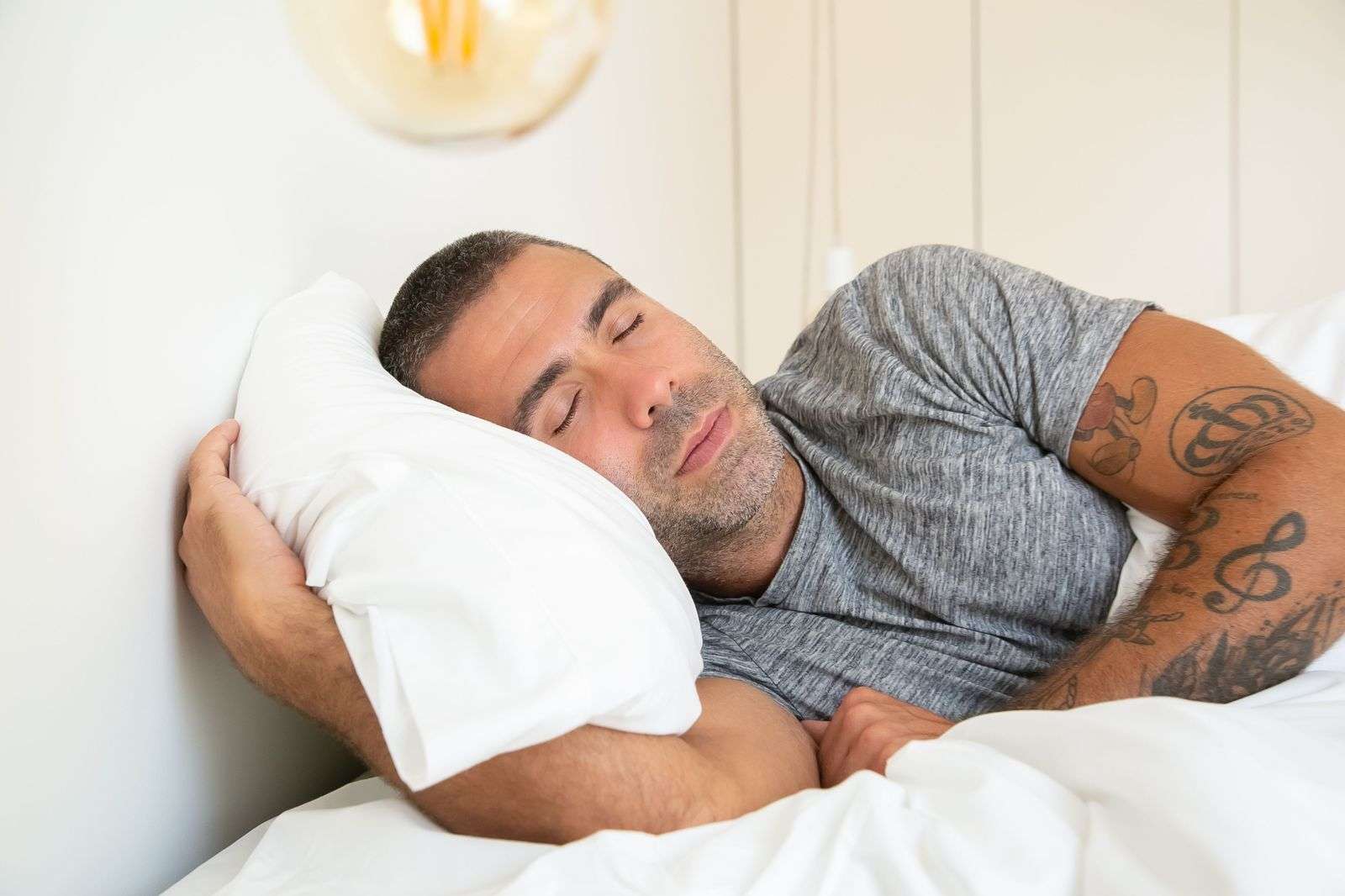
The Short Answer: What Is the Best Sleeping Position?
The short answer: The best sleeping position for most adults is on the side, ideally the left. Side sleeping keeps the airway open, which reduces snoring, and left side sleeping cuts acid reflux, with a 2022 study finding left side sleepers had near zero acid exposure. Back sleeping is fine for spinal alignment but worsens snoring; stomach sleeping ranks last.
That matches what most of us already do: a 2024 SSRS poll of 3,364 US adults found 69% usually sleep on their sides, 19% on their backs, and 12% on their stomachs. Your body figured out the winner before the studies did.
Side sleeping: the best position for most people
Side sleeping is the most popular position among adults, and the research consistently supports it as the healthiest default. The Sleep Foundation estimates that more than 60 percent of adults sleep on their side. Sleeping on your side keeps the tongue and soft tissues from narrowing the airway, which reduces snoring and the risk of positional obstructive sleep apnea. It also positions the stomach below the esophagus, making nighttime acid reflux less likely. With the right pillow and mattress combination, side sleeping supports a neutral spine and takes pressure off the lower back and hips.
There are two refinements worth knowing. First, if reflux is your issue, the left side specifically is the better choice. Multiple studies have found that sleeping on the left side reduces reflux episodes and limits how long stomach acid sits against the esophagus, while sleeping on the right side or flat on the back can make reflux worse. Second, side sleeping is the position doctors recommend during pregnancy, again on the left side, because it improves circulation to the placenta and takes pressure off the liver and lower back. As the Mayo video explains, the concern with back sleeping late in pregnancy is that the weight of the uterus can compress major blood vessels.
To do side sleeping correctly: keep your body in an even vertical plane rather than twisting, choose a pillow thick enough to fill the space between your head and the mattress so your neck is not bent up or down, and put a thin pillow between your knees to keep the hips aligned and take pressure off the lower back. The Sleep Foundation’s full guide to sleeping positions has detailed diagrams of each setup.
The honest drawbacks: side sleeping can cause shoulder soreness or tightness, so it is worth shifting sides occasionally and making sure your mattress cushions your hips and shoulders. There is also the wrinkle question. Some evidence suggests that pressing your face into the pillow night after night can contribute to facial wrinkles, but the research is limited and not all studies find a link, so I would not change positions over this alone.
Back sleeping: best for alignment, worst for snoring
Back sleeping is the easiest position for keeping the spine aligned. Lying flat distributes your weight evenly, which can prevent aches in the neck, shoulders, and lower back, and many people with neck pain do well on their backs because the position calms the muscles around the neck. For lower back comfort, a thin pillow under the small of the back or under the knees reduces stress in the lumbar area. A relatively low-loft pillow supports the natural curve of the neck without pushing the head too far forward, and keeping the arms in similar positions (at the sides or resting on the torso) avoids one-sided strain.
The catch is breathing. Back sleeping is the worst position for people who snore or have obstructive sleep apnea, because gravity pulls the tongue and soft tissues of the throat into the airway. The Sleep Foundation notes that for most people with obstructive sleep apnea, symptom severity increases when they sleep on their back, and some studies estimate that around half of people with sleep apnea have the positional type, meaning their symptoms appear mainly or only on their backs. Cleveland Clinic’s Dr. Foldvary puts the prevalence of sleep apnea at roughly 25 percent of men and more than 10 percent of women, rising with age, so this is not a rare edge case. It is also the reason the Mayo video singles out back sleepers for the warning. Back sleeping is likewise not recommended during pregnancy, for people with acid reflux, or for heavier and older adults, who can find it harder to breathe on their backs. One mitigation: elevating the head of the bed can reduce snoring, reflux, and congestion for people who cannot give up the position.
Stomach sleeping: why experts rank it last
Stomach sleeping is the least common position. Research suggests we spend less than 10 percent of the night face down. It has one real advantage: because the airway stays open, it can reduce snoring compared with back sleeping. That is where the benefits end.
To sleep on your stomach, you have to turn your head sharply to one side, which twists the neck out of alignment with the rest of the spine for hours. The position provides the least back support of all the sleeping positions and increases pressure on the spine, sometimes causing pain on waking. If the mattress is not firm enough, the stomach and hips sink in and pull the spine into an exaggerated curve. The Sleep Foundation quotes physicians who note that stomach sleeping can worsen back pain, especially in the lumbar region, because the spine tends to overextend. It is also the position most likely to press the face into the pillow, which is the wrinkle concern in its strongest form.
If you are a committed stomach sleeper, a few changes reduce the damage: use a very thin pillow or none at all, and consider a pillow under the pelvis to take strain off the lower back. But if you wake up with neck or back stiffness, the position itself is the first suspect.
2026 Research Refresh: The Numbers Behind the Ranking
The left side advantage for reflux is one of the best measured facts in sleep science. In a 2022 study published in the American Journal of Gastroenterology, Schuitenmaker and colleagues tracked 57 reflux patients with simultaneous sleep position monitoring and esophageal pH monitoring. Median acid exposure time on the left side was 0%, versus 1.2% on the right and 0.6% on the back. Acid clearance was also faster on the left: 35 seconds versus 76 seconds on the back and 90 seconds on the right.
It holds up in randomized trials too. A 2022 double blind, sham controlled trial in Clinical Gastroenterology and Hepatology advised 100 adults with nighttime reflux to sleep on their left; half also wore a chest device that vibrated when they rolled right. About 44% of device users cut their nighttime reflux score by at least half, versus 24% of the sham group. Positional therapy helped a meaningful share, not everyone, which is the honest summary: left side sleeping is a free, low risk strategy, not a cure for GERD.
One more number worth knowing: the same 2024 SSRS poll found 45% of US adults sleep six hours or less a night. Position optimizes the hours you get; it does not replace them. If falling asleep is the harder problem, my magnesium glycinate for sleep guide covers the supplement with the best trial data, and the melatonin vs magnesium for sleep guide settles which one to try first.
Pillow and mattress fixes that matter more than position
One theme across every expert source is that your equipment may matter more than your posture. Dr. Foldvary at the Cleveland Clinic points out that a bad pillow or mattress can cause tossing and turning all by itself, and that constant repositioning at night can also signal restless legs syndrome, which affects an estimated 10 to 15 percent of people and is very treatable, so it is worth mentioning to a doctor.
The pillow rules by position, per the Sleep Foundation: side sleepers need a relatively thick, supportive pillow that fills the gap between head and mattress; back sleepers do best with a medium, somewhat firm pillow that is not so high that it tilts the head forward; stomach sleepers should go soft and low, or skip the pillow entirely. For the mattress, side sleepers need enough give to cushion the hips and shoulders, while stomach sleepers need a firmer surface so the midsection does not sink. If your mattress is sagging and a new one is not in the budget, a topper or even rotating the mattress can buy time.
Two small upgrades apply to every position. First, elevating the head of the bed by about six inches lets gravity help with reflux and can reduce snoring and congestion; this helps back sleepers most. Second, keep the room dark, cool, and quiet, because no position rescues sleep that is constantly interrupted. My separate guide on how to improve your sleep quality naturally covers the full environment checklist.
My take: what I actually do for better sleep
I will be honest: for most of my life I gave my sleep position zero thought. I fall into bed late, I wake up late, and wherever I landed was fine. My schedule makes this a real issue for me, though. I go to bed somewhere between midnight and 2 am and I usually wake up around 10 am, and because so many of the events I cover happen in the evening, my wind-down window is short. When your nights are short, the quality of the hours you do get matters more, not less.
What I have actually optimized is not my position but my light. I use a sleep mask called Silent Mode that wraps around the head and blocks out light completely, and it comes preset with meditations for focus, relaxation, and sleep. The tracks use breathwork, and the idea behind it is training the vagus nerve, which governs the parasympathetic side of the nervous system, the rest-and-digest side. I first used the mask to get through an 84-hour fast, and it taught me something I did not expect: that “quality rest” is a skill you can practice, not just something that happens to you. Total darkness plus slow breathing is now my non-negotiable, whether I am at home or in a hotel.
The hotel part is real. I have slept in more hotel beds than I can count, from forgettable ones to a 10 to 12 foot long bed in the Royal Suite in Vienna. Bad pillows are everywhere, and they are the fastest way to ruin a night regardless of position. These days I travel with my own mask and I pay attention to pillow height the way the sleep doctors describe it: thick enough on my side that my neck stays straight, thin when I end up on my back.
One more thing from my own routine that connects to the reflux science above: I eat in a tight window, usually about 6 pm to 8 pm, and I treat alcohol as eating, because it has calories. That means I am rarely going to bed on a full stomach, which probably does as much for my reflux risk as any position choice. If you eat late, the left-side and head-elevation tricks in this post matter even more for you. And if your sleep trouble is about stress rather than position, my notes on lowering cortisol before bed and on magnesium glycinate for sleep are the two things I looked into first.
Want more like this? I publish a health video breakdown like this one every morning and evening. Drop your email in the signup form below and you will get each new post in your inbox, no spam, just the research.
Which Sleep Position Fits You? (60 Second Quiz)
Answer three questions and get a position recommendation based on the evidence above. This is a starting point, not a diagnosis.
Sleep position quiz
For information only, not medical advice. Talk to your doctor before changing anything, especially with sleep apnea or spinal conditions.
Supplements cannot fix a bad position, but the right one can make a good position better. I take magnesium glycinate nightly, and the evidence review in is a magnesium supplement worth it explains why it is the one mineral I do not skip.
FAQ
What is the healthiest sleeping position?
For most adults, side sleeping is the healthiest overall choice. The Mayo Clinic's sleep specialists say the evidence favors the side because it keeps the airway open, reduces snoring and apnea risk, and lowers nighttime reflux. The Cleveland Clinic adds that no single position is best for everyone: the right answer depends on whether you snore, have reflux, are pregnant, or deal with joint pain. Back sleeping is a strong second for spinal alignment if you do not snore, and stomach sleeping ranks last for most people because of neck and back strain.
Is it better to sleep on your left or right side?
For most people the difference is small, but the left side has specific advantages. Sleeping on the left side reduces acid reflux episodes and is the recommended position during pregnancy because it improves circulation and keeps pressure off the internal organs. If you have shoulder or hip pain on one side, sleep on the other side instead. Comfort and uninterrupted sleep still come first: the better side is the one you actually stay asleep on.
Is sleeping on your stomach bad for you?
It is the position most experts recommend against. Sleeping on your stomach forces your neck into a sharp twist for hours and provides the least support for the spine, which can cause neck pain, back pain, and morning stiffness. It does keep the airway relatively open, so some mild snorers do better face down than on their backs, but side sleeping gives you the same breathing benefit without the spinal cost. If you cannot switch, use a very thin pillow or none, and consider one under your pelvis to support the lower back.
What is the best sleeping position if you snore?
Side sleeping. Both the Mayo Clinic and the Sleep Foundation point to the side as the best position for snoring and sleep apnea, because it stops the tongue and soft tissues from falling back into the airway. Back sleeping is the worst for snoring. If you only snore on your back, you may have positional sleep apnea, which affects roughly half of people with sleep apnea, and switching to your side can meaningfully reduce symptoms. Loud, nightly snoring with daytime sleepiness deserves a conversation with a doctor, since sleep apnea is common and treatable.
Is it better to sleep on your left or right side?
Left, especially if you get heartburn. In the 2022 Schuitenmaker study, left side sleepers had a median acid exposure of 0%, versus 1.2% on the right. The anatomy explains it: on your left, the stomach sits below the esophagus so gravity keeps acid down; on your right, the stomach sits above the junction.
What is the worst sleeping position?
Stomach sleeping. It forces neck rotation and extends the lower back for hours, which is why only about 7 to 12% of adults do it and sleep doctors rank it last. If it is the only way you fall asleep, use a very thin pillow or none, and put a pillow under your hips.
Does sleeping position affect snoring?
Yes. Back sleeping lets the tongue and soft tissues fall backward, narrowing the airway, which is why back sleepers snore more. Side sleeping keeps the airway more open and is the standard recommendation for snoring and mild sleep apnea. A 2024 SSRS poll found 69% of adults already sleep on their sides.
Can changing sleep position help acid reflux without medication?
It can reduce it. In a 2022 randomized trial, 44% of people trained to stay on their left side cut their nighttime reflux score by at least half, versus 24% with a sham device. It is a free strategy to try alongside earlier dinners and head elevation, not a replacement for medical care when symptoms are frequent.
The bottom line
The best sleeping position for most people is on the side, with the left side a slight upgrade if reflux or pregnancy is in the picture. Back sleeping is fine for spinal alignment but a poor choice if you snore or have sleep apnea or reflux. Stomach sleeping is the one position the experts consistently rank last. And the unglamorous truth from the Cleveland Clinic is that your pillow and mattress may matter more than any of it: a bad pillow will undo a perfect position, and constant tossing and turning is worth mentioning to a doctor. Pick the position that lets you sleep through the night without pain, set up your pillows to support it, and keep the room dark and cool. That is most of the game.
Disclaimer: This post is for educational purposes only and is not medical advice. Sleep positions interact with real conditions like sleep apnea, reflux, and pregnancy. If you snore loudly, gasp at night, feel exhausted despite a full night in bed, or have a medical condition, talk to your doctor or a sleep specialist.
What position do you sleep in, and has changing it ever fixed a morning ache for you? Let me know in the comments.
