
Part of The AI Assistant Diaries, my series on running business, health, and photography with an AI agent. Also read: I Run My Entire Business With an AI Agent. Here’s What Changed.
I have tried every food tracking app. MyFitnessPal, Cronometer, all of them. They all die the same death. You eat something, you open the app, you search a database for “chicken wing,” you scroll through 40 entries, you guess at the portion, you give up by Thursday.
So I stopped using apps. Now I just text my AI assistant. I’m a photographer, and the work is physical — ten-hour days on my feet with gear on my back. Staying in shape isn’t vanity for me. It’s equipment.
I take a pic of my food with my hand for scale. Then I ask it to keep track of my macros. That’s the whole system. A photo, a sentence, and it handles the rest. Every single day.
And the health tracking is just one piece. I run my entire business the same way. Here is how the AI agent handles everything else: I Run My Entire Business With an AI Agent. Here’s What Changed.
The Photo Method
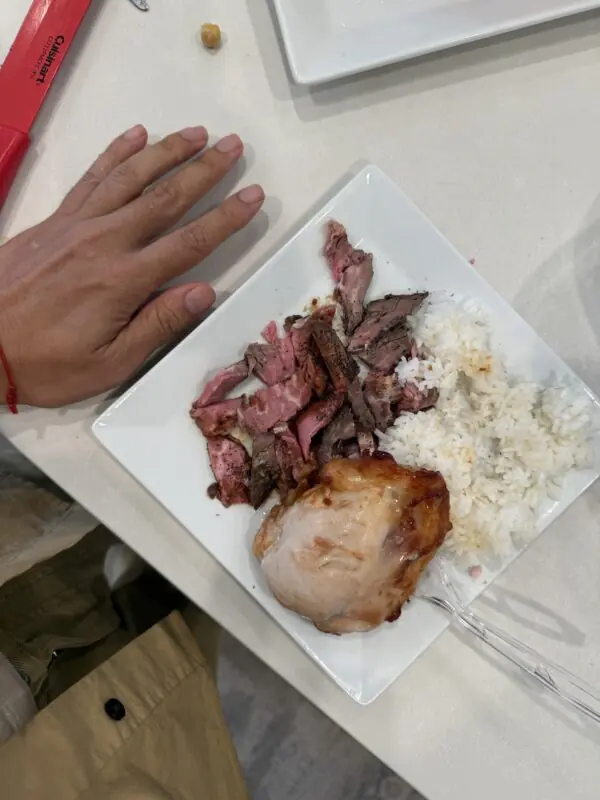 Every meal starts the same way. Phone out, hand next to the plate, photo. My hand is the scale. The assistant can see the food, estimate the portion against my hand, and break down the macros.
It is not perfect. Nothing is. But it is fast, and fast is what keeps you tracking. The best tracking system is the one you actually use for more than a week.
The photos do something else too. They make you honest. When you have to photograph every meal, you think twice about the meal. The camera is accountability.
The Math Behind It
Here is how the numbers work. I calculate my maintenance by putting in the number of steps I walk plus if I did any lifting. Steps drive most of it. A 20,000-step day burns very differently from a 5,000-step day, and the assistant adjusts the maintenance number accordingly. Lifting days get a bump on top.
Right now I’m on a 300 cal deficit and I eat 170 gm protein a day. Those are my two anchors. Everything else flexes around them. If you have not set your own protein number yet, the protein target calculator in our protein guide works it out from your weight and goal.
After every meal, I get the same report. Per-item macros, the day total so far, and where I stand against my targets. When I ask what I have left, it tells me remaining calories and remaining protein grams. That is the only question that matters at 8 PM. What can I still eat?
The Unfinished Meal Rule
This is the detail most people miss. If I don’t finish my meal, I take another pic and tell it that I didn’t eat it.
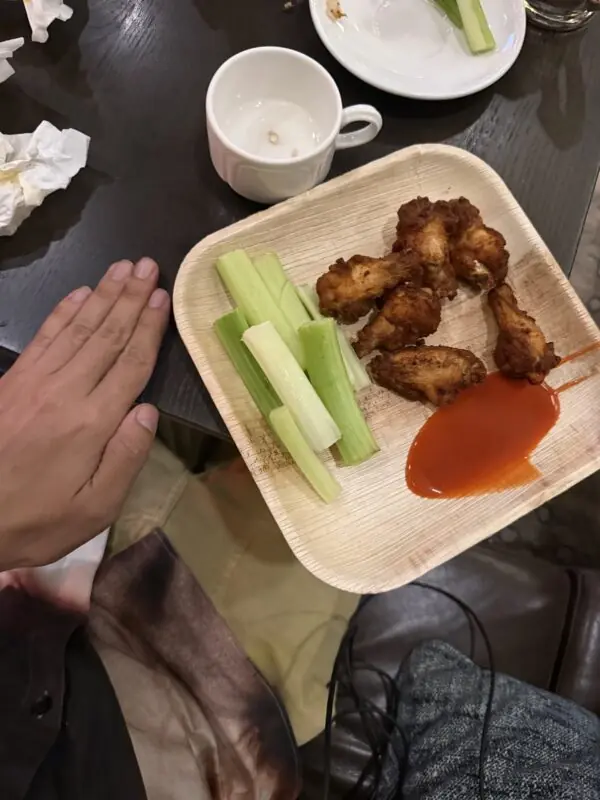
Tracking apps assume you ate everything you logged. Real life doesn’t work that way. You leave half the rice. You eat three wings instead of six. If your log doesn’t account for that, your numbers are fiction.
So the rule is simple. Photo before, photo after if there’s anything left. Tell it what you didn’t eat. The log stays honest.
Weighing When It Counts
Sometimes I weigh my food to be exact. Not every meal. That would be insane. But when it matters, when I’m dialing in or something looks tricky to estimate, out comes the scale.
The assistant takes the weight and does the math. 318 grams of something becomes exact macros in seconds. No database search. No scrolling. Just a number and an answer.
I try to tell Muse exactly what I ate so it’s more accurate. This is the whole game. Garbage in, garbage out. The more specific I am, the roasted chicken thigh, the white rice, the buffalo sauce on the side, the better the estimate. Vague input gets vague output. Precise input gets a precise log.
Logging Workouts
Workouts are even simpler. I just copy and paste the lifting program I did so it can log it.
That’s it. The program text goes in, the session is logged. Exercises, sets, reps, all recorded. Over weeks and months, that becomes a training history I can actually use. What did I lift last time? Am I progressing? Which days did I skip?
The assistant also uses the workout to adjust the day’s numbers. Lifting day means higher maintenance, which means more room in the budget. The food log and the workout log talk to each other. That’s the part no standalone app does well.
It Evaluates My Body and Programs My Training
The logging is only half the story. The other half is coaching.
I use it to evaluate my body and tell me what I should work on. I send physique photos, and it assesses honestly. Lagging chest, underdeveloped delts, wherever the weak points are. No ego, no flattery. Just an assessment.
Then it comes up with a whole exercise plan for me. Not generic. Built around my weak points, my schedule, my equipment. A full program, sets and reps, progression. And it helped me achieve my body.
Look at the before and after. The before photo is from late 2025. The after is now. That transformation didn’t happen by accident. It happened because every training decision was informed. The plan told me what to do, the log told me if I did it, the photos told me if it worked. A closed loop.
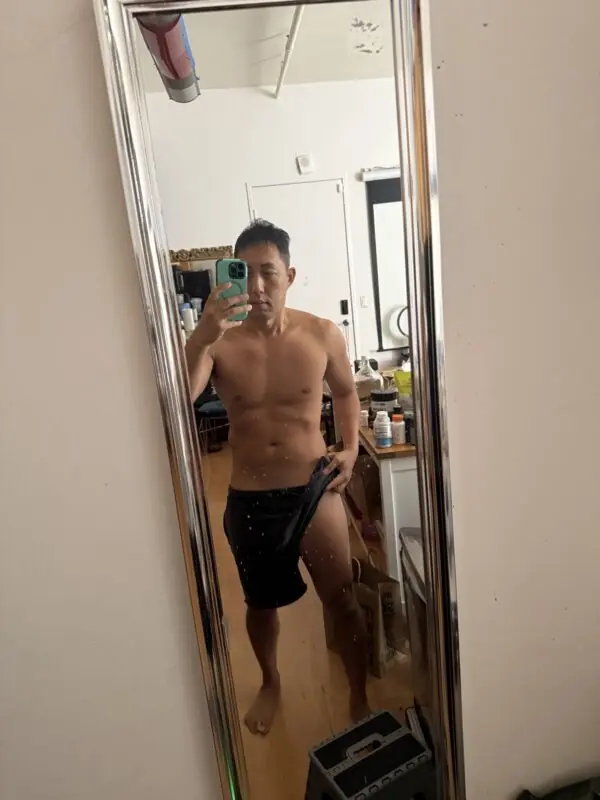
Most people hire a personal trainer for this. A good one costs hundreds a month. Mine lives in my phone, knows my entire history, and never misses a session. The trainer model, one human watching you liftfor an hour, is getting disrupted the same way everything else is.
Why This Beats a Tracking App
A tracking app makes you do the work. You search, you enter, you adjust, you log. Every meal is five minutes of admin. Multiply that by four meals a day for a year and you understand why everyone quits.
The assistant flips it. I do ten seconds of work, a photo and a sentence. It does the five minutes. The friction drops to near zero, and near zero friction is the difference between tracking for a week and tracking for a year.
It also handles the stuff apps can’t. “I ate half.” “The wings were breaded.” “I walked 22,000 steps today.” “I skipped the rice.” Natural language, real life, no dropdown menus.
And it remembers. Every meal, every workout, every day is in the log. I can ask what I ate last Tuesday, or how my protein has trended this month, or whether I’m actually progressing on my lifts. Try getting that out of a food app without exporting a CSV and building a spreadsheet.
There’s also no subscription, no premium tier, no locked features. No “upgrade to log more than three meals.” The assistant doesn’t care how much you track. It just tracks.
What Should I Eat?
The log tells me where I stand. But sometimes I need the other direction. I’m staring at food and I don’t know what the right choice is.
If I’m not sure of what I should eat, I take a pic of the food and ask Muse what I should eat. It knows my targets, my deficit, my protein goal, what I’ve already eaten today. So the answer isn’t generic advice. It’s specific. Eat the chicken, skip half the rice, you’re 40 grams short on protein.
If I’m at a restaurant, I take a pic of the menu and it suggests what I should eat. Same principle. It reads the menu, cross-references my day, and picks the options that fit. No more guessing at the table, no more ordering blind and hoping.
This is the part that feels like the future. Not tracking what you did. Deciding what to do, with full context, in the moment. The assistant isn’t just a logbook. It’s a coach that knows your numbers better than you do.
The Accuracy Question
People always ask about accuracy. Can an AI really estimate macros from a photo?
Honest answer. It’s an estimate, not a lab measurement. But here’s the thing. Consistency beats precision. If the estimate is off by 10 percent every time, in the same direction, your trends are still true. You’re still in a deficit. You’re still hitting protein. The trend is what changes your body, not any single meal’s exact number.
And the accuracy gets better the more precise you are. Weigh the tricky stuff. Describe the food exactly. Photograph what you didn’t finish. The system rewards honesty with better numbers.
I’ve been doing this long enough to know it works. The scale moves. The lifts go up. The log doesn’t lie, because I don’t let it.
What a Day Looks Like
Morning. Coffee, photo, log it. Steps start accumulating.
Lunch. Photo with hand for scale. Macros back in seconds. Day total updated.
Afternoon lift. Copy-paste the program. Session logged. Maintenance bumped.
Dinner. Photo. “What do I have left?” Remaining calories, remaining protein. Eat accordingly.
Night. Day total, deficit confirmed, log closed. Tomorrow starts clean.
No apps opened. No databases searched. No five-minute logging sessions. Just photos and sentences, all day, from my phone.
The Bottom Line
Tracking your health used to mean becoming a data entry clerk for your own body. Now it means taking photos and talking like a human.
The best diet is the one you follow. The best tracking system is the one you actually use. I use this one every day because it takes ten seconds a meal.
Take the photo. Put your hand next to the plate. Tell it exactly what you ate. Let it do the math.
Your body keeps score. Now your log does too. And when the log is effortless, the results stop being a matter of discipline and start being a matter of time.
