
Protein is everywhere right now. High-protein yogurt, high-protein cereal, high-protein coffee. The message from fitness culture is simple: eat more protein. But beneath the marketing, a real question remains: how much protein do you actually need per day? The answer depends on your age, your activity level, and your goals, and it is higher than the official minimum most people know.
The number you have probably heard is 0.8 grams per kilogram of body weight per day. That is the Recommended Dietary Allowance (RDA). What fewer people know is that the RDA was designed as a minimum to prevent deficiency in sedentary adults, not as an optimum for health, muscle, or healthy aging. A large body of newer research suggests most active adults, and most adults over 50, do better with considerably more.
This guide breaks down what the evidence actually says: the numbers by lifestyle and goal, a simple formula to calculate your own target, the best sources, and the myths that refuse to die. It also sits near the top of our ranking of which biohacks actually work.
Why the RDA Is Not Enough for Most People
The RDA of 0.8 g/kg/day comes from nitrogen balance studies, which measure the minimum intake needed to avoid losing body protein. By definition, that is a floor, not a ceiling, and not a target for thriving. It was also established largely in young, healthy, sedentary men, which does not describe most of the population trying to age well, train hard, or lose fat without losing muscle.
Protein researchers have argued for years that optimal intakes are higher. Expert reviews and position stands from sports nutrition bodies consistently land in the range of 1.2 to 2.0 grams per kilogram per day for active people, with higher ends for those building muscle or dieting. Older adults face an additional challenge called anabolic resistance: aging muscle responds less strongly to protein, so it needs a bigger dose per meal to trigger the same muscle-building signal.
The Short Answer: How Much Protein Per Day?
Most adults need 1.2 to 1.6 grams of protein per kilogram of body weight per day, the range in the 2025-2030 US Dietary Guidelines released in January 2026. People building muscle do best at 1.6 to 2.2 g/kg, and those cutting aim for 1.8 to 2.4 g/kg. Spread it across 3 to 4 meals of 25 to 40 grams.
How Much Protein Per Day: The Numbers by Goal
Here is where the research lands for different people. Find the description that fits you best.
Sedentary adults
If you do not exercise much, 1.0 to 1.2 g/kg/day is a sensible practical target, modestly above the RDA, with evidence suggesting better preservation of muscle and function than the bare minimum. For a 70 kg (154 lb) adult, that is 70 to 84 grams per day. That target raises a common question: does protein powder without working out actually help if you never train?
Active adults and recreational exercisers
If you train a few times per week, aim for 1.4 to 2.0 g/kg/day. The International Society of Sports Nutrition’s position stand supports this range for active individuals to support recovery, adaptation, and body composition. For our 70 kg example, that is roughly 100 to 140 grams daily.
Building muscle
How much protein do I need to build muscle? A well-known meta-analysis by Morton and colleagues found that protein intakes around 1.6 g/kg/day maximized resistance-training gains, with little additional benefit beyond that for most lifters. A practical muscle-building range is 1.6 to 2.2 g/kg/day. More is not harmful for healthy people, but the returns diminish.
Losing fat while keeping muscle
This is where protein earns its keep most dramatically. In a calorie deficit, higher protein intakes, around 1.8 to 2.4 g/kg/day or even higher, help preserve lean mass while fat comes off. Protein is also the most satiating macronutrient, which makes dieting meaningfully more tolerable. If you take one number from this article for a cut, make it the high end of this range — that is the short answer to how much protein a day to lose weight while keeping muscle. Pair that protein target with the rest of the plan in our guide to reduce body fat quickly, and the cut gets much easier to sustain.
Adults over 60
Aging muscle needs more protein, not less. Expert groups recommend 1.2 to 1.6 g/kg/day for healthy older adults, spread across meals, combined with resistance training. This is one of the highest-leverage interventions against sarcopenia, the age-related muscle loss that drives frailty. Our overview of what longevity science actually prioritizes puts muscle preservation near the top of the list for exactly this reason.
A Simple Formula to Calculate Your Target
Do this once — it works like a simple protein intake calculator — and you will never wonder again:
Step 1: Weigh yourself in kilograms (pounds divided by 2.2). Step 2: Pick your multiplier from the ranges above based on your activity and goal. Step 3: Multiply. A 70 kg recreational lifter aiming to build muscle: 70 x 1.8 = 126 grams per day.
Then distribute it. Muscle protein synthesis responds best to 25 to 40 grams of quality protein per meal, repeated 3 to 4 times daily, because each meal needs enough leucine (roughly 2.5 to 3 grams) to flip the muscle-building switch. A 120-gram target split as 30 grams across four meals beats 100 grams at dinner and almost nothing before it.

The Best Protein Sources
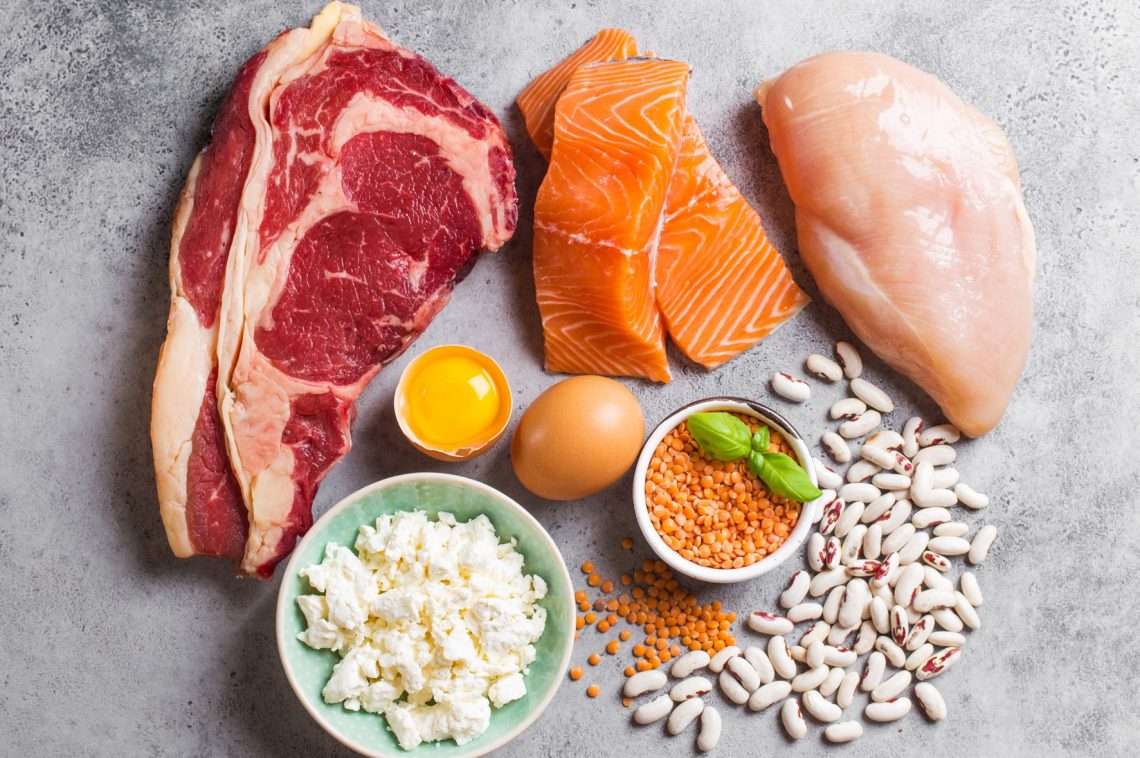
Hitting 120 to 160 grams daily is easy with the right foods and miserable without them. Prioritize complete, leucine-rich sources: whey protein, eggs, chicken, turkey, fish, Greek yogurt, and cottage cheese. Plant standouts include tofu, tempeh, edamame, lentils, and beans, though most plant proteins are lower in leucine and digestibility, so vegetarians should aim for the higher end of the ranges and vary sources across the day.
A bonus: many top plant protein sources, especially lentils and beans, are also fiber powerhouses, which helps with the other under-consumed nutrient. Our guide to how much fiber is actually too much explains how to raise fiber without digestive misery, and beans pull double duty for both targets.
Protein Myths, Busted
Myth: too much protein harms your kidneys
In healthy people, this does not hold up. Reviews of high-protein diets find no evidence of kidney damage in individuals with normal kidney function. The myth comes from clinical advice for people who already have kidney disease, where protein restriction can be appropriate. If your kidneys are healthy, a high-protein diet is not a threat to them.
Myth: your body can only use 30 grams per meal
Your body absorbs nearly all the protein you eat; the question is how it gets used. Muscle protein synthesis does plateau per meal, but the excess is not wasted, it is used for enzymes, immune function, gut lining, and other tissues, and it suppresses hunger for hours. Larger, less frequent protein meals still count. Distribution matters, but not as rigidly as the 30-gram rule suggests.
Myth: high protein weakens bones
The old acid-ash hypothesis predicted protein would leach calcium from bones. Modern evidence points the other way: adequate protein is associated with better bone mineral density and fewer fractures, especially when calcium and vitamin D are sufficient. Protein is a building block of bone, not its enemy.

Practical Tips to Actually Hit Your Number
Knowledge is not the bottleneck; execution is. Anchor each meal with a palm-to-two-palms-sized protein portion. Fix breakfast first, since it is the meal most people under-protein (a Greek yogurt bowl or eggs instead of plain toast). Keep ready options around: cottage cheese, canned tuna, whey, edamame. And track for one week, because most people misestimate their intake by 30 to 50 grams, usually downward. A protein coffee variation is another easy breakfast fix, blending collagen or whey into your morning coffee for 20-plus grams before the day starts.
2026 Research Check-In
The ranges in this guide just got official backup. On January 7, 2026, HHS and USDA released the 2025-2030 Dietary Guidelines for Americans, raising the protein target from the old 0.8 g/kg RDA to 1.2 to 1.6 g/kg of body weight per day, formally aligning federal guidance with what sports nutrition research has supported for over a decade. The old RDA was a deficiency floor, not an optimization target, which is exactly what this article argued.
Two things worth noting since publication:
- The anabolic resistance story for older adults keeps strengthening. A 2026 randomized trial in Nutrients found that 1.6 g/kg per day combined with resistance training was the best approach for preserving muscle during weight loss in older men, and that resistance training's stimulus mattered more than protein alone. Spreading protein across meals matters as much as the daily total: pre-sleep protein research showed 40 grams effective for overnight muscle protein synthesis in older men where 20 grams was not.
- Plant protein quality research keeps refining digestibility scores, which reinforces the article's advice for vegetarians to aim higher in the ranges and vary sources.
To keep this honest, I eat this way myself. I run about 180 grams of protein a day on my cut, with one scoop of Dymatize ISO100 whey isolate daily, and I track the cost: that 5 lb tub is up 83% since 2021, from $75.00 to $137.49. Whole food first, powder to fill the gap. For the rest of the stack, see whether creatine is safe for kidneys and hair, and do not forget how much fiber is actually too much, since high-protein diets often run low on it.
The Bottom Line
Most adults need more protein than the 0.8 g/kg RDA minimum: roughly 1.2 to 1.6 g/kg for sedentary and older adults, 1.4 to 2.0 for the active, and up to 2.2 to 2.4 when building muscle or dieting. Spread it across 3 to 4 meals, prioritize quality sources, and pair it with resistance training. Protein is not magic, but among nutritional levers, it is one of the few with a genuinely strong evidence base, and it is one most people still underdose.
Protein Questions: The 2026 Additions
Did the 2026 Dietary Guidelines change protein recommendations?
Yes. The 2025-2030 Dietary Guidelines for Americans, released January 7, 2026, raised the protein target from 0.8 g/kg to 1.2 to 1.6 g/kg per day, matching the ranges this guide already recommended. The old number was a deficiency minimum, not an optimum.
Is 150 grams of protein a day too much?
Depends on your weight and goal. At 1.6 g/kg, a 94 kg (207 lb) person training for muscle lands right at 150 grams. For a 70 kg sedentary adult it would be high. Use the calculator above with your own numbers.
What are the cheapest high-protein foods?
Eggs, Greek yogurt, chicken breast, tuna, tofu, and lentils. I cover the gap with one scoop of Dymatize ISO100 whey isolate daily. Track prices: whey isolate is up 83% since 2021, so whole food is the economical base.
Can older adults build muscle with protein alone?
Not really. A 2026 trial in older men found 1.6 g/kg per day preserved muscle during weight loss, but resistance training was the bigger driver. Protein without the training stimulus is just expensive calories.
Frequently Asked Questions
Is 100g of protein per day a lot?
Not for most active adults. For a 70 kg adult who trains a few times per week, the evidence-based target is roughly 100 to 140 grams daily, and hitting 120 to 160 grams is described as easy with the right foods. For a sedentary adult, 70 to 84 grams is a sensible target — so 100 grams is above the minimum but well within a normal active range.
How do I calculate how much protein I need a day?
Step 1: Weigh yourself in kilograms (pounds divided by 2.2). Step 2: Pick your multiplier from the ranges above based on your activity and goal — for example, 1.4 to 2.0 g/kg for active adults, or 1.6 to 2.2 g/kg for building muscle. Step 3: Multiply. A 70 kg recreational lifter aiming to build muscle: 70 x 1.8 = 126 grams per day. Then distribute it across 3 to 4 meals with 25 to 40 grams of quality protein each.
