
The 4-7-8 breathing technique is one of the simplest stress-relief tools you will ever learn, and it takes less than two minutes. You inhale for four counts, hold for seven, and exhale for eight, then repeat. That is the whole method. Integrative medicine physician Dr. Andrew Weil calls it a natural tranquilizer for the nervous system, and it has a reputation online as a way to calm anxiety fast and fall asleep more easily.
Table of Contents
- What Is the 4-7-8 Breathing Technique?
- How to Do the 4-7-8 Breathing Technique: 5 Steps
- Why 4-7-8 Breathing Might Work
- Can 4-7-8 Breathing Help You Fall Asleep?
- Using the 4-7-8 Breathing Technique for Stress and Anxiety
- Common Mistakes and Safety Notes
- My Take
- 4-7-8 Breathing FAQ
- A Quick Disclaimer
What Is the 4-7-8 Breathing Technique?
The 4-7-8 breathing technique is a controlled breathing exercise rooted in pranayama, the ancient yogic practice of breath regulation. Dr. Andrew Weil developed and popularized it as one of his three core breathing exercises. He nicknames it the Relaxing Breath, and his framing is worth taking seriously: it is a natural tranquilizer for the nervous system, subtle when you first try it, but gaining in power with repetition and practice. Most blogs quote the first half and skip the second.
The numbers describe counts, not seconds. Inhale quietly through your nose for a count of four, hold for seven, exhale audibly through your mouth for eight. One sequence is one cycle, and a session is four cycles, under 90 seconds total. What matters is the ratio: the exhale runs twice as long as the inhale, and the hold does the heavy lifting. That ratio is what distinguishes 4-7-8 from box breathing, where every phase is equal.
How to Do the 4-7-8 Breathing Technique: 5 Steps
Before we go further, here is the short answer. This is the exact method Dr. Weil teaches:
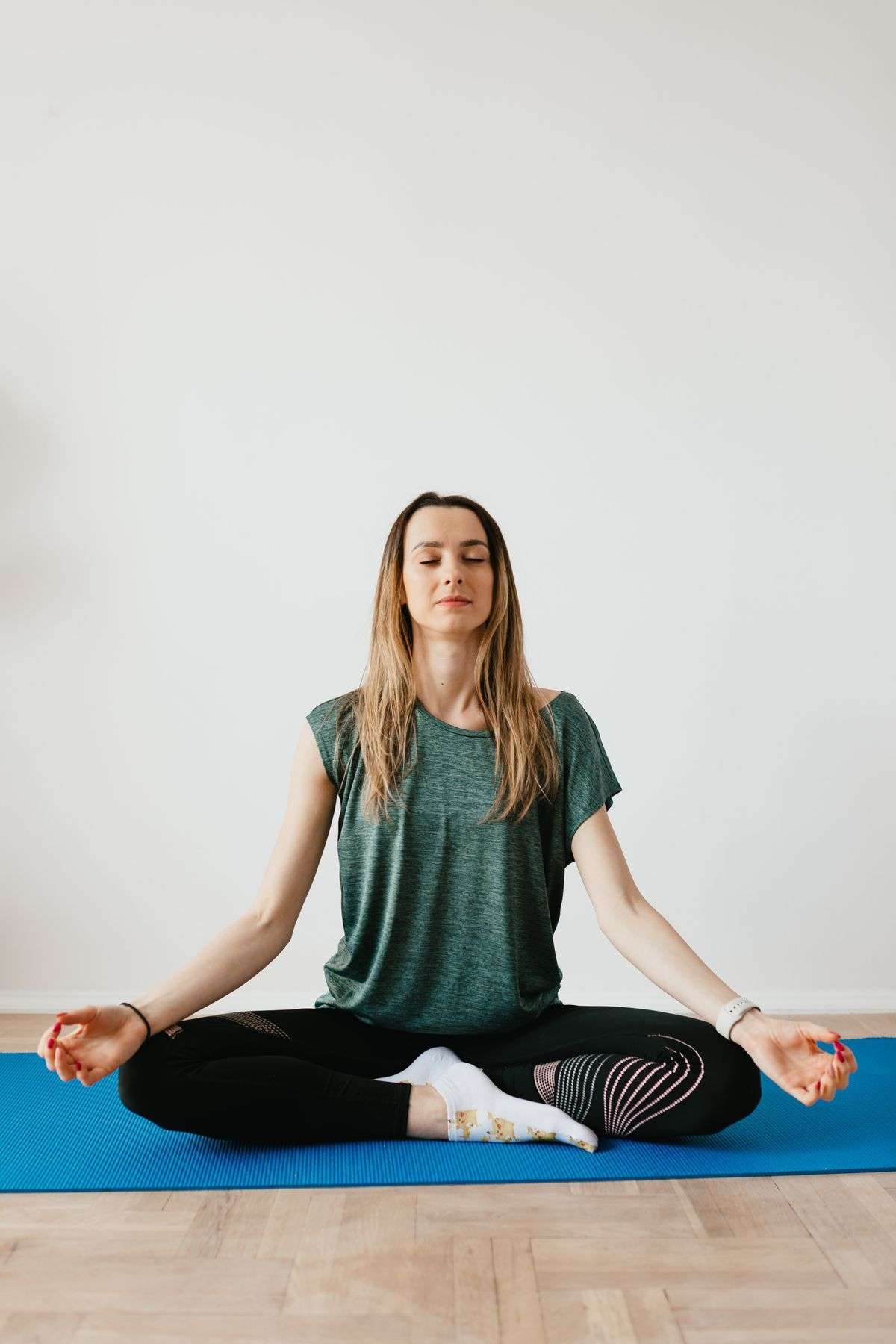
- Sit with your back straight. Place the tip of your tongue against the ridge of tissue just behind your upper front teeth, and keep it there for the entire exercise.
- Exhale completely through your mouth, around your tongue, making an audible whoosh sound. Pursing your lips slightly helps if it feels awkward.
- Close your mouth and inhale quietly through your nose to a mental count of four.
- Hold your breath for a count of seven.
- Exhale completely through your mouth, making a whoosh sound, to a count of eight. That is one cycle. Inhale again and repeat the cycle three more times, for a total of four cycles.
A few details separate doing it right from doing it wrong. Always inhale quietly through your nose and exhale audibly through your mouth, never the reverse, and keep the tongue pinned behind your upper teeth the whole time. If a seven-count hold feels too long at first, speed up the counting while keeping the 4:7:8 ratio, and slow everything down over weeks. Weil’s dosing advice, from his own published instructions: practice at least twice a day, never more than four cycles per session for the first month, and only after that extend up to eight cycles.

In the video, Dr. Weil demonstrates the technique himself on his official channel. The points he stresses most are the ones people get wrong: sit with your back straight while learning, keep the tongue tip pinned behind your upper front teeth through all five steps, and remember that the 4:7:8 ratio is what matters, not the number of seconds. If the seven-count hold feels too long, count faster and keep the ratio. He closes with the expectation-setting line that defines his whole approach: the exercise is subtle when you first try it, but gains in power with repetition and practice.
Why 4-7-8 Breathing Might Work
There is a plausible physiological story here, even if the direct clinical trial evidence for 4-7-8 itself is thin. That combination is exactly why this technique deserves both enthusiasm and honesty.
What the research actually says
There is limited direct scientific research on the 4-7-8 technique itself. Medical News Today’s review is blunt: the clinical evidence is mostly anecdotal, evidence for deep breathing techniques in clinical practice is often low quality, and the claim that the method can put you to sleep in one minute is a claim, not a finding. A 2020 review found only limited evidence that deep breathing techniques may improve heart and lung function, reduce blood pressure, improve quality of life in chronic disorders, and reduce migraine frequency and severity.
Limited evidence is not the same as no effect. It means the technique has not been studied with the rigor we would want, which is common for free, unpatentable practices nobody funds trials for. The honest framing: 4-7-8 is a relaxation tool with a real physiological mechanism and a long track record of users reporting benefits, not a proven medical treatment.
The mechanism researchers suspect
A 2019 perspective in Frontiers in Psychiatry proposed that slow, deep breathing may help initiate sleep and ease falling back asleep by targeting the autonomic nervous system. The hyperarousal model of insomnia involves chronic sympathetic activation paired with underactive parasympathetic tone. Slow breathing with extended exhales is thought to shift that balance by increasing vagal tone and promoting cardiorespiratory synchronization.
That maps onto the 4-7-8 ratio. The eight-count exhale is the longest phase by design, and extended exhales are associated with parasympathetic dominance.
Can 4-7-8 Breathing Help You Fall Asleep?
This is the claim that made 4-7-8 famous, and it needs the most careful handling. Some proponents say the method can put you to sleep in one minute. Medical News Today reports that claim as something proponents say, not as something studies confirm. Health experts frame it more carefully: the technique may help your body and mind relax, making it easier to settle into sleep, but it is not a cure for insomnia or sleep problems.
If your problem is a buzzing mind at 11pm, four cycles of 4-7-8 breathing is a genuinely good pre-sleep ritual. It gives your attention one narrow job, counting, and slows your breathing into the range that signals safety to your nervous system. Over weeks of nightly practice, Weil’s own prediction, the effect deepens. What it will not do is override real insomnia, sleep apnea, or a bedroom full of blue light at midnight. Think of it as a sleep-onset assistant, not a sleep guarantee.
Pair it with the basics that move the needle: four cycles in bed, lights low, phone face down. If you want to rebuild your whole routine, read my guide to how to fall asleep fast and my roundup of science-backed ways to improve sleep quality. Safety note: do the technique sitting or lying down, not standing, because first-timers sometimes feel lightheaded. If you are pregnant or live with a heart or lung condition, skip the breath hold or shorten it, and talk to your doctor first.
Using the 4-7-8 Breathing Technique for Stress and Anxiety
Sleep made this technique famous, but stress is arguably its home turf. Weil’s framing is that once learned, you use it whenever anything upsetting happens, before you react, and whenever you notice internal tension. It is a pattern interrupt: four cycles take about a minute, which makes it one of the few stress tools that fits between the email that ruins your morning and the reply you are about to send.
The most common reported uses of 4-7-8 breathing are reducing stress and anxiety, and users consistently say it gets more effective with frequent use. That lines up with the mechanism: you are training your nervous system to downshift on command, and like any trained response, it strengthens with repetition.
Breathwork works best as part of a broader stress strategy. Chronic stress keeps cortisol elevated, and breathing exercises pair well with the other levers. My guide to lowering cortisol naturally covers the full stack, and if you lean toward the adaptogen side, my breakdown of ashwagandha for stress and sleep is worth reading alongside this one.
Common Mistakes and Safety Notes
Most people who try 4-7-8 and conclude it does nothing made one of a few fixable errors. The first is rushing the exhale. If your eight-count exhale collapses into four counts, you have turned 4-7-8 into 4-7-4, and the long-exhale relaxation effect largely disappears. The second is doing too many cycles too soon. Weil caps beginners at four cycles per session for the first month for a reason. The third is judging the technique after two tries. It is subtle at first and gains power with practice, so give it the twice-daily, four-week run before you render a verdict.
On safety: the only widely reported side effect is lightheadedness when starting out. Sit or lie down for your first sessions, and if you feel dizzy, stop and breathe normally. If you are pregnant, skip the hold or shorten it substantially. If you have asthma, COPD, a heart condition, or anything that makes breath-holding risky, check with your doctor first.
My Take
I came to breathwork sideways. During an 84-hour fast, the cravings hit hard around the second day, and what got me through was not willpower, it was a meditation I found on YouTube and a device called Silent Mode, a mask that blocks light completely and plays tracks designed to activate different parts of the brain. What hooked me was the science the experience pointed to: the vagus nerve is the key to your autonomic nervous system and the parasympathetic control of the heart, lungs, and digestive tract, and deliberate breathwork can train that system like a muscle.
I will be honest about where 4-7-8 fits for me. I do not have a daily 4-7-8 routine, and I am not going to pretend this has been my secret practice for years. What I have is a working relationship with breathwork as a stress and fasting tool, and 4-7-8 is the most structured, most portable version of that idea I have come across. Simple only works if it is specific, and this is both.
So here is my plan, stated publicly so I actually do it: four cycles, twice a day, for the next month. Once before bed, once in the afternoon when the day starts compressing.
Want more practical health breakdowns like this one in your inbox? I publish a new evidence-grounded health post every morning and evening, and my newsletter readers get the highlights plus the occasional experiment I am running on myself. Sign up below and you will not miss the next one.

4-7-8 Breathing FAQ
Does 4-7-8 breathing really work?
As a proven clinical treatment for anxiety or insomnia, no. The direct research on 4-7-8 itself is limited and mostly anecdotal. As a relaxation technique with a plausible physiological mechanism and a large base of users reporting real benefits, yes, and it tends to work better the longer you practice. Set your expectations at relaxation tool, not medical treatment, and it delivers.
How many times should you do 4-7-8 breathing?
Dr. Weil’s own guidance: do it at least twice a day, never more than four breath cycles per session for the first month, and after that you can extend to a maximum of eight cycles. He also says you cannot do it too frequently, which means the limiting factor is cycles per session, not sessions per day. Consistency matters more than volume.
Can 4-7-8 breathing help you fall asleep?
It may help you relax enough to fall asleep more easily, but it is not a cure for insomnia. The plausible mechanism is that slow breathing with long exhales shifts your nervous system toward parasympathetic dominance, the physiological state sleep onset requires. Use it as a nightly wind-down ritual alongside real sleep hygiene, and skip or shorten the breath hold if you are pregnant or have a heart or lung condition.
A Quick Disclaimer
This article is for educational purposes only and is not medical advice. I am a health writer and biohacker sharing what I have learned and tried, not a clinician, and nothing here replaces guidance from your doctor. Breath-holding exercises are not appropriate for everyone, especially during pregnancy or with heart and lung conditions, so check with a healthcare professional before starting if any of that applies to you.
Have you tried the 4-7-8 breathing technique, and did the twice-daily practice make a difference for you? Tell me in the comments, I read every one.
