
The best long-term data we have says no, not in the way the marketing promised. A study of more than 83,000 adults found that standing more did not reduce cardiovascular disease risk, and that prolonged standing carried its own circulatory risks. The standing desk is not a scam, but it is solving the wrong problem. The real problem is not posture. It is stillness.
The Study That Tested the Whole Premise
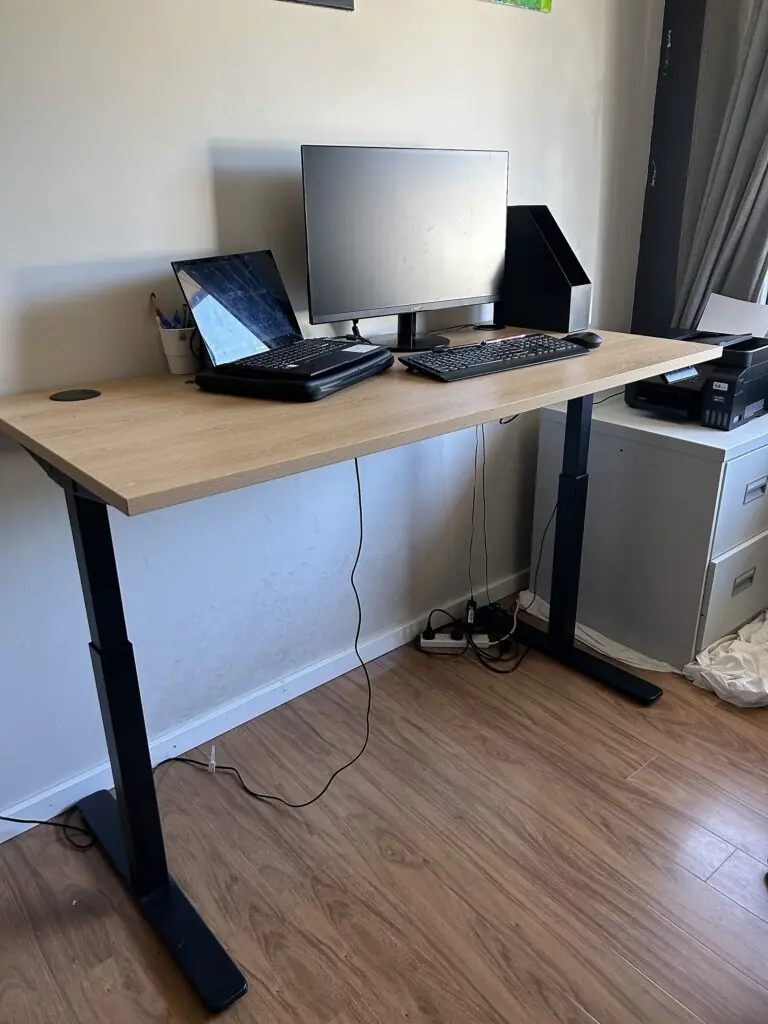
In December 2024, Matthew Ahmadi, Emmanuel Stamatakis, and colleagues at the University of Sydney published a study in the International Journal of Epidemiology that went straight at the standing-desk promise. They used data from 83,013 UK adults who were free of heart disease at baseline, measured with research-grade wrist-worn wearables, and followed them for seven to eight years.
The key findings:
- Standing more did not reduce the risk of cardiovascular disease, stroke, or heart failure over the long term.
- Standing for more than two hours a day was associated with an 11 percent higher risk of circulatory disease for every additional 30 minutes of standing beyond that threshold.
- Sitting for more than ten hours a day was associated with a 13 percent increase in heart problems and a 26 percent rise in circulatory disorders over seven years.
The researchers also flagged orthostatic circulatory issues tied to prolonged standing: varicose veins, chronic venous insufficiency, orthostatic hypotension, and venous ulcers. Standing still for hours is a known occupational hazard in jobs like retail and nursing. The desk version of the same behavior has the same physiology.
One honest caveat: the study measured total stationary time, sitting or standing, not standing-desk use specifically. A standing desk is a small fraction of most people’s total standing. But the direction of the finding is hard to ignore. Simply swapping sitting still for standing still does not appear to buy cardiovascular protection.
Why Standing Still Is Not Moving

The study’s useful concept is “stationary time.” Whether you sit or stand, being stationary means your large leg muscles are not contracting, blood pools in the lower legs, and circulation slows. The muscle pump that drives venous blood back to the heart needs movement, not posture.
That is why prolonged standing has its own risk profile. Gravity does the pooling whether your knees are bent at 90 degrees or straight. The varicose veins, the venous insufficiency, the deep vein thrombosis risk flagged in the research, these come from blood sitting in the legs, and they do not care about your desk’s height setting.
The researchers’ recommendation was direct. “For people who sit for long periods on a regular basis, including plenty of incidental movement throughout the day and structured exercise may be a better way to reduce the risk of cardiovascular disease,” said Stamatakis, who directs the Mackenzie Wearables Research Hub at the University of Sydney.
What Actually Moves the Needle
Here is the number that matters more than any desk spec. In related research published by the same team, about six minutes of vigorous exercise per day, or 30 minutes of moderate-to-vigorous exercise per day, lowered heart disease risk even in people who were sedentary for more than eleven hours a day. The exercise did not erase the sedentary time. It offset it.
The practical translation is boring and effective:
- Walk for a few minutes every 30 minutes. A quick lap, stairs, a walking meeting.
- Use lunch for movement, not just food.
- Add short structured exercise: six vigorous minutes is a real dose.
- If you work from a desk all day, these exercises for people who sit all day are the actual intervention the standing desk was supposed to be.
The pattern is consistent with everything else in longevity research. Strength training for longevity works because muscle contractions change your metabolism. Cardio works because sustained movement changes your circulation. A posture change does neither.
The Five-Minute Walk That Beats the Standing Desk
If the standing desk is the wrong tool, what is the right one? Keith Diaz, an associate professor of behavioral medicine at Columbia University, ran the experiment. In research published in 2023 in Medicine and Science in Sports and Exercise, 11 middle-aged and older adults each completed five separate eight-hour sitting sessions in a lab, testing different patterns of walking breaks.
The winning pattern: five minutes of light walking every 30 minutes. It was the only routine that significantly reduced both blood sugar and blood pressure. Post-meal blood sugar spikes dropped by 58 percent compared with uninterrupted sitting, a reduction Diaz said is comparable in magnitude to what you would expect from daily exercise over six months, or from starting a medication regimen. All walking patterns lowered systolic blood pressure by 4 to 5 mm Hg.
A 2026 follow-up published in the British Journal of Sports Medicine scaled the idea to more than 11,500 real-world participants over two weeks. Those in the 30- or 60-minute break groups reported less fatigue, better mood, and improved productivity and work engagement. The mechanism is the muscle pump the standing desk cannot provide: contracting leg muscles pull glucose from the bloodstream directly, independent of insulin, and drive venous blood back to the heart.
Five minutes, every half hour, at a normal walking pace. That is the dose the evidence supports, and no piece of furniture delivers it.
The Verdict: Keep the Desk, Change the Habit
The standing desk is not useless. It is a rotation tool. Alternating between sitting and standing, shifting position, fidgeting, stepping away, that variety is probably better than either posture held for eight hours straight. What the evidence kills is the idea that the desk itself is a health intervention. It is furniture.
So keep the desk if you like it. Set it to a comfortable height for part of the day. Then walk. The upgrade you are looking for is not standing instead of sitting. It is moving instead of being still. Pair the habit with cardiologist-approved rules for heart health and you have done more for your cardiovascular system than any piece of office furniture ever will.
