
There are places on earth where living to 100 is not a miracle, it is Tuesday. They are called the Blue Zones, five regions where researchers found the highest concentrations of centenarians on the planet. The Blue Zones diet and lifestyle is not a fad or a 30-day challenge. It is the everyday pattern of how these people eat, move, rest, and gather, and Dan Buettner, the National Geographic explorer who identified the zones, has spent two decades documenting exactly what they do differently.
In this post I break down the Blue Zones diet and lifestyle into the habits that actually matter, guided by a long interview with Buettner on the ZOE channel where he names the foods worth avoiding, and backed by the official Blue Zones food guidelines and peer-reviewed research.
Contents: Watch the video | Video summary: what centenarians actually eat | What are the Blue Zones? | The Blue Zones diet: the food rules | The lifestyle habits that matter as much as food | My take | FAQ | A quick health note
Watch the Video: Dan Buettner on the Foods to Avoid

In this ZOE interview, Dan Buettner sits down for a wide-ranging conversation about the eating patterns he observed across the Blue Zones, and flips the usual question around: instead of asking what to eat, he talks through the foods the longest-lived people simply do not eat much of. It is one of the clearest explanations I have found of why the Blue Zones diet and lifestyle works, because it is grounded in what real centenarians actually put on their plates.
Video Summary: What Centenarians Actually Eat
Here is the core of what Buettner explains in the interview, in my own words.
The foundation of every Blue Zones diet is beans. In Okinawa it is soy, in Sardinia fava beans and chickpeas, in Ikaria lentils, in Nicoya black beans, in Loma Linda a mix of all of them. Centenarians eat beans, often daily, and the fiber in those beans is doing quiet work behind the scenes: it feeds the gut, steadies blood sugar, and keeps people full on very few calories.
The eating pattern is overwhelmingly plant-based, but it is not a strict vegan prescription. Meat shows up as a condiment or a celebration food, not the center of the plate. Processed foods, sugary drinks, and packaged snacks are largely absent, not because anyone is white-knuckling a diet, but because these foods were never part of the traditional food environment in the first place.
Buettner also spends real time on how and when Blue Zones residents eat. There is a natural eating window: people eat most of their food earlier in the day, take a small early-evening meal, and then simply do not snack all night. Breakfast matters and is treated as a real meal. And the meals themselves are social events, eaten slowly with family, which naturally paces how much gets eaten.
Perhaps the most underrated point in the video is that longevity in the Blue Zones is not just a food story. Buettner keeps coming back to the environment and the social fabric: gardens people tend daily, hills people walk without thinking about it, friends people see every day, a sense of purpose that gets them out of bed. The food gets the headlines, but the lifestyle is the engine.
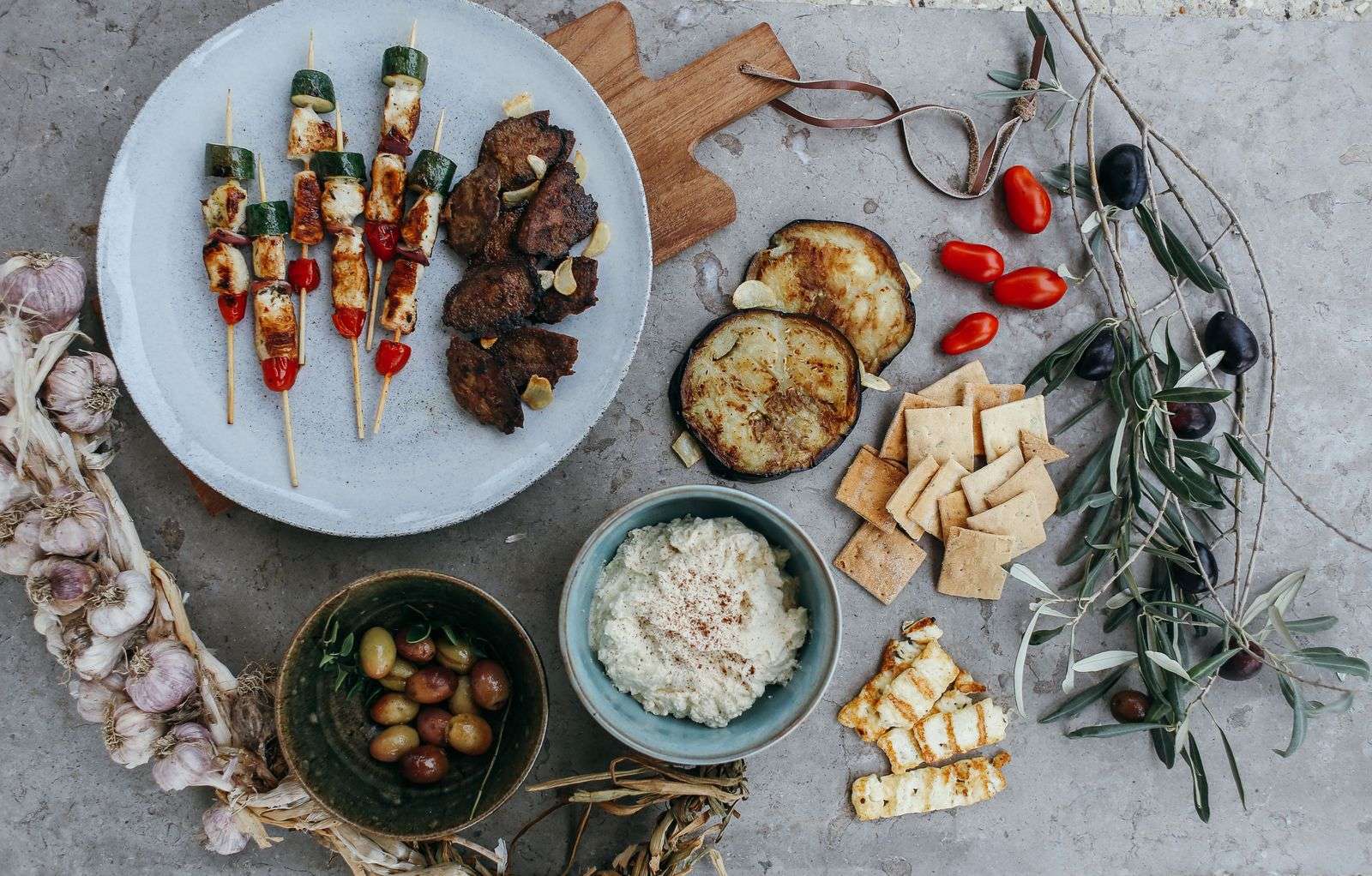
What Are the Blue Zones?
The term comes from Dan Buettner’s work with National Geographic, when researchers circled five regions on a map in blue ink where people were living measurably longer, healthier lives: Okinawa in Japan, Sardinia in Italy, Ikaria in Greece, Nicoya in Costa Rica, and Loma Linda in California.
What makes the Blue Zones credible is that the longevity is verified. Researchers studied birth records and confirmed that these regions produce far more centenarians than average, and more importantly, that those extra years are mostly healthy years. A 2022 peer-reviewed review in the American Journal of Lifestyle Medicine (https://pubmed.ncbi.nlm.nih.gov/39507913/) revisited the principles common across the Blue Zones, compared them against the six pillars of lifestyle medicine, and reviewed newer studies on how behavioral factors relate to longevity. This is not a streaming-documentary invention or a supplement company’s marketing story. It is demography first, diet advice second.
The Blue Zones Diet: The Food Rules
The official Blue Zones food guidelines (https://www.bluezones.com/recipes/food-guidelines/) distill the eating pattern into clear rules. Here they are, translated into plain language.
Eat mostly plants, nearly all the time
Across all five zones, 95 to 100 percent of what people eat comes from plants. Vegetables, fruits, whole grains, and legumes make up the bulk of every plate. Meat is eaten rarely, in small portions, more like a flavoring than a main course. This plant slant is one reason plant-based diets lower cholesterol, since the pattern is naturally low in saturated fat and rich in fiber.
Make beans the centerpiece
If there is one non-negotiable in the Blue Zones diet, it is a daily dose of beans. A cup of beans a day is the rough target in the guidelines, and it is the single food most consistently tied to longevity across the zones. Beans deliver protein, minerals, and a heavy dose of fiber, and fiber-rich beans feed beneficial gut bacteria, which is one more way this simple staple supports the whole system.
Cook with olive oil, snack on nuts
Olive oil is the primary added fat, used generously in Sardinia and Ikaria. Nuts show up daily too, about two handfuls, and the Adventists in Loma Linda who ate nuts regularly were among the longest-lived people Buettner studied. Whole grains round out the trio: sourdough and 100 percent whole wheat breads rather than white flour products.
Keep added sugar under 28 grams a day
This is one of the most concrete numbers in the guidelines: no more than about 28 grams (seven teaspoons) of added sugar per day. Centenarians sweeten with fruit and honey on occasion, not with soda and candy as a daily habit. Given how much hidden sugar sits in processed food, this rule alone eliminates most of the modern packaged diet.
Drink water, coffee, tea, and a little wine
Water is the default drink. Coffee and tea are part of the daily routine in several zones, and both show up in research on healthy aging. Wine appears too, but with a specific cultural frame: a small glass or two with food and friends in the evening, never binge drinking, never alone. The pattern is moderation inside community, not abstinence and not excess.
The Lifestyle Habits That Matter as Much as Food
Buettner calls the full set the Power 9. The food rules are only part of it. Here is the rest.
Move naturally all day
Blue Zones centenarians do not do CrossFit. They garden, walk to visit friends, cook from scratch, and live in houses with stairs and hills outside. Their movement is woven into the day in dozens of small doses. This constant low-intensity activity is the original longevity exercise program, and it is the opposite of sitting for ten hours and then punishing yourself at the gym.
Know your purpose
The Okinawans call it ikigai, the Nicoyans call it plan de vida. It translates roughly to “why I wake up in the morning.” Having a clear sense of purpose is associated in research with years of extra life expectancy, and in the Blue Zones it is not a self-help concept. It is grandkids, a garden, a craft, a role in the community.
Downshift every day
Stress is part of life everywhere, including the Blue Zones. The difference is the built-in release valve: prayer, naps, happy hour with friends, ancestor veneration. Everyone has a daily ritual that sheds stress. Chronic stress drives inflammation, and inflammation drives aging, so the daily downshift is doing real biological work.
Eat mindfully: the 80 percent rule and the eating window
Okinawans practice hara hachi bu, stopping when they are 80 percent full. Combined with eating earlier in the day, a modest evening meal, and no late-night snacking, most Blue Zones residents naturally eat within an 8–10 hour window. Nobody is tracking macros. The environment and the habits do the portion control for them. A Harvard review of the Mediterranean diet, the closest studied cousin of this pattern (https://nutritionsource.hsph.harvard.edu/healthy-weight/diet-reviews/mediterranean-diet/), notes that in a meta-analysis of 16 prospective studies, women who followed it most closely had 24 percent lower cardiovascular risk and 23 percent lower risk of premature death.
Put loved ones first, and choose the right tribe
In every Blue Zone, family comes first: aging parents live nearby or at home, partners and grandchildren are central, and people belong to faith-based or social communities that show up for them. Just as important is the social circle itself. Buettner found that longevity clustered in friend groups, because health behaviors are contagious. The people around you shape what you eat, how you move, and whether you smoke far more than willpower does.
Is the Blue Zones Story True? What 2026 Research Says
The short answer: The Blue Zones story holds up where it matters. Whether every centenarian record is perfect is disputed, but the nine habits researchers documented, plant-based eating, daily natural movement, purpose, stress relief, strong family and social ties, are each backed by independent science. Twin research puts about 20 percent of lifespan in genes and 80 percent in lifestyle.
You should know about the fight happening around this research, because it is loud and it matters. University College London researcher Saul Justin Newman analyzed United Nations mortality data across 236 jurisdictions and argued that clerical errors, pension fraud, and missing records explain much of the apparent extreme longevity, and that supercentenarian clusters tend to correlate with poverty and weak record-keeping. Blue Zones researchers pushed back hard, calling the critique academically irresponsible and arguing it analyzed broad regions of Japan and Sardinia rather than the much smaller actual zones. A peer-reviewed response in The Gerontologist defended the demographic validation of the original sites. As of 2026, the dispute is unresolved, not settled.
Here is why I do not find that dispute disqualifying. The habits themselves never needed a brand. The 1996 Danish twin study found only about 20 percent of lifespan is dictated by genes, with roughly 80 percent shaped by lifestyle and environment. Seventh-day Adventists around Loma Linda, California live about 10 years longer than their North American counterparts. Okinawans call purpose “ikigai” and Nicoyans call it “plan de vida”, and the Blue Zones research credits a sense of purpose with up to seven extra years of life expectancy. None of that depends on any single birth certificate being right.
The honest takeaway: treat the zones as case studies, not commandments. The diet rules hold up against everything we know about fiber, legumes, and ultra-processed food, which is why they sit comfortably next to our best foods for gut health guide. The 80-percent-full rule rhymes with what our intermittent fasting 16:8 guide teaches about eating windows. And the proof that ordinary people can change their trajectory is personal: read how I lost 30 pounds in a month and see what happens when someone actually applies the unglamorous fundamentals.
Your Power 9 Score
Buettner distilled the longevity research into nine common denominators called the Power 9. Tick the box for each one you already do most days, and get your score instantly.
For reflection only. Your score says nothing about your health status or lifespan; longevity is why a score is a prompt to act, not a diagnosis.
My Take: What a Fasting Photographer Learned From Centenarians
I want to be straight with you: I have never been to a Blue Zone. I learned about them the same way you probably did, by reading and watching. But when I listened to Buettner describe how centenarians eat, I kept hearing echoes of my own life, and a few places where my life is the photographic negative of theirs.
The eating window stopped me first. I practice intermittent fasting every day, usually on a two to four hour eating window. I wake up around 10 in the morning, drink only water, tea, or coffee until about 6 in the evening, and then eat between roughly 6 and 8. When I am out at events, that window can stretch later, but the structure is the same: a long daily fast, then food. After a couple of months of this, my weight stabilized from 185 down to 165, my face and belly got noticeably less puffy, my skin looked healthier, and friends started telling me I looked 25 when I was 37.
So when Buettner describes Blue Zones residents eating within a natural 8 to 10 hour window, finishing with a small early-evening meal, and never snacking through the night, I recognized the shape of it immediately. My version is stricter than theirs, and I am not recommending mine to anyone. Fasting is definitely not for everyone, and I say that for a reason. But the underlying principle is identical: the body does better when it gets a real break from digesting, and both the centenarians and I stumbled into that same rhythm, they by tradition and me by experiment.
The social part hit me differently, because here my life runs in the opposite direction. Blue Zones centenarians eat their biggest meals earlier and share small evening meals with family. I eat primarily socially, but my social life happens at events that run late into the night. When I am not eating socially, I keep it simple: a smoothie, or something healthy, sometimes vegan and low sodium. That is the honest truth of a working photographer's schedule, and it is the one Blue Zones habit I have not cracked. Their lesson is not really about the clock, though. It is that meals are communal and unhurried, and that is something I can borrow even at 9 pm: sit down, slow down, eat with people you like.
One more parallel I did not expect: before my longer fasts, I spend a day eating only fruit to clear processed food out of my system, because going into a fast clean makes the whole thing easier. The centenarians never need a cleanse day, because processed food was never in their system to begin with. Their baseline is my reset. That tells you everything about the distance between their food environment and ours, and it is the strongest argument in the video for the simplest change: eat food that looks like food.

Want more breakdowns like this in your inbox? I send out each new video post by email, with the key takeaways and the research behind them. Sign up below and you will get the next one first.
FAQ
What foods do Blue Zone communities eat most often?
Beans, whole grains, garden vegetables, fruits, nuts, and olive oil. The official Blue Zones food guidelines put the pattern at 95 to 100 percent plant-based, with a daily dose of beans as the single most consistent habit across all five zones. Meat, dairy, eggs, and sugar appear in small amounts, not as daily staples.
What do people in Blue Zones drink daily?
Mostly water, plus coffee and tea, which are daily rituals in several zones. Wine is part of the pattern in Sardinia and Ikaria, but framed very specifically: a glass or two with a meal and with friends, as a social ritual. Sugary drinks and heavy alcohol are essentially absent from the traditional pattern.
What do Blue Zones eat for breakfast?
There is no single prescribed Blue Zones breakfast. The pattern is a real morning meal built from whole foods: in the video, Buettner discusses breakfast as a genuine meal rather than a skipped one or a pastry on the run. Think whole grains, fruit, and vegetables rather than anything from a box. The principle matters more than the menu: eat a real breakfast, made from real food, earlier in the day.
A Quick Health Note
This post is educational, not medical advice. The Blue Zones research describes population patterns, not prescriptions, and what worked for Sardinian shepherds may not fit your body, your medications, or your life. Talk to your doctor before making big changes to how you eat, especially if you manage blood sugar, blood pressure, or take daily medication.
What is the one Blue Zones habit you could actually see yourself adopting: the daily beans, the eating window, the garden, or the long unhurried meals with people you love? Tell me in the comments.
Frequently Asked Questions
Are Blue Zones real or debunked?
Contested, not debunked. Demographers Gianni Pes and Michel Poulain first identified the Sardinian zone in a 2004 paper, and Dan Buettner popularized five zones through National Geographic and a bestselling book. Critic Saul Justin Newman argues record errors explain the longevity; researchers counter that the zones were validated at a much smaller geographic scale than his analysis used. The dispute is unresolved, but the underlying habits are independently supported.
What are the five original Blue Zones?
Okinawa in Japan, Sardinia in Italy, the Nicoya Peninsula in Costa Rica, Ikaria in Greece, and Loma Linda in California. Each was identified for an unusually high concentration of people living to 100 and beyond.
What do people in Blue Zones actually eat?
A diet about 95 percent plant-based: beans or legumes daily, leafy greens, vegetables, whole grains, nuts, fruit, and olive oil. Meat appears roughly five times a month in small portions, with minimal processed food. Okinawans also practice hara hachi bu, stopping at 80 percent full, and zone residents typically eat their smallest meal in the late afternoon or early evening.
Can I follow the Blue Zones diet without living in a Blue Zone?
Yes. The Power 9 habits are defaults you can build anywhere: walk more, eat mostly plants, stop at 80 percent full, keep a stress-relief ritual, and invest in family and friends. Researchers found purpose alone is associated with up to seven extra years of life expectancy, and that requires no relocation.
Do Blue Zones residents really drink wine?
In several zones, yes, moderately and regularly: typically one to two glasses daily, with food and in company. The researchers are explicit that non-drinkers should not start for longevity. The social context matters more than the wine.
