
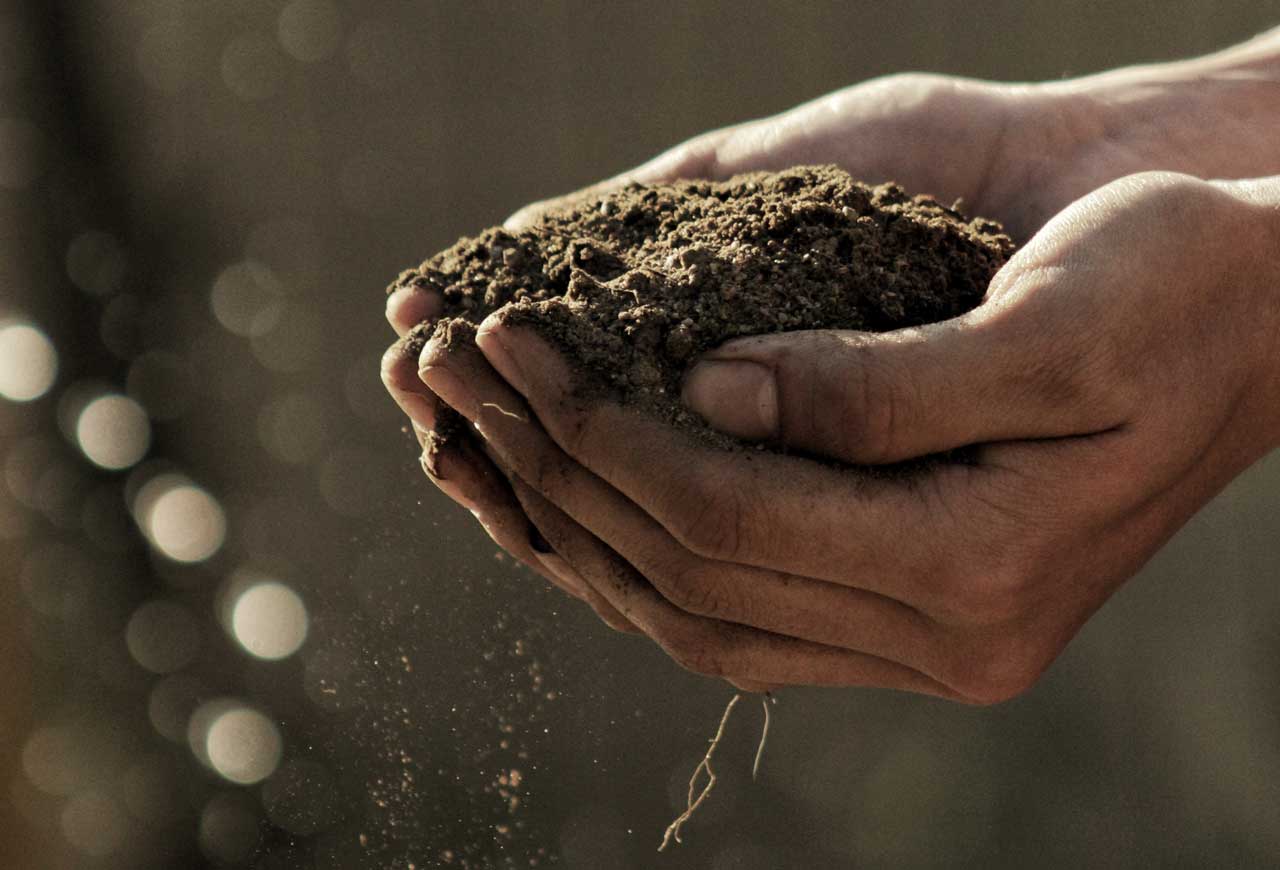
The most overlooked health intervention in your life is not a supplement, a wearable, or a morning routine. It is dirt. Specifically, the living soil that grows your food, and whether that soil is thriving or depleted. Everything you eat was built from soil, and the quality of that soil quietly determines how much nutrition actually reaches your plate.
Here is the part most wellness conversations skip. Industrial farming has spent decades optimizing for yield: more bushels per acre, more uniformity, more shelf life. What it did not optimize for is nutrient density. A tomato can look identical on the shelf while carrying a fraction of the minerals it held a generation ago, because the soil it grew in has been stripped of organic matter and microbial life. You cannot supplement your way out of food that was never nutritious to begin with.
Regenerative agriculture is the counter-movement, and it is having a moment. These are farming practices built around soil health: four core approaches, cover cropping, no-till planting, crop rotation, and managed grazing. Instead of extracting from the land until it is exhausted, regenerative farms rebuild it, season after season. Healthier soil grows more nutrient-dense food. That is the entire thesis, and it is why regenerative farming health matters to anyone who eats.
Why Soil Health Shows Up in Your Body
Plants do not manufacture minerals. They extract them from soil through their roots, with the help of an underground network of microbes and fungi that break down organic matter into forms plants can absorb. This is the soil food web, and it is the original nutrient delivery system.
When soil is alive, with high organic matter and diverse microbial life, plants pull up a full spectrum of minerals: magnesium, zinc, iron, calcium, and dozens of trace elements your body needs to function. When soil is dead, tilled to dust, dosed with synthetic fertilizer, and left bare between seasons, plants still grow. They just grow emptier. The calories are there. The micronutrients are not.
This is the mechanism in plain terms. Synthetic fertilizers feed plants directly with nitrogen, phosphorus, and potassium, which is why yields stay high. But they bypass the microbial partnerships that deliver the broader mineral profile. Over time, soil organic matter declines, microbial diversity collapses, and the food grown in that soil carries less of what your cells actually need. You eat the same salad. Your body gets less from it.
Regenerative practices reverse this. Cover crops keep living roots in the ground year-round, feeding microbes through every season. No-till planting leaves the fungal networks intact instead of shredding them with every pass of the plow. Crop rotation breaks pest and disease cycles naturally while different plant families feed different soil organisms. Managed grazing mimics the herds that built the world’s great grasslands, with animals moving frequently so their manure fertilizes and their hooves press seeds into the ground without overgrazing any one spot. Each practice rebuilds organic matter and microbial diversity. Each one makes the soil a better nutrient factory.
The takeaway for your health is simple. Nutrient density starts in the soil, years before food reaches your kitchen. Choosing food grown regeneratively is choosing food from soil that was managed as a living system rather than a growing medium.
The Financing Gap Starving the Good Farms
If regenerative farming produces better food, why is it still a small fraction of agriculture? The answer is money, or more precisely, the absence of it.
Small, diversified regenerative farms are exactly the operations growing the most nutritious food. They are also the operations banks understand least. A conventional lender knows how to underwrite a thousand acres of corn with a predictable buyer and a federal crop insurance policy behind it. It does not know how to underwrite forty acres of mixed vegetables, pastured poultry, and a farm stand, where revenue comes from a dozen different streams across the season. The paperwork does not fit the template, so the loan does not happen.
This is the financing gap, and it starves the best farms of capital. Without loans, regenerative farmers cannot buy land, build infrastructure, or expand production. They stay small not because demand is lacking but because the financial system was built for a different kind of farm. The farms growing the most nutritious food are the ones least able to finance growth.
It is a strange market failure. Consumers increasingly want regeneratively grown food. Farmers want to grow it. The scale of the unmet need is visible in a single number: in its first full year of operation, the farm lending platform Steward received applications from more than 2,000 farms. The only missing piece is the bridge capital between willing lenders and working farms.
What Steward Does About It
Steward, at gosteward.com, was built to close that gap. Founded by Dan Miller, formerly of the real estate investment platform Fundrise, Steward is an online lending platform that connects everyday investors directly with regenerative farms that banks turn down.
Here is how it works. Farms apply for loans to fund land purchases, herds, equipment, and infrastructure. Loan terms run from 9 months to 6 years depending on the project. Investors browse the loan offerings and fund them starting at $100. The farms repay with interest, typically in the 5 to 10 percent range, and investors earn a return without ever touching soil. The company is B Corp certified, which means its social and environmental commitments are independently verified rather than just claimed.
The numbers tell the story of demand. In its proof of concept phase, reported by Civil Eats in 2019, Steward moved $2.2 million into 16 farms. In its first full year of operation, more than 2,000 farms applied for financing. That is not a niche curiosity. That is a sector-wide signal that thousands of working farms are hungry for exactly this kind of capital.
A concrete example: Fisheye Farms in Detroit used Steward financing to expand to roughly ten times its original land, growing urban produce for its local community. A city farm feeding its neighbors, scaled up because individual lenders believed in it. Multiply that pattern across hundreds of farms and you start to see what direct farm lending can build.
The Bigger Picture: Policy Is Catching Up
Steward is not operating in a vacuum. In December 2025, the USDA announced a $700 million regenerative agriculture pilot, split between $300 million through the Conservation Stewardship Program and $400 million through the Environmental Quality Incentives Program. A full 25 percent of program funds are reserved specifically for regenerative contracts. That is federal money, at serious scale, flowing toward the same soil-first practices.
Public attention has shifted too. The MAHA movement has pushed soil health into mainstream conversation as a public issue, connecting the dots between depleted farmland and public health in ways that reach far beyond farming circles. When soil health becomes dinner-table conversation, the market for regeneratively grown food grows with it.
None of this replaces private financing. Government programs move slowly and favor established operations. The farms that need capital fastest, the small diversified ones, are often the last to benefit from federal programs. That is precisely where platforms like Steward matter most: fast, direct, and sized for the farms the system overlooks.
How to Participate, and the Honest Risks
If the soil-to-body connection resonates, Steward offers the most direct way to act on it. The minimum is $100, which puts farm lending within reach of nearly any budget. You browse active farm loans, choose the operations you want to back, and earn 5 to 10 percent interest as the farm repays.
This is not financial advice, and the risks are real. Read them before putting in a dollar.
Farm loans can default. Agriculture is weather-dependent, market-dependent, and operationally demanding. If a farm fails, you can lose some or all of your principal. These investments are not FDIC insured, not bank guaranteed, and not liquid the way a stock or savings account is. Your money is locked up for the loan term, anywhere from 9 months to 6 years, and there is no secondary market to sell out early if you change your mind.
Do your own due diligence. Read each loan offering carefully: the farm’s plan, the use of funds, the repayment schedule, the risk disclosures. Start small while you learn how the platform works. Never invest money you cannot afford to lose, and treat farm lending as one small piece of a diversified picture, not a replacement for conventional savings.
With those caveats understood, the appeal is straightforward. Your capital goes directly to farms rebuilding soil, and you earn a return for it. It is one of the rare cases where an investment’s financial return and its health return point in the same direction.
What You Can Do This Week
You do not need to lend money to benefit from the regenerative movement. Here is a practical ladder, from easiest to most committed.
Buy from regenerative sources. Farmers markets, CSAs, and farm-direct delivery let you ask the grower how they manage their soil. “Do you use cover crops? Do you till?” are fair questions, and good farmers love answering them. Every dollar you spend is a vote for the farming system you want.
Eat the rainbow from real soil. Prioritize whole foods over processed ones, and when you can, choose produce from farms that publish their practices. If you are already tracking protein for muscle building, apply the same label-reading discipline to your produce sourcing.
Learn your watershed’s farms. Most metro areas have regenerative operations within driving distance. Visit one. Seeing healthy soil next to depleted soil, side by side, is more convincing than any article.
Consider a Steward loan. If you have $100 you can put to work, browse the current offerings at gosteward.com. Pick a farm whose mission you understand. Start with one loan and watch how it performs before committing more.
Tend your own patch. Even a balcony garden managed with compost and no synthetic inputs teaches the soil lesson firsthand. There is also a quieter benefit: the emotional well-being that comes from working with living soil and knowing exactly where some of your food comes from.

The Soil Is the Supplement
Biohacking culture loves to optimize the downstream: the perfect protein timing, the ideal sleep stack, the precise micronutrient panel. All of that matters. But it all sits on top of a foundation nobody in the wellness world talks about enough, which is the soil that grew the food in the first place.
Regenerative farming health is the recognition that human nutrition begins years before harvest, in the organic matter and microbial life of farmland. The farms rebuilding that foundation are doing the most fundamental health work imaginable, and they have been doing it largely without the capital they deserve.
That is finally changing. Federal pilots, public attention, and direct lending platforms are converging on the same insight: fund the soil, and the health follows. Whether you participate with a $100 loan or simply by choosing regeneratively grown food, you are investing at the source. Everything downstream gets better from there.
