
Yes. A study published October 14, 2026 in the journal Science found that large dogs show a faster-moving DNA methylation aging signature in their blood than small dogs, the first direct evidence that big dogs do not just die younger but actually age faster at the cellular level. Researchers analyzed 1,640 blood methylation profiles from 894 pet dogs and built an epigenetic clock that estimated each dog’s age with a median error of less than one year.
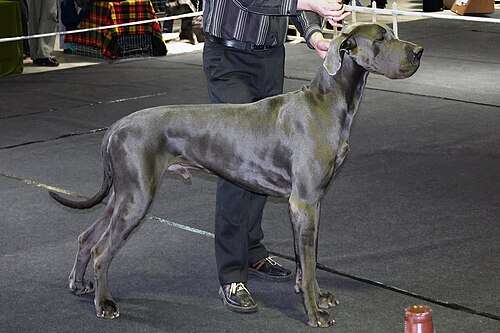
For decades, dog owners have lived with a painful paradox. Within a single species, the biggest dogs die the youngest. Great Danes typically die years younger than Chihuahuas. Everyone knew it. Nobody knew whether a Great Dane’s cells were actually aging faster, or whether big dogs simply ran into fatal diseases earlier while following the same molecular trajectory as small dogs. The new research, led by Noah Snyder-Mackler of Arizona State University’s School of Life Sciences and Center for Evolution and Medicine, answers that question with data. The cells of large dogs are aging faster, and the difference is measurable in their DNA.
What did the 894-dog study actually find?
The research team measured DNA methylation, chemical tags attached to DNA that control which genes are switched on and off, in blood samples from 894 pet dogs of various breeds. Methylation patterns shift predictably with age, which makes them useful for building statistical tools called epigenetic clocks that estimate biological age from a blood sample.
Using the age-related patterns in 1,640 methylation profiles, the researchers trained a clock that could estimate a dog’s chronological age with a median error of less than one year. That accuracy gave them a reliable baseline for comparing calendar age against molecular age across breeds and sizes.
Three findings stood out. First, larger dogs showed signs of accelerated molecular aging compared with smaller dogs. Second, male dogs also showed faster molecular aging than females, matching the well-known pattern that male dogs tend to have shorter lifespans. Third, dogs whose biological age appeared older than expected from their methylation profiles faced a higher risk of early death, which means the clock was not just counting birthdays. It was capturing something real about each animal’s aging trajectory.
As Snyder-Mackler put it: “We all know that big dogs usually don’t live as long as small dogs, but we have not known whether their cells actually age faster, or whether they simply hit certain diseases earlier.” Now the field has its answer, at least for the blood methylome: parts of the aging program genuinely move faster in large dogs throughout adulthood.
What is an epigenetic clock, and how accurate is this one?
An epigenetic clock is a statistical model trained on DNA methylation data. Methylation does not change the DNA sequence itself. Instead, it changes how cells use their genetic instructions, and its patterns shift as an organism ages. By studying which methylation sites change most reliably with age, researchers can build a clock that reads a blood sample and estimates how old the animal is biologically.
The dog clock in this study was trained on first blood samples from 809 dogs with known birthdays, drawn from a larger group of 864 dogs enrolled in the Dog Aging Project. It estimated chronological age to within roughly a year, a level of precision that made it possible to detect meaningful differences between a dog’s calendar age and its molecular age.
Some dogs were sampled annually for up to four years, which let the team track how methylation changed within the same animal over time rather than relying only on comparisons between different dogs. That repeated sampling is one reason the findings carry weight. The researchers were watching aging happen, not just inferring it from a single snapshot.
How much faster do large dogs age?
The study did not produce a single number like “a Great Dane ages twice as fast as a Chihuahua,” but it did quantify the stakes. In a follow-up analysis covering up to two years after each measurement, 121 of the 894 dogs died. After accounting for adult size and sex, each additional year of epigenetic age relative to the model’s expectation was associated with a 15 percent higher mortality hazard, a hazard ratio of 1.15 with a 95 percent confidence interval of 1.01 to 1.31.
That is a population-level association, not a forecast of any individual dog’s remaining life. But it confirms the clock is measuring something tied to survival, not just the passage of time.
One of the most striking temporal patterns was when the molecular aging happens fastest. The data showed that epigenetic change accumulates most rapidly early in a dog’s life. The methylation shifts during puppyhood and adolescence are far more pronounced per unit of chronological time than those that accrue in later years. Younger dogs generally accumulated epigenetic age faster than older dogs, which complicates any simple constant-rate picture of aging. The pace of biological change appears to decelerate over the lifespan, a principle seen across mammals, and in dogs, whose lifespans are already compressed relative to humans, that early-life burst of epigenetic change is especially dramatic. It may be one of the windows during which the differences between large and small breeds are set in motion.
What are jumping genes, and why do they matter for aging?
The most mechanistically interesting finding concerns where in the genome the accelerated aging shows up. The researchers found that the faster methylation aging in large dogs was especially strong in parts of the genome that normally help keep “jumping genes” quiet.
Jumping genes, also called transposable elements, are DNA sequences that can copy themselves and insert into new spots in the genome. LINE1s are one well-studied type of jumping gene. In a healthy cell, they are kept silent by DNA methylation. But their activation has been linked to genome instability, cancer, and other age-related disease.
In large dogs, Snyder-Mackler said, methylation at those regions appears to erode more quickly with age, as if the genome is losing some of the tape or clamps that keep these mobile elements suppressed. In other words, part of what makes large dogs age faster may be a faster breakdown of the silencing machinery that keeps disruptive genetic elements in check. That is a concrete, testable mechanism, and it points toward the kind of process that future research might learn to measure, follow over time, and potentially modify before disease appears.
Why is this finding surprising?
Across mammals, bigger species usually live longer than smaller ones. Elephants outlive mice by decades. That is the standard pattern. But within a single species, the pattern can reverse, and dogs are the most dramatic example. Few animals show the link between size and lifespan as clearly as dogs, where the largest breeds die years younger than the smallest.
Earlier comparisons across species had linked certain biological mechanisms to exceptional longevity, but those mechanisms were poorly suited to explaining differences among individuals within one species. The new study closes that gap. It shows that the within-species size paradox in dogs is not just a demographic curiosity about disease timing. It is a measurable difference in the speed of molecular aging itself, visible in the blood methylome.

That reframing matters because it changes where researchers look next. If large dogs simply died earlier after following the same molecular trajectory as small dogs, scientists would hunt for late-life triggers of disease or mortality. But since parts of the aging program move faster throughout adulthood in large dogs, the search shifts earlier, toward processes that can be measured and potentially modified long before disease appears.
Does this apply to humans?
Directly, the study is about dogs. But the tools are the same ones used in human longevity research. Epigenetic clocks were first developed to estimate biological age in humans, and they are now a standard instrument in aging biology, used to test whether interventions like diet, exercise, and sleep changes move the needle on molecular aging. The methylation science behind the dog clock is the same methylation science behind human biological-age tests.
The conceptual payoff is similar to other recent aging research. Scientists recently turned ordinary blood cells into brain cells to study how aging works at the cellular level, part of a growing effort to watch aging as a process rather than treating it as an inevitable decline. The dog study fits that same shift: aging is becoming something researchers can measure in real time, compare across individuals, and interrogate for mechanisms.
For human longevity, the jumping-genes angle is worth watching. The erosion of methylation around transposable elements with age is a candidate driver of genome instability, and genome instability is one of the hallmarks of aging. If large dogs lose that silencing faster, understanding why could eventually inform strategies to preserve it, in dogs and possibly beyond. It joins a fast-moving set of questions aging biology is answering with hard data, from whether knee cartilage can regrow to how biological age can be measured and tracked over time.
What should dog owners take away from this?
First, biological age and calendar age are not the same thing, in dogs or in people. Two dogs born in the same year can be aging at different molecular speeds, and this study gives veterinarians and researchers a framework for measuring that difference from a blood sample.
Second, the findings are about populations, not predictions. An epigenetic clock reading is not a countdown for any individual dog. The 15 percent higher mortality hazard per extra year of epigenetic age is a statistical association across hundreds of animals, not a personal forecast.
Third, the early-life finding is a reminder that aging is not something that starts in old age. The fastest molecular changes happen during puppyhood and adolescence. Good nutrition, healthy weight, regular veterinary care, and an active life during those early years may matter more than previously understood, since that appears to be when the epigenetic trajectory gets set.
Finally, the healthspan framing applies to dogs as much as to people. The goal of longevity science is not just more years but more healthy years, the years lived in good health. A molecular understanding of why large dogs age faster is a step toward interventions that could compress the period of decline, giving big dogs not just longer lives but better ones.
The bottom line
A Science study published October 14, 2026, analyzing 1,640 blood methylation profiles from 894 pet dogs, found that large dogs show accelerated molecular aging compared with small dogs, with the difference concentrated in genome regions that silence jumping genes. Male dogs aged faster too, and dogs whose biological age ran ahead of their calendar age faced a higher risk of early death. The work transforms the old observation that big dogs die young from a demographic curiosity into a measurable biological process, one centered on DNA methylation, transposable elements, and the speed of the aging program itself. For aging research, dogs have just become a much more interesting model. For the rest of us watching our own biological clocks, the message is familiar: aging is a process you can measure, and what gets measured can eventually be managed.
