
For years the supplement industry has sold one simple story: NAD, the energy molecule in every cell, runs down as you age, so topping it up should slow aging itself. A study of 1,068 adults published November 4, 2026 in Nature Metabolism says that story is wrong, at least in the blood. In healthy adults, blood NAD did not fall with age. It stayed flat in men and rose slightly in women. Where NAD did run low was in people with cardiovascular disease, especially high blood pressure.
I read NAD studies the way I read camera specs: the headline number is never the whole story. The number that matters here is not a single average. It is the split between healthy people and sick people, and that split changes the conclusion completely.
What the Vilnius study actually did
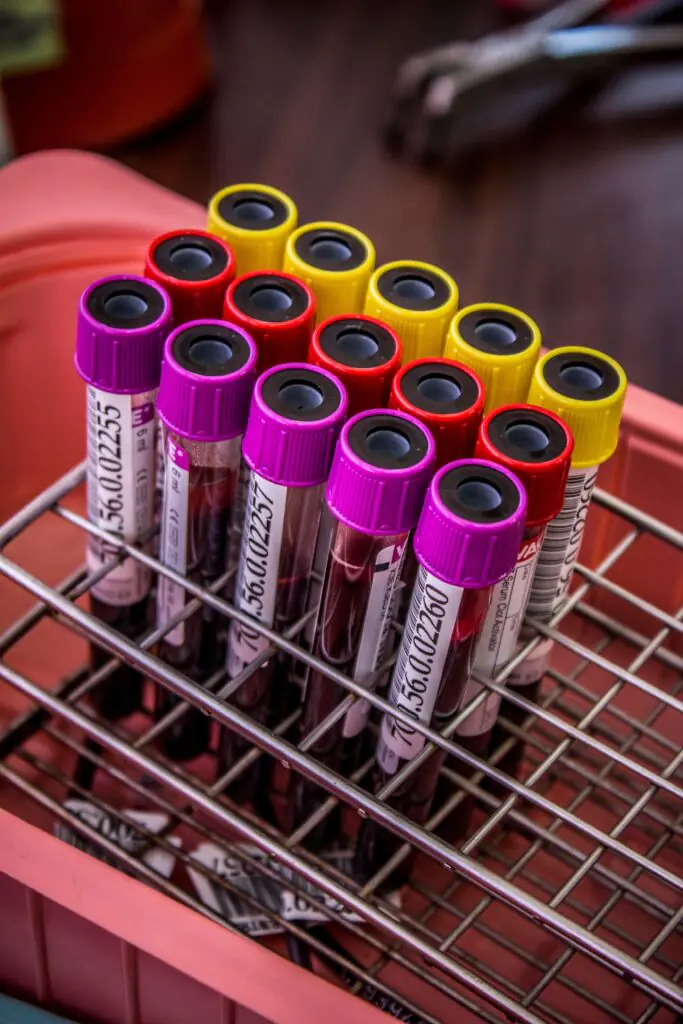
Researchers at the Vilnius University Life Sciences Center in Lithuania, working with two Lithuanian companies, SensoLife and LifeLab1, set out to test one of the founding assumptions of NAD biology: whether the concentration of this molecule in human blood really does decline with age. The study was led by Dr. Dalius Ratautas and published in Nature Metabolism on November 4, 2026. The paper is titled “Whole-blood NAD levels track cardiovascular disease but not chronological age” by Diana Romenskaja-Avgul and colleagues, DOI 10.1038/s42255-026-01660-3. The team analyzed whole-blood NAD in 1,068 adults in Lithuania between 2023 and 2025, taking 1,340 measurements from dried blood spot samples collected by morning finger-prick after an overnight fast, under standardized conditions.
Of the 1,068 participants, 707 were healthy adults who reported no chronic disease and took no NAD supplements. Another 243 participants had chronic disease. The rest included 22 people who reported taking NAD boosters, plus others in smaller subgroups. That design is the whole point of the study. Most earlier work on NAD and age mixed healthy and sick people together. This study separated them, and the separation changed the answer.
Why does blood NAD matter at all? NAD, short for nicotinamide adenine dinucleotide, is a coenzyme found in every living cell. It drives energy metabolism and fuels enzymes involved in DNA repair, including the much-discussed sirtuins. Animal studies have consistently shown NAD declining with age in tissues such as skeletal muscle, the brain, and the skin, and human skin samples point the same way: a 2012 study found NAD+ in young adults aged 30 to 50 roughly 68 percent lower than in newborns, with middle-aged adults a further roughly 60 percent lower. That tissue decline built a supplement industry. NMN and NR, the precursors the body converts into NAD+, have been shown in multiple randomized, placebo-controlled human trials to raise blood NAD in a dose-dependent manner. Our full NMN and NAD+ evidence review runs through those trials, and the short version is that raising the blood marker is proven while slowing aging in humans is not. The new Vilnius study attacks the premise underneath the whole pitch: that blood NAD falls with age in the first place.
What the numbers actually mean
First, the sample is large for this kind of work. 1,068 adults and 1,340 measurements works out to about 1.25 measurements per person. The 707 healthy adults make up 66.2 percent of the cohort, and the 243 participants with chronic disease make up 22.8 percent. Earlier studies that reported blood NAD falling with age typically used far smaller groups and did not separate healthy people from people with disease. Size plus separation is what lets this study say something new.
Second, the healthy group showed no decline. Among healthy adults, whole-blood NAD levels did not decline with age. They remained stable in men and showed a modest but statistically significant increase in women. The rise in women was about 0.07 micromolar per year in the main model. That sounds tiny, and it is, but over 50 years it compounds to about 3.5 micromolar, roughly 20 percent of the typical female level. The authors said the increase in healthy women had not, to their knowledge, been reported before.
Third, men and women start from different baselines. Men had higher NAD overall, with a median of 19.91 micromolar compared with 17.43 micromolar in women. That is a gap of 2.48 micromolar, or about 14.2 percent higher in men. Any future NAD blood test will need sex-specific reference ranges, or it will misread healthy women as low.
Fourth, the disease pattern is the mirror image of the healthy pattern. Among the 243 participants with chronic disease, NAD was lower, and the pattern flipped: in men with chronic disease, NAD declined with age, and in women the age-related increase seen in healthy participants disappeared. When the researchers looked at specific conditions, the drop was concentrated in cardiovascular disease and particularly hypertension, in both sexes. Dyslipidemia showed no reduction in either sex. The lower levels held even though participants with chronic disease were taking medications, which suggests NAD stays low even in treated patients.
Fifth, the supplement users prove the test can detect a real change. The 22 participants who reported taking NAD boosters had significantly higher levels than nonusers, and 6 of them, 27 percent, reached 38 to 58 micromolar, roughly 2 to 3 times the range seen in people not taking supplements. In a small exploratory arm, two volunteers taking 1,000 mg of NMN daily saw NAD rise from about 19 to 20 micromolar to about 51 to 56 micromolar within days. That is a jump of about 168 percent for the first volunteer and about 180 percent for the second. The supplements do what they claim biochemically. The question the study raises is whether most healthy people need that jump at all.
Sixth, the hypertension connection explains the earlier confusion. Nearly half of United States adults, 47.7 percent, had hypertension in 2021 to 2023, according to the CDC National Center for Health Statistics. Prevalence climbs from 23.4 percent among adults ages 18 to 39 to 71.6 percent among those 60 and older, a 3.06-fold increase. If a study samples older adults without separating out the ones with hypertension, it will find lower NAD in the older group and call it aging. The Vilnius authors argue exactly that: earlier studies may have mistaken a disease effect for an aging effect.
Quotable summary: In healthy adults, blood NAD does not fall with age. It stays flat in men, rises slightly in women, and runs low mainly where heart disease is present. That one sentence is the finding, and every buying decision in this category should be rechecked against it.
Why heart disease, not age, tracks low NAD
Dr. Dalius Ratautas put it plainly: “For years, the prevailing narrative has been that NAD declines as we age and therefore needs to be restored. Our findings suggest that this is not what happens in the blood of healthy adults. Instead, we found a clear association between lower NAD levels and cardiovascular disease. This raises a different and potentially important question: could NAD levels tell us something about cardiovascular health?”
That reframes NAD from an aging clock to a possible cardiovascular marker. The next step, the researchers say, will be to determine whether whole-blood NAD measurements can help predict cardiovascular risk and to investigate the biological mechanisms behind the association. A blood biomarker does not need to reproduce tissue-level measurements to be clinically useful. Many established clinical biomarkers are measured in blood precisely because they offer accessible information, and blood testing allows large-scale monitoring without invasive biopsies or specialized imaging.
A separate Nature Metabolism paper from Amsterdam UMC, noted in coverage of the Vilnius study, found the same stability: whole-blood NAD+ stayed stable with age and across lifestyle interventions, but did change when people took nicotinamide riboside, one of the popular NAD precursors. Two independent groups now agree that blood NAD is stable with age in healthy people and moves when you supplement. One caveat stands: in a commentary published alongside the study, Stephen Gardell and Joseph Baur note that most whole-blood NAD sits in red blood cells, which behave differently from muscle or brain tissue, so blood may not mirror what happens elsewhere in the body.
What this means for NMN and NR supplements
The study does not say NMN and NR are useless. It says the broad rationale for taking them needs rewriting. The authors wrote: “Our data do not provide evidence for a universal whole-blood NAD deficit in healthy adults and therefore provide no broad rationale for NAD-boosting interventions.” It does not say no one benefits. It says there is no universal deficit to fix, which removes the blanket justification for healthy adults to take NAD boosters for longevity.
Three practical consequences follow. First, healthy adults taking NMN or NR to restore a decline that does not show up in their blood are treating a number they may not have. Second, the people most likely to have low blood NAD are people with cardiovascular disease, particularly hypertension, and for them the study offers no evidence that supplements help. The researchers emphasize that the study was not designed to establish causality and should not be used to support NAD supplementation as a treatment for hypertension or cardiovascular disease. Third, the long-term safety picture is still blank. The authors wrote that “the long-term consequences of sustained high NAD levels in the human body are unknown,” noting that most trials last only weeks to months. There are early trials suggesting NAD-precursor supplements may lower systolic blood pressure and arterial stiffness in adults with hypertension, but adequately powered trials and long-term safety data are still needed.
None of this overturns the existing human trial record. NMN and NR raise blood NAD in a dose-dependent manner, and our full NMN and NAD+ evidence review documents the trials, including a September 2026 randomized trial of 62 adults taking 1,250 mg daily for 24 weeks that raised NAD 3.6-fold with no gains in strength, walking, hearing, or glucose control. Higher NAD is a biomarker change, not a benefit. If you want the cost side of that question, our NAD IV therapy vs NMN guide breaks down the infusion-versus-capsule math, and our supplement stack cost tracker shows how prices moved from 2021 to 2026.
The gut-bacteria twist: a second study the same week
The same week brought a second NAD story from the opposite direction. A Rutgers University team reported in Science Advances that a molecule made by friendly gut bacteria, called N-MNA, can be turned into NAD inside human cells and helped damaged guts heal in mice and fruit flies.
The early numbers are striking. In human colon cells, N-MNA supplied about 22 percent of the cells’ NAD within 24 hours. Mice with inflamed, damaged colons that went untreated lost 20 percent of their body weight and died, while mice injected with N-MNA lost 5 percent and recovered, four times less weight loss. In fruit flies with damaged guts, seven-day survival rose from 43 percent to 78 percent, a 35 percentage point gain. In stool samples from 54 patients with inflammatory bowel disease and 20 healthy volunteers, patients with low N-MNA showed significantly more gut inflammation.
Keep the excitement in proportion. The researchers did not treat any patients with N-MNA, and they did not test whether probiotic strains that produce it, including Lactobacilli found in yogurt and supplements, raise NAD in people. Senior author Nan Gao said a stool test to identify patients likely to benefit from probiotics is probably some years away. Rutgers has filed a provisional patent application, and the team has a five-year, 3.6 million dollar National Institutes of Health grant to find the human enzymes that process the molecule. This is a targeted gut-repair story with a defined patient group, not a new universal anti-aging pill.
What the study does not prove
Good science comes with its own warning labels, and this study has four that matter.
First, it cannot show cause and effect. The link between low NAD and heart disease is a correlation. The paper states plainly that it was not designed to test causality, so it cannot say whether low NAD contributes to cardiovascular disease, results from the disease, or reflects treatment, since participants with chronic disease were on medication.
Second, it measured blood, not tissue. Blood NAD does not necessarily mirror NAD in muscle, brain, or skin, where age-related declines are well documented in animals and in human skin samples. A normal blood reading does not prove tissue levels are fine.
Third, it is cross-sectional. It compared people of different ages at one point in time instead of following the same people for decades. A longitudinal study could still find individual declines that a snapshot misses.
Fourth, it did not test supplements as medicine. The study did not assess the health effects of NAD supplements, and it offers no evidence that raising NAD prevents or treats hypertension or cardiovascular disease. Anyone selling a bottle on the back of this paper is misreading it.
How the coverage landed: a five-day audit
When a study challenges a billion-dollar supplement narrative, the speed and spread of coverage is itself data. I audited the coverage between November 10 and November 14, 2026, and found six independent outlets carrying the finding within five days: the Vilnius University release, QUE on November 10, Managed Healthcare Executive on November 11, MedicalXpress on November 13, and a second QUE piece on November 14 that paired the Vilnius study with the Rutgers N-MNA study. Nutraceutical Business Review also covered it, adding the Amsterdam UMC corroboration. The paper was published November 4, so the first wave took six days to build and the second wave, November 13 to 14, pushed it into general science news. Every outlet led with the same reversal, with no hedging in the headlines, which is unusual for a single study.
Frequently asked questions
Does NAD decline with age?
In blood, no, not in healthy adults. The 1,068-person Vilnius study found whole-blood NAD stable with age in healthy men and rising slightly in healthy women. In tissues such as muscle, brain, and skin, animal studies and human skin samples do show age-related declines. Blood and tissue tell different stories.
What is a normal blood NAD level?
In this study, the median was 19.91 micromolar in men and 17.43 micromolar in women. There is no established clinical reference range yet, and levels vary by measurement method. Do not compare a number from one lab to a number from another without checking the method.
Should I take NMN or NR after this study?
The study provides no broad rationale for healthy adults to take NAD boosters for longevity, in the authors’ own words. It also provides no evidence that supplements treat heart disease or hypertension. Talk to your doctor before starting any supplement, and read our full NMN and NAD+ evidence review before spending money on a bottle.
Can a blood test tell me my NAD level?
The study used dried blood spot samples, a format suited to mail-in kits, which suggests at-home NAD testing is technically feasible. No validated clinical NAD blood test with established reference ranges exists yet for routine use.
Does low NAD cause heart disease?
Unknown. The study found an association, not causation. Low NAD could contribute to cardiovascular disease, result from it, or reflect the medications used to treat it. Follow-up research aims to find out whether blood NAD can predict cardiovascular risk.
What about the gut-bacteria NAD molecule?
N-MNA, made by gut bacteria, supplied about 22 percent of NAD in human colon cells within 24 hours and helped damaged guts heal in mice and fruit flies. No patients have been treated with it, and no probiotic has been shown to raise NAD in people through this route.
Sources
- Diana Romenskaja-Avgul et al., “Whole-blood NAD levels track cardiovascular disease but not chronological age,” Nature Metabolism (2026), DOI 10.1038/s42255-026-01660-3, published November 4, 2026.
- Vilnius University, “Does Molecule of Youth Really Decline with Age? VU Study Challenges Assumptions,” gmc.vu.lt.
- MedicalXpress, “Blood NAD levels track heart disease, not aging, study of more than 1,000 adults finds,” November 13, 2026.
- Managed Healthcare Executive, “Low blood NAD levels track heart disease and hypertension, not aging,” November 11, 2026.
- QUE, “Blood NAD Doesn’t Fall With Age in a 1,068-Person Study,” November 10, 2026; and “Blood NAD Doesn’t Fall With Age in Healthy Adults… as Rutgers Finds a Gut-Microbe Route to NAD,” November 14, 2026.
- Rutgers University-Newark, “Rutgers-Newark Scientists Help Discover Microbe-Made Molecule Linked to Aging Reverses Gut Damage,” November 13, 2026.
- Massudi et al. (2012), PLoS One, human skin NAD+ by age, as summarized in our NMN and NAD+ evidence review.
- CDC National Center for Health Statistics, hypertension prevalence 2021 to 2023, via Managed Healthcare Executive.
This article is for information only and is not medical advice. Talk to your doctor before starting, stopping, or changing any supplement.