
On October 9, 2026, researchers at the University Hospital of Bonn and the University of Bonn announced something that sounds like science fiction: they took blood cells from an 80-year-old donor and turned them into neural stem cells whose molecular age measured under 20 years. The cells did not just look younger on paper. They behaved like young cells. And unlike every previous version of this trick, the transformation happened slowly, over more than 100 days, giving scientists an unprecedented window into how cellular aging actually unwinds.
The results were published in the journal Aging Cell (Lea Jessica Berg et al., “Protracted Fate Acquisition and Epigenetic De-Aging During Induced Neural Stem Cell Conversion of Human Blood Cells,” DOI: 10.1111/acel.70751). The work is laboratory research, not a therapy, and the team is the first to say so. But as an experimental model for studying aging, it may be the most useful one yet.
What the Bonn Team Actually Did
The human body contains hundreds of different cell types, all sharing the same genetic makeup from the same fertilized egg. During development, each cell commits to a fate, and under normal circumstances that commitment is permanent. A skin cell cannot naturally become a liver cell, and a blood cell cannot become a nerve cell.
The Bonn team reversed that commitment in the lab. They started with red blood cell precursors, also called erythroid progenitors, taken from ordinary blood samples. They directly converted those blood precursors into induced neural stem cells, or iNSCs, which are stem cells that can produce nerve cells. Crucially, they did it in one step, without first passing the cells through a pluripotent stem cell stage. Pluripotent cells are stem cells with virtually all developmental “career paths” open to them. Every previous demonstration of this kind of rejuvenation had used the two-step route: blood cell to pluripotent stem cell, then pluripotent stem cell to neural stem cell.
The leader of the work is Professor Oliver Brüstle, director of the Institute of Reconstructive Neurobiology at University Hospital Bonn and a member of the Transdisciplinary Research Area (TRA) Life and Health at the University of Bonn.
The Method: Two Factors, One Virus, No Detour
To force the fate switch, the team used a Sendai virus system to deliver just two transcription factors, SOX2 and cMYC, into the blood-derived cells. Transcription factors are proteins that tell a cell which genetic instructions to read, and changing the reading list changes the cell’s developmental path.
The conversion unfolded in stages that the team could watch in real time. Within days of infection, the blood cells downregulated the erythroid marker CD71. By day 12, the emerging cells expressed the neural stem cell markers DACH1 and PAX6. Morphologically, the cultures already resembled neuroepithelial tissue within the first two weeks. On the surface, the fate switch appeared to happen quickly. The rejuvenation, however, was anything but quick.
The Headline Numbers
The figures from the study are striking:
- 80 to under 20: blood cells from an 80-year-old donor became neural stem cells with a molecular age under 20, a reset of more than 60 years.
- 101: the oldest donor in the study. The team tracked conversions from donors ranging from newborns to a 101-year-old individual.
- 100+ days: the period over which the gradual epigenetic reset could be tracked, far longer than previous methods allowed.
- 12 days: the point at which the emerging cells first expressed the neural stem cell markers DACH1 and PAX6.
- 2: the number of transcription factors used, SOX2 and cMYC, delivered via Sendai virus.
- 1 step: the direct conversion route, versus the conventional two-step method that passes through pluripotency.
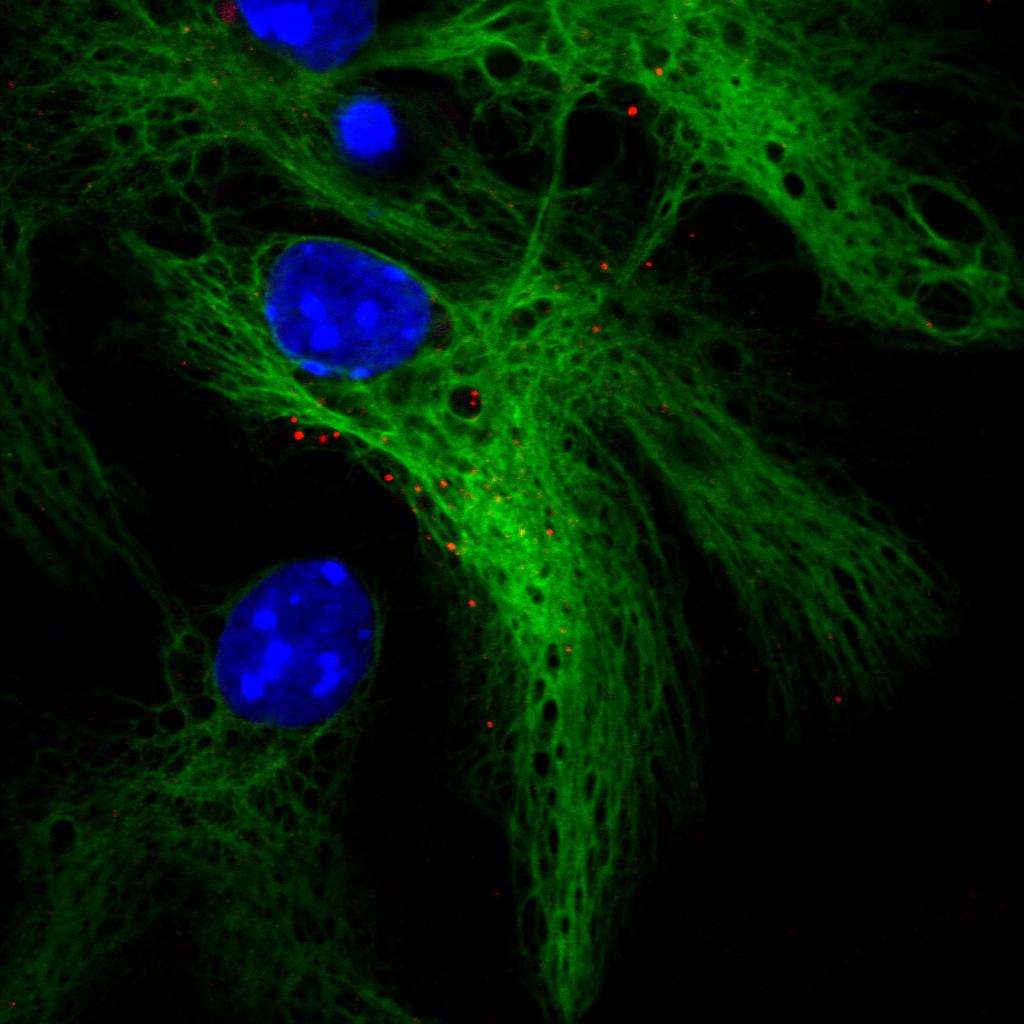
To measure rejuvenation, the researchers used epigenetic or molecular clocks. These track chemical modifications to DNA, such as DNA methylation, that accumulate with age. The modifications do not change the genetic code itself. They change how frequently the code is read. When the clocks were significantly reset, the cells from the 80-year-old registered a molecular age below 20 years.
Why Slow Matters More Than Fast
It was already known that reprogramming can rejuvenate cells. But until now, the effect had only been observed with the two-step method, where rejuvenation happens very rapidly. Speed sounds good, but it is a scientific problem: when everything changes at once, you cannot see which changes cause which.
The Bonn team’s direct conversion is the opposite. As Brüstle put it, in their approach rejuvenation occurred gradually and could be tracked for over 100 days. That slow-motion timeline is the point. Because the epigenetic clocks reset over several weeks instead of all at once, the researchers can now run controlled experiments to identify which factors and active substances accelerate or slow down the rejuvenation process. In other words, the method is a microscope for aging itself. You cannot drug what you cannot observe, and this model makes the process observable for the first time over a meaningful stretch of time.
“They Behave Like Young Cells”
The reset was not just numerical. “We also know that this epigenetic rejuvenation ensures that the cells actually behave like young cells,” Brüstle said. That distinction matters, because a molecular clock reading is ultimately a prediction. What makes this study notable is that the young clock readings came with young-cell behavior.
There is also precedent from the same group suggesting the resulting cells are functionally competent. In previous studies, the Bonn researchers had already shown that nerve cells produced through this direct conversion approach form connections with existing neurons after transplantation into the brains of mice. The current study builds on that foundation by asking a different question: what happens to the cells’ age during the conversion?
What This Is NOT
Precision matters here, and the researchers’ own framing is careful. This is a test-tube result. The conversions happened in laboratory cultures, not in a living body. Nobody’s brain was rejuvenated. The 80-year-old donor’s body did not become younger. The molecular age reading applies to the converted cells in the dish, and it cannot be interpreted as the donor returning to a youthful state.
There is also a long road between “rejuvenation model” and “treatment.” The team presents the work as an experimental system for dissecting the mechanisms of cellular rejuvenation, not as a therapy. Any clinical application would require years of additional work, safety validation, and regulatory review. The value is upstream: a better model means better questions, and better questions eventually mean better interventions.
Why Neuroscientists Care: Alzheimer’s and the Biggest Risk Factor
Brüstle singled out neuroscience as the field where this matters most: “After all, age is the most important risk factor for neurodegenerative diseases such as Alzheimer’s.” That single fact reframes the entire study. Alzheimer’s research has spent decades attacking plaques and tangles, the downstream damage. A model that lets scientists watch aging unwind in real time opens the door to studying the upstream process that makes age itself the dominant risk factor.
By offering a way to study rejuvenation as it unfolds over weeks rather than as a before-and-after snapshot, the approach may help researchers identify new strategies for addressing cellular aging and its associated effects. The slow window is what makes compound screening possible: apply a substance, watch the clocks over weeks, and see whether the reset speeds up or stalls.
The Bigger Picture: Reprogramming Enters a New Phase
The Bonn result lands in a field that has been accelerating. The classic reprogramming story starts with induced pluripotent stem cells, where adult cells are rewound all the way to an embryonic-like state. Direct conversion, the Bonn team’s specialty, skips that full rewind and pushes cells straight into a new identity. What the new study adds is the dimension of time: rejuvenation is not an on-off switch, but a process with a measurable pace, and the pace can now be manipulated and studied.
The study also resolves a puzzle that sat between two known results. When cells are reprogrammed into iPSCs, their DNA methylation age rewinds to an embryonic state, essentially zero. When cells are converted directly into post-mitotic neurons, they largely retain the age of the cells they came from. The induced neural stem cells sit intriguingly between these poles: self-renewing like stem cells, generated without a pluripotent intermediate, and shedding nearly all traces of their epigenetic age, but only through a slow process unfolding over roughly fifty days to more than a hundred.
What Comes Next
The immediate next steps are scientific, not medical. The Bonn team now has a platform to test which factors and active compounds accelerate or slow cellular rejuvenation, work that was impossible when the process happened too fast to dissect. For neuroscience, the model offers a new way to study how aging makes neurons vulnerable, which could inform strategies for Alzheimer’s and other age-related neurodegenerative conditions.
For the rest of us, the takeaway is measured but real: scientists have shown that the molecular age of a human cell is not fixed, that it can be turned back by more than 60 years, and that the process can now be watched, timed, and eventually controlled. The cells came from an 80-year-old. The stem cells they became measure under 20. And this time, science got to watch the whole journey happen.
