
A study published November 2, 2026, in the journal Aging Cell found that people who consumed EGCG, the main polyphenol in green tea, showed signs of slower biological aging. The analysis covered 10,977 U.S. adults, and tea drinkers carried a PhenoAge roughly six to seven months younger than people who consumed no EGCG at all. The benefit did not grow with higher intake, and the human data cannot prove that EGCG caused the difference.
That is the honest summary. The study is real, peer-reviewed, and large. It is also observational, which means it found an association, not a cause. This article walks through exactly what the researchers measured, what the numbers mean in plain language, how the mechanism works in worms and mouse cells, and what you should and should not do with the information.
What Is EGCG?
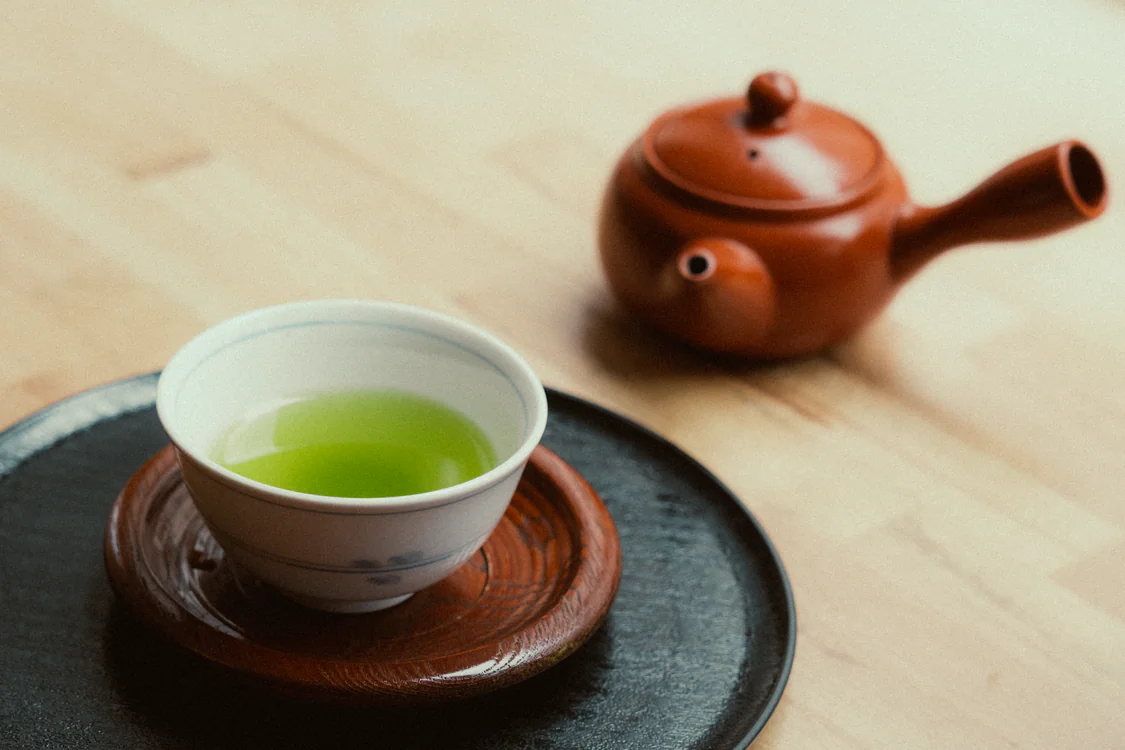
EGCG stands for epigallocatechin gallate. It is a catechin, a type of plant polyphenol, and it is the most abundant catechin in green tea, making up roughly 50 percent of the total catechins in green tea leaves. It is also present in black tea, though in smaller amounts.
EGCG has been studied for years as a possible healthy-aging compound. Earlier research linked it to better mitochondrial function, lower oxidative stress, and less chronic inflammation. What was missing, until now, was population-level evidence connecting dietary EGCG intake to a validated marker of biological aging, plus a plausible mechanism for how it might work. The November 2026 study, led by Xiaoming Huang and colleagues at Fujian Medical University and Fuzhou University Affiliated Provincial Hospital in China, set out to supply both.
The Study: 10,977 Adults, One Biological Age Clock
The researchers analyzed data from the U.S. National Health and Nutrition Examination Survey, known as NHANES. The sample included 10,977 participants. Just under half were men, at 48.1 percent. The median age was 47 years, and the median PhenoAge was 43 years.
PhenoAge is a biological age estimate built from chronological age plus routine blood markers. It is one of the most widely used second-generation aging clocks, trained to predict mortality risk rather than just calendar age. A PhenoAge lower than your chronological age suggests your body is aging more slowly than average. A higher PhenoAge suggests the opposite.
The researchers grouped participants by EGCG intake: no EGCG, lower intake, and higher intake. They then compared PhenoAge acceleration, which is the gap between PhenoAge and chronological age, across the groups. They also tracked mortality over an average of about 7.9 years of follow-up, and they estimated remaining life expectancy at age 45.
The study was published in Aging Cell, volume 25, issue 11, article e70795, with DOI 10.1111/acel.70795 and PubMed ID 42971933.
What the Human Data Showed
Compared with people who consumed no EGCG, both the lower-intake and higher-intake groups had lower PhenoAge acceleration. The lower-intake group scored about 0.53 years lower. The higher-intake group scored about 0.62 years lower.
Translated into months, that is roughly 6.4 months for the lower-intake group and 7.4 months for the higher-intake group. The two groups were close to each other, which is the first important detail. More EGCG was not linked to a meaningfully larger benefit. The gap between lower and higher intake was only about 0.09 years, or just over one month.
The mortality analysis included 10,964 participants. Over the follow-up period, 1,276 deaths were recorded, which is about 11.6 percent of the sample. Both EGCG-consuming groups showed lower all-cause mortality than non-consumers.
Estimated remaining life expectancy at age 45 was about 1.22 years higher for the lower-intake group and about 1.27 years higher for the higher-intake group. In months, that is roughly 14.6 months and 15.2 months. Again, the two intake groups were nearly identical.
Where did participants get their EGCG? Almost entirely from tea. Tea-based foods and drinks accounted for 99.55 percent of EGCG intake in the sample. Black tea, green tea, and tea not specified by type made up the main sources. That detail matters, because it means the study measured EGCG from ordinary diet, not from supplements.
What the Numbers Mean, and What They Do Not
Here is the part no one else has spelled out plainly, so let me do the math in the open. A PhenoAge difference of 0.53 to 0.62 years sounds small, and it is. Six to seven months on a biological age clock is a modest association, not a transformation. The life expectancy difference of 1.22 to 1.27 years is larger in absolute terms, but it is an estimate derived from the same observational data, not a measured outcome.
The quotable summary: tea drinkers in the study carried a PhenoAge roughly six to seven months younger than non-drinkers, and the benefit did not grow with higher intake.
Three limits deserve emphasis. First, the study is observational. People who drink tea may differ from people who do not in many ways, including diet, income, exercise, and smoking, and statistical adjustment cannot remove every difference. Second, dietary information came from two 24-hour food recalls, which may not capture what someone typically eats and drinks over time. Third, the researchers studied EGCG from food and beverages, not from supplements. There is no evidence from this study that taking an EGCG pill would offer the same benefits.
The flat dose response is also worth noting. If EGCG itself were driving the effect in a simple dose-dependent way, you would expect the higher-intake group to do clearly better than the lower-intake group. They did not. That pattern is consistent with a threshold effect, where a little EGCG is enough, but it is also consistent with tea drinking acting as a marker for other healthy habits.
The Mechanism: Peroxisomes, the Cell’s Cleanup Crew
The researchers did not stop at the human data. They ran experiments in roundworms, Caenorhabditis elegans, and in mouse liver cells, to test whether EGCG could plausibly slow aging through a specific mechanism.
In the worms, EGCG extended lifespan by up to 10.73 percent under the tested conditions, and it improved measures of health during aging, including movement and feeding. When the researchers looked closer, they found that EGCG appeared to activate peroxisomes.
Peroxisomes are small structures inside cells that help break down fats and deal with waste. Think of them as part of a cell’s cleanup crew. Their activity can decline as we age. In the worm experiments, EGCG increased both the number of peroxisomes and how well they worked. Specifically, it increased peroxisome abundance, raised levels of the genes prx-5 and prx-19, and increased the proteins PRX-5 and PRX-19. It also boosted peroxisomal fatty acid beta-oxidation, raising the genes acox-1.2, acox-3, and dhs-28, increasing ACOX-3 protein, and reducing very long-chain fatty acids.
The decisive test was a knockdown experiment. When the researchers blocked prx-5, acox-1.2, or dhs-28, the lifespan and health span benefits of EGCG disappeared. That is strong evidence that the peroxisome pathway is not a side observation but the mechanism itself, at least in worms.
The team saw something similar in mouse liver cells that had been artificially aged with doxorubicin. EGCG reduced the proportion of senescent cells, measured by SA-beta-gal staining, and lowered the aging markers p21 and p16. It increased peroxisome abundance and peroxisome-related proteins, including the biogenesis factors PEX5 and PEX19, the membrane transporters ABCD1 and PMP70, and the beta-oxidation enzymes ACOX1, HSD17B4, EHHADH, and ACAA1. When Pex5 or Acox1 was knocked down, the anti-senescent effects weakened.
None of this proves the same mechanism operates in humans. Worms and isolated mouse cells are not people. But the mechanism gives the human association a biological story that fits, and that is more than most observational nutrition findings can offer.
How Much EGCG Is in a Cup of Tea?
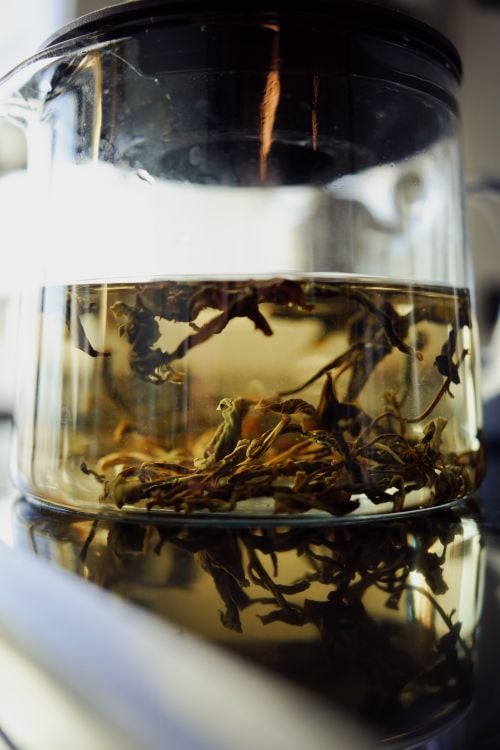
If you drink tea already, you are probably getting EGCG. The amount varies widely by tea type and brewing. Independent testing by ConsumerLab found that brewed green teas sold in the United States provide about 20 to 80 milligrams of EGCG per cup. Matcha powders provided 73 to 119 milligrams per cup, because matcha suspends the whole ground leaf in water. Bottled green teas were lower, at 4 to 47 milligrams per cup.
A 2007 USDA analysis reported a higher figure, about 180 milligrams of EGCG per cup of regular green tea, but that came from a laboratory brewing method using one gram of leaves per 100 milliliters of water, which is stronger than a typical home brew. The ConsumerLab range of 20 to 80 milligrams per cup is the more practical guide for everyday tea.
Supplements are a different story. ConsumerLab found that green tea supplements provided anywhere from 20 to more than 500 milligrams of EGCG per daily serving, and one product contained only about half the amount claimed on its label. That variability, plus the fact that the 2026 study measured EGCG from food and drink rather than pills, is why the researchers and the coverage of the study both caution against reaching for a concentrated supplement.
Should You Drink More Tea?
The study does not support drinking more tea than you already enjoy. Because the lower-intake and higher-intake groups showed nearly identical associations, there is no evidence that piling on extra cups adds benefit. If you already drink green or black tea, there is no reason to stop. If you do not drink tea, this study alone is not a reason to start, and it certainly is not a reason to buy EGCG capsules.
What the study does support is a simpler idea. A daily tea habit, the kind millions of people already have, was associated with measurably slower biological aging in a large, well-conducted analysis, and the association came with a plausible cellular mechanism. That is worth knowing. It is not worth overhauling your diet over.
What I Have Not Done
I have not run this experiment myself, and neither has anyone else in a human trial. There is no randomized controlled trial showing that giving people EGCG slows their biological aging. The worm lifespan extension of 10.73 percent happened in laboratory worms, not people. The peroxisome mechanism was demonstrated in worms and mouse liver cells, not in human tissue. Everything in this article comes from the published paper and the independent coverage of it in November 2026.
Frequently Asked Questions
What is EGCG?
EGCG, short for epigallocatechin gallate, is a catechin and the most abundant polyphenol in green tea, making up roughly 50 percent of green tea’s total catechins. It is also present in black tea.
What did the November 2026 EGCG study find?
In an analysis of 10,977 U.S. adults from NHANES, people who consumed EGCG from their diet had PhenoAge acceleration about 0.53 to 0.62 years lower than non-consumers, lower all-cause mortality, and an estimated 1.22 to 1.27 years of additional remaining life expectancy at age 45. The study was published in Aging Cell on November 2, 2026.
Does EGCG slow aging?
The human evidence is observational, so it shows an association, not proof of cause. Experiments in roundworms and mouse liver cells suggest a mechanism involving peroxisome biogenesis and fatty acid beta-oxidation, but that mechanism has not been demonstrated in humans.
How much EGCG is in a cup of green tea?
Independent testing by ConsumerLab found brewed green tea provides about 20 to 80 milligrams of EGCG per cup, while matcha provides 73 to 119 milligrams per cup. Bottled green tea is lower, at 4 to 47 milligrams per cup.
Should I take an EGCG supplement for longevity?
No evidence from this study supports EGCG supplements. The researchers studied EGCG from food and beverages, not pills, and supplement EGCG content varies widely, from 20 to more than 500 milligrams per serving in independent testing. The study’s authors and coverage both caution against concentrated supplements.
What are peroxisomes and why do they matter for aging?
Peroxisomes are small structures inside cells that break down fats and handle waste. Their activity can decline with age. In the 2026 study, EGCG increased peroxisome number and activity in worms and mouse liver cells, and blocking the genes involved removed the lifespan benefit.
Does drinking more tea give a bigger benefit?
In this study, no. The lower-intake and higher-intake groups showed nearly identical associations with PhenoAge, mortality, and life expectancy. The gap between the two groups was only about 0.09 years of PhenoAge acceleration.
Related reading
Sources: Huang et al., Aging Cell, November 2026, volume 25, issue 11, e70795, DOI 10.1111/acel.70795, PMID 42971933; mindbodygreen, November 4, 2026; ConsumerLab green tea testing; Wiley Online Library full text of the Aging Cell paper.
