
Disclaimer: This article is not medical advice. This product is not intended to diagnose, treat, cure, or prevent any disease. Talk to your clinician before starting any supplement, especially if you are pregnant, nursing, taking medication, or managing a health condition.
The unsexy molecule behind a lot of longevity talk
Every longevity conversation eventually lands on the same handful of ideas: sleep, training, protein, stress, and the slow wear that age puts on all of them. Glutathione sits quietly underneath that conversation. It is not a trendy ingredient with a celebrity endorsement. It is a molecule your body already makes, every day, from amino acids you get from food. The reason biohackers talk about it is simple. Glutathione is one of the main antioxidants your cells use to handle oxidative stress, the byproduct of normal metabolism, hard training, poor sleep, pollution, alcohol, and getting older.
N-Acetyl-L-Cysteine, usually shortened to NAC, enters this story as a precursor. Your body uses cysteine to build glutathione, and cysteine is often the limiting piece. NAC is a stable, supplemental form of cysteine. That is the whole pitch, and it is worth stating plainly because so much supplement marketing hides a simple mechanism behind a wall of jargon. NAC does not contain glutathione. It supplies one of the raw materials your body uses to make it.
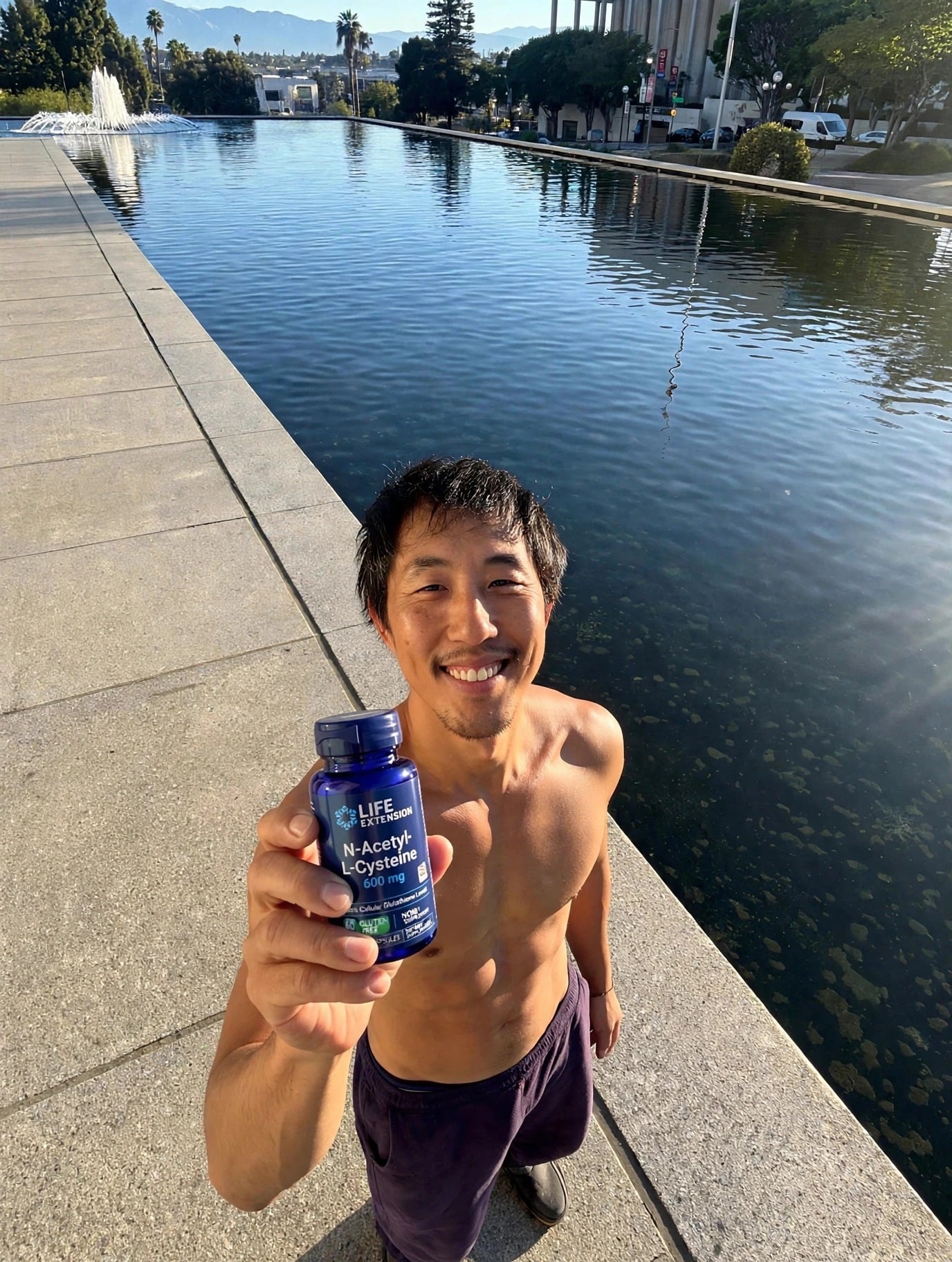
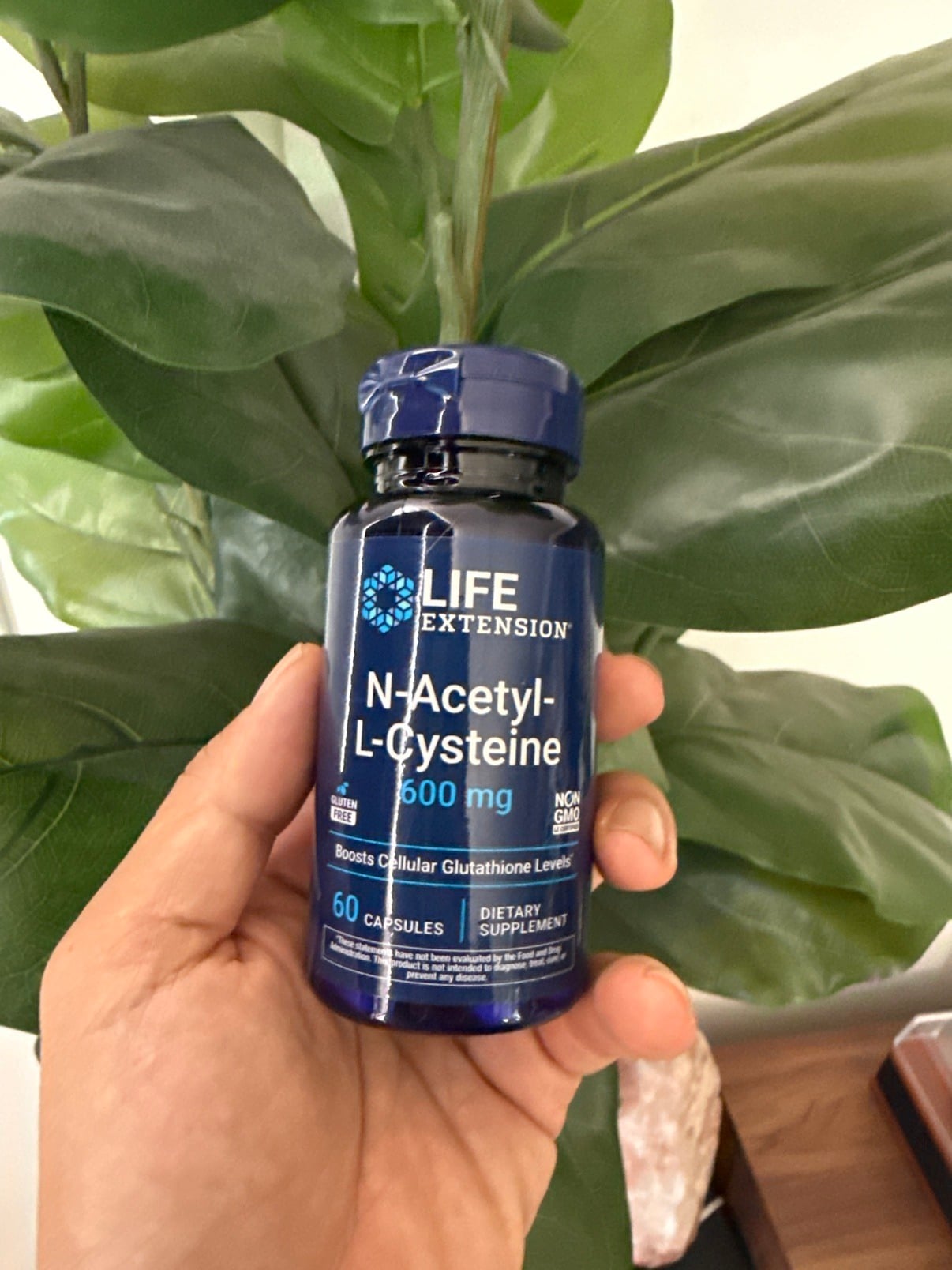
The label on the bottle in the photograph says it directly: Life Extension N-Acetyl-L-Cysteine 600 mg, 60 capsules, gluten free, non-GMO, and the words “Boosts Cellular Glutathione Levels.” That label claim is the manufacturer’s statement about what the product is for. This article does not go further than that. It explains the biology, the context, and the practical questions to ask before a bottle like this earns a place in your routine.
The bottle in the photo: Life Extension N-Acetyl-L-Cysteine 600 mg — not sponsored.
What glutathione actually does
Think of glutathione as part of your cells’ cleanup crew. When you train hard, breathe city air, drink, sleep badly, or simply age, your cells produce reactive oxygen species, often called free radicals. In small amounts these are normal signaling molecules. In larger amounts they can damage proteins, fats, and DNA inside cells. Antioxidants neutralize them. Glutathione is unusual because your body makes it internally, recycles it, and uses it across many tissues, including the liver, lungs, and immune cells.
Levels tend to decline with age. That decline is one reason researchers study glutathione in the context of aging, recovery, and resilience. Decline is not a disease, and restoring a level is not a cure for anything. It is a measurable part of how the body’s defenses change over time. Stress, illness, heavy training loads, and low protein intake can all increase demand for the amino acids that build glutathione. That is why the molecule shows up in conversations about both longevity and athletic recovery. Two different goals, one shared bottleneck: the supply of cysteine.
Food supplies cysteine too. Whey protein, eggs, poultry, garlic, onions, and cruciferous vegetables all contribute sulfur containing amino acids. A diet rich in protein, which is already a cornerstone of most serious training and longevity routines, covers much of this ground. NAC is interesting precisely when someone wants a concentrated, predictable source of cysteine without changing their whole diet. It is a supplement to a foundation, not a replacement for one.
How NAC fits a biohacking stack
A useful rule for any stack is that every item should earn its place by doing one clear job, and the whole stack should stay small enough that you can tell what is actually helping. NAC earns consideration on that test because its job is narrow: supply cysteine. It is not a stimulant, not a hormone, not a proprietary blend with twelve ingredients hiding behind one dose. The label shows a single ingredient at 600 mg per capsule. That transparency matters. When a product lists one ingredient at a clear dose, you know exactly what you are taking, and you can judge it on that basis.
Where does it sit relative to the rest of a routine? Below the basics, above the experiments. Sleep, protein, resistance training, and stress management come first, and no capsule compensates for missing them. After those are in place, a person interested in cellular health might add NAC alongside the other unglamorous staples: a good protein intake, creatine for training, vitamin D if levels are low, and omega 3s from fish or a quality oil. That is a stack built on boring, well understood inputs. NAC fits that company. It does not fit a stack built on chasing the newest compound each month, because its mechanism has been understood for decades and there is nothing novel to hype about it.
Timing and habit matter more than cleverness here. Supplements only work as routines. A bottle that sits unopened on a shelf does nothing. The practical question is whether taking a capsule fits a routine you already follow, for example with a morning meal or alongside other daily staples, and whether you will still be taking it in three months. If the answer is no, the money is better spent on food, sleep, or a training session. Biohacking rewards consistency over novelty, and NAC is a consistency supplement.
Reading the label like a skeptic
The bottle in the photograph gives a good example of what to check on any NAC product. First, the form and dose: N-Acetyl-L-Cysteine, 600 mg per capsule. That is a standard, commonly sold dose, and it is the only dose this article discusses, because it is the dose on the label in front of us. This article does not recommend a daily regimen, a number of capsules per day, or a cycle length. Anyone considering a regimen should discuss it with a clinician, who can weigh individual factors this article cannot know.
Second, the count: 60 capsules. That tells you how long a bottle lasts at a given use, and it lets you calculate cost per capsule, which is the honest way to compare products. A cheaper bottle with fewer capsules or a lower dose is not cheaper at all.
Third, the quality signals: gluten free and non-GMO, printed on the front of this bottle. Those labels answer specific questions for people with celiac disease, gluten sensitivity, or a preference for non-GMO ingredients. They do not by themselves prove purity or potency. For that, look for third party testing, a certificate of analysis, or a manufacturer with a track record of publishing quality standards. Life Extension is a long established supplement company, which is one reason this particular bottle is a useful example, but brand reputation is a starting point for research, not a substitute for it. Check whether the manufacturer tests for heavy metals, microbes, and label accuracy, and whether those results are available.
Fourth, the claim: “Boosts Cellular Glutathione Levels.” Treat label claims as the manufacturer’s summary of the intended purpose, not as proof of an outcome in your body. The mechanism, cysteine supply supporting glutathione synthesis, is well described in biochemistry. Individual results vary with diet, age, training, stress, and health status. A claim on a bottle is not a promise about you.
Finally, the fine print. The bottle itself carries the standard supplement disclaimer that its statements have not been evaluated by the Food and Drug Administration and that the product is not intended to diagnose, treat, cure, or prevent any disease. That language is legally required, and it is also a useful reminder. NAC is a nutritional supplement, not a medicine, and this article treats it that way throughout.
What to watch, and who should pause first
NAC is generally well tolerated, and it has a long history of use both as a supplement and, in different forms and doses, in clinical settings. That history does not make it right for everyone. Talk to your clinician first if you are pregnant or nursing, if you take regular medication, if you have asthma or a history of breathing difficulty, or if you have a liver or kidney condition. These are talk to your clinician flags, not warnings that something will happen. They are the situations where an individual conversation matters more than a general article.
Practical notes that come up often in that conversation include stomach discomfort, nausea, or an unpleasant sulfur smell, which some people notice with cysteine supplements. Taking a supplement with food sometimes helps, but again, this article does not prescribe timing or use. If you notice anything unusual after starting any supplement, stop and talk to your clinician. That is the correct response to any new input, whether it is a capsule, a food, or a training program.
Interactions are another reason for the clinician conversation. NAC can interact with certain medications, and only a clinician who knows your full list can assess that. Bring the bottle, or a photograph of the label, to the appointment. The dose, form, and brand are exactly the details that make that conversation useful.
The bottom line for a cellular health routine
NAC is not exciting, and that is a point in its favor. It does one job, supplying cysteine for glutathione synthesis, at a clear dose, in a single ingredient capsule, from a long established manufacturer. It belongs after the foundations, sleep, protein, training, stress management, and alongside other simple staples, not in place of them. It belongs in a routine you will actually keep, bought from a manufacturer whose quality testing you have checked, at a cost per capsule you have calculated.
If you are building a longevity routine and you like your supplements boring, transparent, and mechanistically clear, NAC is worth a conversation with your clinician. If you are looking for a dramatic transformation from a bottle, this is not that product, and no honest article should pretend otherwise. The best biohacks are usually the least dramatic ones: the habits you keep, the protein you eat, the sleep you protect, and the simple inputs that support the systems your body already runs.
Related reading
Top Doctor: NAC and Glutathione: A Clinician’s Plain Language Guide
David’s Guide: NAC in My Daily Routine: A Simple, Honest Look at It
The Biohack: NAC and Glutathione: What It Does and Why It Matters
