
For twenty years, the blue zones have been the most famous map in longevity science. Five places where people routinely outlive the rest of us: Okinawa in Japan, Sardinia in Italy, the Nicoya Peninsula in Costa Rica, Ikaria in Greece, and Loma Linda in California. Researchers have spent decades trying to bottle what makes them work.
Now there may be a sixth. And it is sitting right next door to one of the originals.
The Bolotana finding
A study published on October 5, 2026 in the journal Frontiers in Aging identified Bolotana, a mountain village in Sardinia of roughly 2,300 residents, as a new blue zone candidate. The project was led by longevity researcher and National Geographic Explorer Dan Buettner, working with an international team of scientists including lead scientist Dr. Gianni Pes of the University of Sassari.
The team analyzed demographic records from Bolotana, cross-checking civil records, parish archives, and family lineages, in some cases stretching back more than a century. They focused on a specific question: once people in Bolotana reach older age, how long do they keep living?
The answer, for women, was striking.
The numbers
If a woman in Bolotana reaches age 70, her remaining life expectancy is 20.85 years on average, about 21 more years. That exceeded both the average and even the highest annual figures recorded across all of Sardinia, and across Italy as a whole, during the same period.
The researchers also calculated conditional survival, which is the odds that a 70-year-old woman goes on to live to 100. In Bolotana, that figure came out to 13.83 percent, roughly one in seven. In most modernized countries, that number sits around 3.5 percent.
Put plainly, a woman turning 70 in this small village has roughly three to four times the odds of reaching 100 compared with a typical American woman. One analysis of the figures put it at nearly four times; the university announcement described it as nearly three times. Either way, the gap is enormous.
A snapshot from autumn 2024 tells the same story from a different angle. About six people aged 100 or older were living in Bolotana at the time, in a town of about 2,300 residents. That is roughly 11 times the concentration of centenarians in the United States.
Bolotana by the numbers
2,300: Bolotana’s approximate population, a mountain village in Sardinia’s interior.
6: the number of residents aged 100 or older living in Bolotana in autumn 2024. In a town of 2,300, that works out to roughly 260 centenarians per 100,000 people. The US figure, using the Census Bureau’s 2020 count, sits near 24 per 100,000. That is where the “11 times the US concentration” figure comes from, and it is not a rounding trick.
20.85: the average remaining life expectancy, in years, for a woman in Bolotana who reaches age 70. Not only did this beat the Sardinian average, it beat the single highest annual figure recorded anywhere in Sardinia or Italy during the same measurement period.
13.83%: the conditional probability that a 70-year-old woman in Bolotana reaches 100. Compare that with roughly 3.5% in most modernized countries, and the scale of the outlier becomes clear.
3x to 4x: the range of published estimates for how much likelier a 70-year-old Bolotana woman is to reach 100 versus a US woman of the same age. The University of Illinois Chicago announcement says nearly three times; the paper’s own figures point closer to fourfold. The honest number is somewhere in that band.
2021 to 2025: the mortality window the estimates are based on. These are not projections or models of the future. They describe what actually happened to real people in Bolotana during those five years.
100+: the number of years some of the verification records span. Civil registries, parish archives, and family lineages were cross-checked against each other, and they converged on the same individuals. In longevity demography, where most sensational claims collapse the moment someone checks a birth certificate, that triangulation is the whole ballgame.
5: the number of validated blue zones before Bolotana entered the conversation: Okinawa, Sardinia, Nicoya, Ikaria, Loma Linda. Two decades of research, five places. A credible sixth candidate does not come along often.
Why the women matter
Here is the part that surprised the researchers. Sardinia’s original blue zone, concentrated in the island’s mountainous interior, became famous specifically for exceptional male longevity. In most longevity hotspots, the male advantage is the headline.
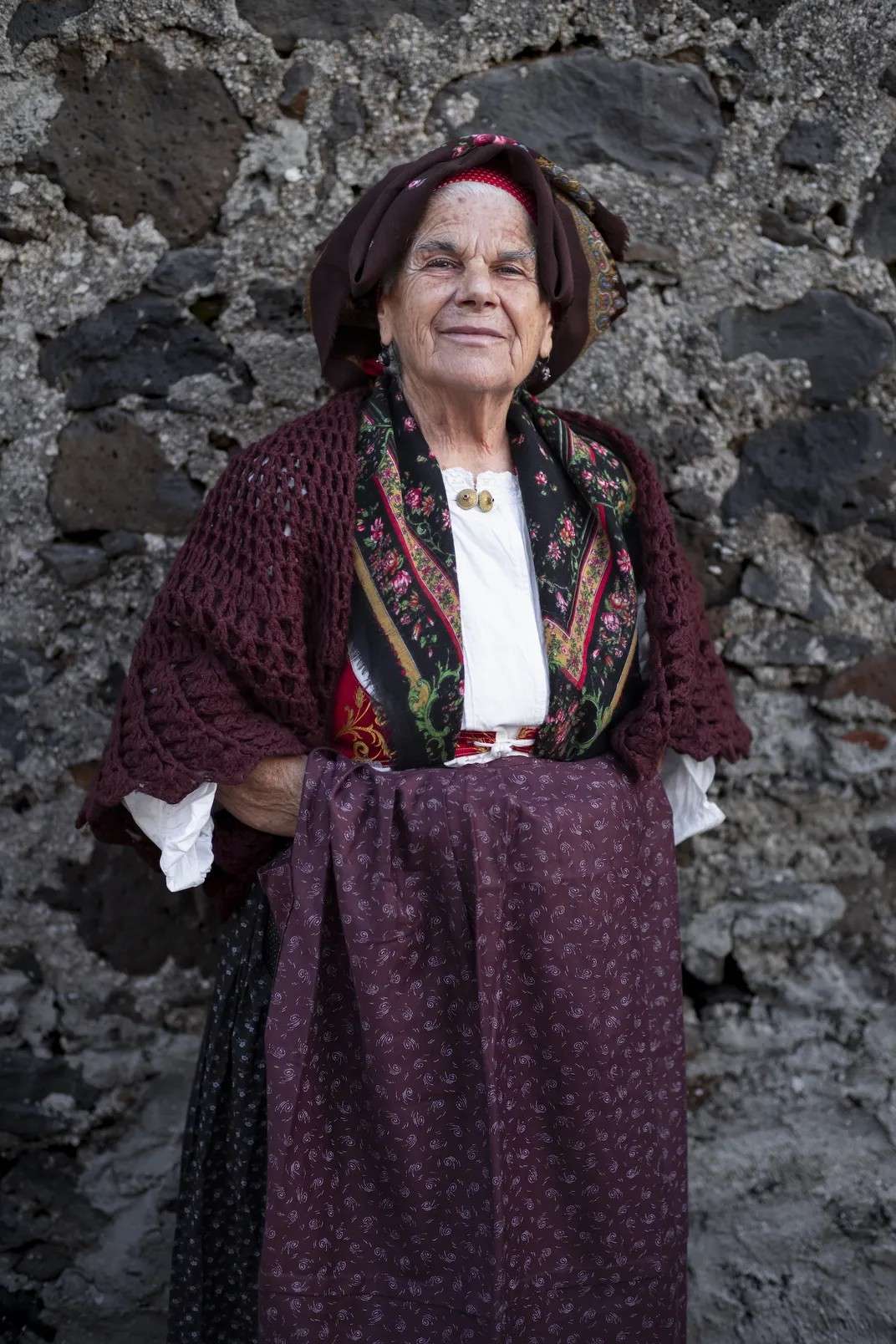
Bolotana flips that. The strongest survival signal belongs to women, and the researchers say they still cannot fully explain why. Dr. Pes noted that the convergence of independent historical sources, civil records, parish archives, and family lineages all pointing at the same individuals across more than a century, makes the pattern unusually well documented for demographic research. But the mechanism behind the female advantage remains an open question.
That honesty matters. Longevity science is full of confident claims built on thin data. This team is saying the pattern is real and the explanation is not yet settled.
The five original blue zones, briefly
For context, here are the five places that made the original list, the ones every longevity discussion since has been measured against: Okinawa, Japan; Sardinia, Italy; the Nicoya Peninsula in Costa Rica; Ikaria, Greece; and Loma Linda, California. Each was identified because its residents were reaching advanced ages at rates far above surrounding populations, with verified ages to back it up.
Sardinia earned its spot largely through its interior mountain villages, where men in particular were living exceptionally long lives. That is what makes Bolotana so interesting as a neighbor. It sits right outside the original Sardinian zone, in the same island and a similar mountain setting, yet the longevity signal shows up most strongly in women. If the same environment is producing a different pattern a short distance away, the difference between the two villages could end up being as informative as the longevity itself.
The coverage timeline
The study landed on October 5, 2026, and the media pickup was fast. National Geographic ran an exclusive the same day. EIN Presswire carried the announcement with the 11x centenarian figure. Men’s Journal followed on October 7 with a breakdown of the 13.83% conditional survival number. mindbodygreen published its analysis on October 9, leading with the nearly-fourfold odds.
That four-day arc, from journal publication to mainstream health coverage, is exactly why the search term broke out. Each wave of coverage sent a new cohort of readers to Google asking the same question: is there really a new blue zone?
What the researchers do next
Buettner has described the finding as a chance to learn what is helping Bolotana’s women live so long, and the team has framed the village as a place where the old longevity patterns may still be intact. That framing matters because it sets up the real research program: comparing Bolotana’s diet, daily activity, social structures, and genetics against both the original Sardinian blue zone and the broader Italian population.
The demographic work is the foundation, not the finish line. Civil records and parish archives can tell you who lived long. They cannot tell you why. The why will come from fieldwork: what people eat, how they move through the day, who they spend time with, and what their genes look like. Until that work is published, the honest answer to “what is their secret” is that nobody knows yet, and anyone who claims otherwise is selling something.
That is also why this story has a longer shelf life than a typical study-news cycle. The initial finding was published on October 5, 2026, and the follow-up research will unfold over months and years. Each new paper will be a new round of coverage, which means this topic will keep generating search interest well beyond this week.
What this is not
A few cautions before anyone books a flight to Sardinia.
First, these are population estimates based on mortality conditions observed from 2021 through 2025. They describe what happened to a specific group of people in a specific place during a specific period. They are not a prediction that any individual woman turning 70 today will live to 100. A 13.83% conditional survival rate still means more than 86% do not reach 100, which is worth stating plainly.
Second, Bolotana is a candidate, not a confirmed sixth blue zone. The researchers are calling it exactly that: a candidate worth deeper study. The next phase is figuring out what is driving the pattern, whether it is genetics, diet, daily movement, social structure, or some combination researchers have not isolated yet.
Third, longevity hotspots have a history of fading. Some historically identified blue zones have seen their advantage weaken as lifestyles modernize. Bolotana’s recent numbers look strong, but the researchers will need to show the pattern holds.
Why longevity researchers care
The reason this study is getting attention is not just the headline numbers. It is the quality of the underlying records. Most longevity claims about small villages collapse under scrutiny because ages cannot be verified. Bolotana’s ages can be, through multiple independent sources.
There is also the timing. As some of the original blue zones lose their edge to modern diets and sedentary habits, finding a possible emerging hotspot suggests the longevity puzzle is not finished. There may be places where the old patterns are still intact, and studying them now, before they change, could be more valuable than studying the famous ones after they have already shifted.
What you can actually take from this
Nobody knows yet what specifically makes Bolotana’s women live so long, so anyone selling you a “Bolotana protocol” is getting ahead of the science. But the broader blue zone research, built over two decades, keeps pointing at the same unglamorous factors: daily natural movement, plant-forward eating, strong social ties, and a sense of purpose.
Those are the same levers covered across the longevity evidence on this site. If you want to go deeper on what the research actually supports, start with the evidence on intermittent fasting and longevity, the NMN and NAD longevity debate, and what the science says about sauna use and longevity.
The Bolotana team will keep digging into the why. When they publish the follow-up, the real story will be in the mechanism, not the milestone. That is the part worth watching.
