






Introduction
Hydrogen water has become a wellness trend over the last decade, gaining popularity among athletes, biohackers, and health enthusiasts.
Marketed as a supercharged version of regular water, it is infused with molecular hydrogen (H₂), which is believed to act as a powerful antioxidant.
Supporters claim it helps fight oxidative stress, boosts energy, enhances skin health, and even improves exercise recovery.
But as with any health trend, it’s important to look beyond the hype. While hydrogen water has potential benefits, it also raises questions about possible drawbacks.
Could drinking it every day lead to side effects? Are there groups of people who should avoid it?
This article explores the negative side effects of hydrogen water, separating fact from speculation so you can make an informed decision.

Caption: Hydrogen water is trending worldwide, but not without potential side effects.
Understanding Hydrogen Water
Before diving into side effects, it helps to understand what hydrogen water is.
- What it is: Hydrogen water is simply water infused with molecular hydrogen gas.
- How it’s made: Manufacturers use electrolysis or hydrogen tablets to dissolve hydrogen molecules into drinking water.
- Why it’s hyped: Molecular hydrogen is thought to neutralize free radicals, reduce inflammation, and protect cells from oxidative damage.
In theory, this makes it a powerful antioxidant. But while studies show some promise, research is still early-stage, and there’s a lot we don’t know about its long-term effects.
Possible Negative Side Effects of Hydrogen Water
1. Digestive Discomfort
Some people report bloating, mild nausea, or stomach cramps after drinking hydrogen water. This is likely due to the extra gas introduced into the digestive system.
While similar to drinking carbonated beverages, the sensation can be uncomfortable for those with sensitive stomachs or conditions like irritable bowel syndrome (IBS).
Tip: If you experience bloating, try drinking smaller amounts instead of a full bottle at once.
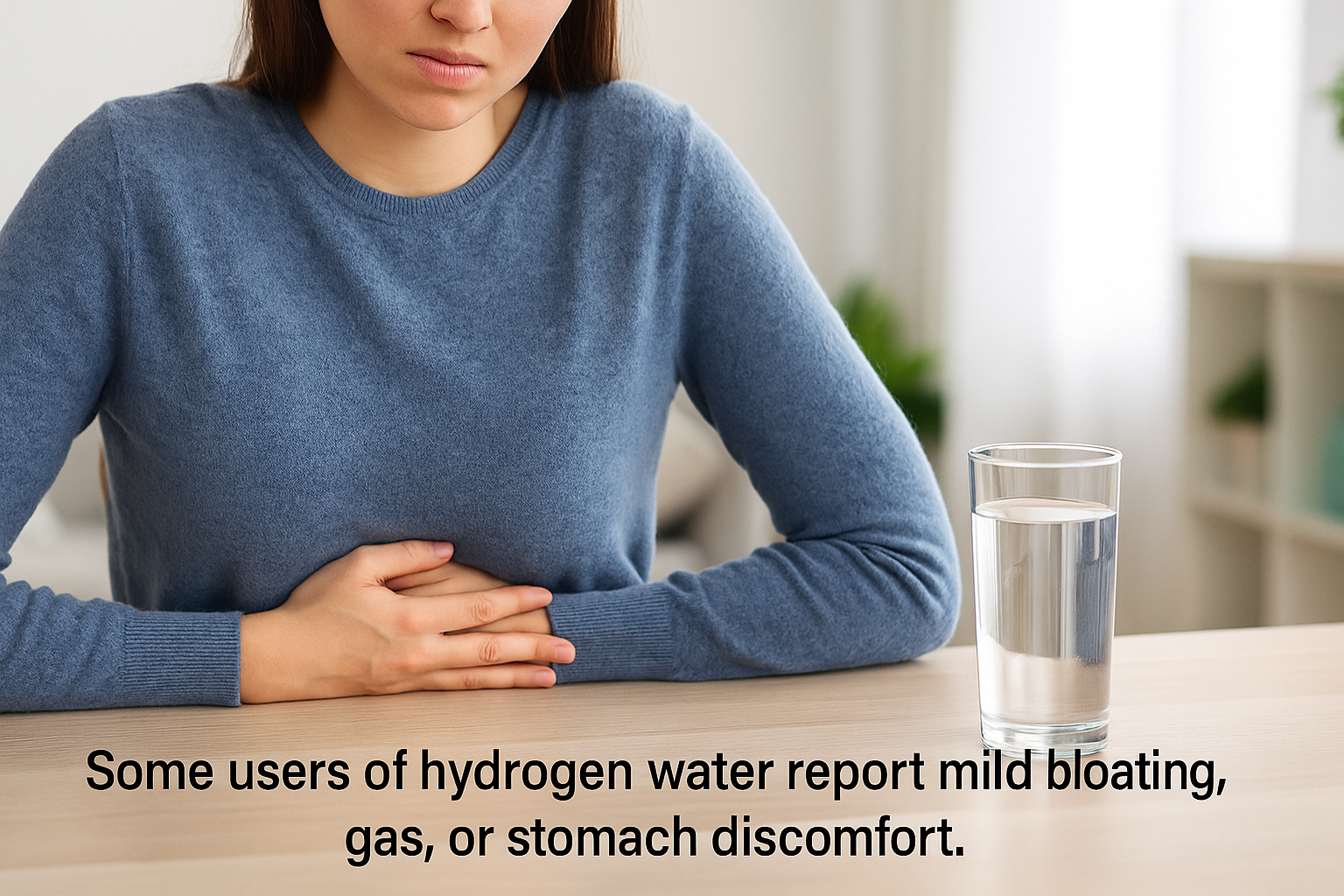
Caption: Some users of hydrogen water report mild bloating, gas, or stomach discomfort.
2. Overhydration Risk
Because hydrogen water is often marketed as a “performance enhancer,” some users may consume it excessively.
Drinking too much water, even plain water, can cause hyponatremia, a dangerous drop in sodium levels in the blood. While rare, this can be life-threatening and cause symptoms like confusion, headache, nausea, and, in severe cases, seizures.
Important: Stick to normal hydration guidelines—8 to 10 glasses of water a day is sufficient for most adults.
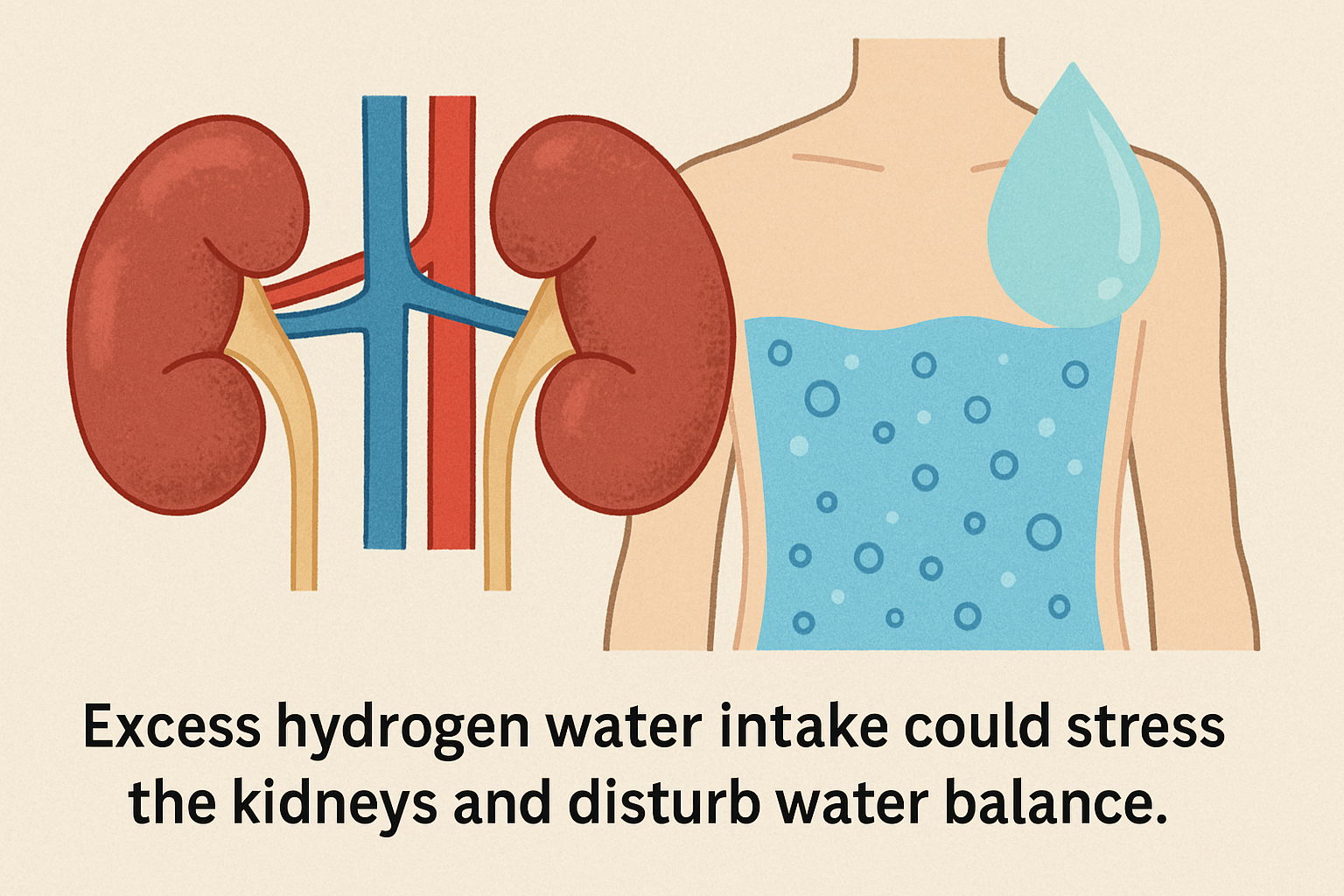
Caption: Excess hydrogen water intake could stress the kidneys and disturb water balance.
3. Unproven Long-Term Safety
Hydrogen water hasn’t been around long enough for researchers to fully understand its long-term safety profile. Early studies suggest it may be safe for short-term use, but questions remain about daily consumption over many years. Unlike traditional therapies with decades of data, hydrogen water’s safety is still largely anecdotal.
For those considering it as a daily supplement, this uncertainty is worth keeping in mind.

Caption: Scientist testing hydrogen water – long-term safety still uncertain.
4. Potential Drug Interactions
Hydrogen water is believed to have anti-inflammatory and antioxidant effects. While this may sound beneficial, it could theoretically interfere with medications that rely on oxidative pathways to work effectively. For example:
- Chemotherapy drugs: Some cancer treatments use oxidative stress to kill cancer cells.
- Antibiotics: Certain types depend on oxidative processes to destroy bacteria.
Although no major clinical evidence currently confirms these interactions, caution is recommended for people on prescription medications. Always consult a doctor before combining hydrogen water with medical treatments.

Caption: Hydrogen water may interfere with certain medications or treatments.
Also read: Next Health Opens in Calabasas–Woodland Hills: A New Hub for Longevity and Biohacking
5. Possible Reduction of Exercise Adaptations
Athletes often turn to hydrogen water for faster recovery and reduced muscle fatigue. However, excessive antioxidant supplementation can sometimes blunt natural training adaptations.
Oxidative stress, while damaging in high amounts, also signals the body to adapt, repair, and grow stronger.
In other words, neutralizing too many free radicals might reduce the effectiveness of workouts over time.
6. Quality Control Issues in the Market
Not all hydrogen water is created equal. Because the industry is loosely regulated, products may vary widely in purity, hydrogen concentration, and safety standards. Some risks include:
- Contaminated products from poorly made tablets or low-quality equipment.
- False advertising about hydrogen levels that dissipate quickly after packaging.
- Added chemicals in some low-cost versions.
This raises a hidden “side effect”—spending money on a product that may not deliver the promised benefits.
7. Financial Cost and Psychological Dependence
Another overlooked drawback is the cost factor. Branded hydrogen water can cost several dollars per bottle, much more than regular bottled water. Over time, this can create unnecessary financial strain.
Additionally, some users may develop a psychological dependence, believing they cannot perform or stay healthy without it, even though the benefits remain scientifically unproven.
Who Should Be Cautious with Hydrogen Water?
Hydrogen water is generally considered safe for most people, but certain groups should approach it with caution:
- People with chronic digestive issues like IBS or GERD, due potential bloating.
- Those on medication for cancer, infections, or chronic conditions—consult your doctor first.
- Pregnant and breastfeeding women, since research on long-term safety in these groups is limited.
- Athletes who may not want to risk reduced training adaptations.
Are There Proven Alternatives?
If your goal is to improve antioxidant levels or reduce oxidative stress, there are proven, safer, and more affordable alternatives:
- A balanced diet rich in antioxidants – foods like berries, leafy greens, nuts, and dark chocolate naturally reduces oxidative stress.
- Regular exercise – moderate activity strengthens the body’s defense systems.
- Hydration with plain water remains the most essential and effective way to support overall health.
- Stress management – meditation, yoga, and quality sleep reduce inflammation naturally.

Caption: Natural antioxidants and regular water remain safe hydration choices.
Conclusion
Hydrogen water may sound like the future of hydration, but it is not without risks.
The negative side effects, ranging from digestive discomfort and overhydration risks to potential drug interactions and unproven long-term safety, highlight why cautious use is important.
For most people, a healthy lifestyle that includes a balanced diet, exercise, and proper hydration will provide more proven benefits at a much lower cost.
If you’re curious about hydrogen water, it’s best to approach it as a supplement rather than a replacement for traditional wellness practices—and always consult a healthcare professional before making it a daily habit.
Also read: How to Treat Sun-Damaged Skin Naturally: Restore and Rejuvenate Your Skin at Home