
Is Walking 10,000 Steps a Day Worth It?
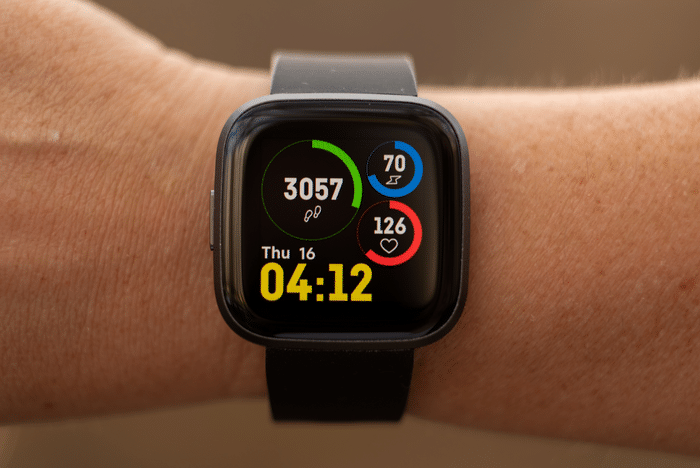
The 10,000-step goal is arguably the most successful fitness meme in history. It lives on every fitness tracker, in every corporate wellness challenge, and in the heads of millions of walkers. What almost nobody knows is that the number was invented by a 1960s Japanese marketing campaign for a pedometer, not by exercise scientists. The name of the device roughly translated to “10,000-step meter,” and the catchy round number stuck for sixty years.
So the obvious question: did the marketers accidentally get it right? The research answer is interesting. They overshot the number, but they nailed the concept.

What the Step-Count Research Shows
Over the past decade, researchers have published large cohort studies tracking daily step counts against mortality and disease. The findings are remarkably consistent.
Mortality risk drops steeply as daily steps rise from sedentary levels. The biggest gains come from going from very few steps to a moderate number. Benefits continue to accumulate up to roughly 7,000 to 9,000 steps per day for most adults, after which the curve flattens considerably. Beyond that range, additional steps add little further mortality benefit in the data.
Meta-analyses pooling these studies have landed in the same zone: substantial risk reduction through the mid-thousands, diminishing returns approaching ten thousand, and no clear magic threshold at exactly 10,000. Older adults appear to max out their benefit at somewhat lower counts than younger adults, which makes sense given differences in stride length and baseline activity.
The takeaway is encouraging rather than deflating. You do not need 10,000 steps to get most of the benefit. But the people hitting 10,000 are certainly not wasting their time either.
Steps and Weight Loss
For weight management specifically, walking works through straightforward energy expenditure. A 10,000-step day burns roughly a few hundred calories above baseline for most adults, varying with body weight and pace. Sustained over months, that is a meaningful contribution to a calorie deficit, and it comes without the compensatory hunger that intense exercise sometimes triggers.
Walking has a particular advantage for weight loss adherence. It requires no gym, no recovery time, no special skill, and minimal injury risk. The best exercise for weight loss is the one you will still be doing in a year, and walking wins that contest for most people.
That said, walking alone rarely produces dramatic weight loss without dietary changes. Diet drives the deficit; walking supports it, preserves lean mass better than dieting alone, and improves the metabolic context in which fat loss happens. Pair your steps with sensible eating and adequate protein intake for weight loss for the best results.
Pace Matters Too
Step counts tell you volume but not intensity, and intensity matters independently. Brisk walking that elevates your heart rate and breathing confers greater cardiovascular benefit than the same number of slow strolls. Some research suggests that cadence, steps per minute, and time spent at higher intensity add benefit beyond the raw count.
This does not mean every walk must be a workout. It means that mixing in some brisk segments, hills, or a faster pace upgrades the return on the same step investment. The talk test is a good guide: you should be able to talk but not sing during a brisk walk.
The Psychology of the Round Number
Here is something the debunkers miss when they mock the marketing origins of 10,000. The number works as a behavioral tool precisely because it is round, memorable, and ambitious. Behavioral science shows that specific, challenging goals outperform vague intentions like “walk more.” Millions of people who would otherwise be sedentary move meaningfully more because a device set them a concrete target.
The perfect step count, derived from dose-response curves and personalized to age and fitness, would be scientifically superior and behaviorally useless. Ten thousand persists because it is simple enough to remember and hard enough to feel like an achievement. There is wisdom in that, even if it started as advertising.
What If 10,000 Feels Impossible?
For sedentary beginners, older adults, or people with joint issues or limited time, 10,000 can feel demoralizing rather than motivating. The research is clear that this is unnecessary suffering. Going from 2,000 to 5,000 steps delivers a large share of the benefit. Small, sustainable increases beat ambitious targets abandoned by February.
Practical ways to add steps without adding “exercise time”: walking meetings, parking farther away, a short walk after meals (which also blunts post-meal blood sugar spikes, a genuinely useful metabolic trick), and breaking the day into two or three shorter walks instead of one long one.
The After-Meal Walk: A Genuinely Useful Trick
One of the best-supported walking strategies has nothing to do with step totals. Short walks after meals, even just ten to fifteen minutes, measurably blunt post-meal blood sugar spikes in trials. For people managing prediabetes or simply aiming for better metabolic health, three short post-meal walks may do more than one long morning walk. The mechanism is simple: contracting muscles soak up glucose without needing as much insulin. It is a small habit with an outsized metabolic return, and it requires no equipment, counting, or motivation beyond standing up after dinner.
Beyond Steps: What Walking Does Not Do
Walking is superb cardiovascular base-building, but it does not build much muscle or bone density on its own. After about age thirty, adults lose muscle mass progressively, and walking does little to stop it. Resistance training twice a week remains essential, and no step count replaces it.
Walking also does not correct a poor diet, fix sleep deprivation, or substitute for the higher-intensity exercise that maximally improves cardiorespiratory fitness. It is a foundation, among the simplest health habits with real evidence, not a complete program.
The Bottom Line
Is 10,000 steps a day worth it? The number itself is arbitrary marketing, but the habit it encourages is one of the best-supported health behaviors in existence. Most of the mortality benefit accrues by 7,000 to 9,000 steps, the biggest gains come from leaving the couch, and brisk pace beats slow shuffling.
Do not quit because you “only” hit 7,500. Do not obsess over the exact count. Walk daily, walk briskly sometimes, lift weights twice a week, and let the tracker be a nudge rather than a tyrant. The marketers picked a fine number. The science says the real magic was never the number. It was the walking.
