
Marc Poirer is the founder of Rouge, a red light therapy company. Two years ago, Marc could not have imagined life without his literal pain in the neck affecting every single aspect of his life. Today, he can say that he’s been pain-free for over a year which can be attributed to red light therapy.
Please visit Rouge for the best red light therapy devices. Use the promo code “davidlee” for $100 off.
What he found was a relatively little known concept called photobiomodulation – red light therapy – that has the potential to affect almost every part of the human body from the cell outward – from common skin problems such as wrinkles, sun damage, and stretch marks, to painful conditions such as arthritis, joint inflammation, and nerve pain, like Marc’s. However, largely only available in upscale spas and health clinics, red light therapy was quite expensive, especially since the benefits require consistent use.
The more he learned, the more he knew that this was his mission: to empower people to unlock the potential within their cells, to allow them to be their best – and healthiest – selves. To Marc, that mission meant providing people with affordable, at-home red light therapy options to suit their specific needs. We had a chance to ask him about the benefits of red light therapy.
So What Is the Best Red Light Therapy Device in 2026?
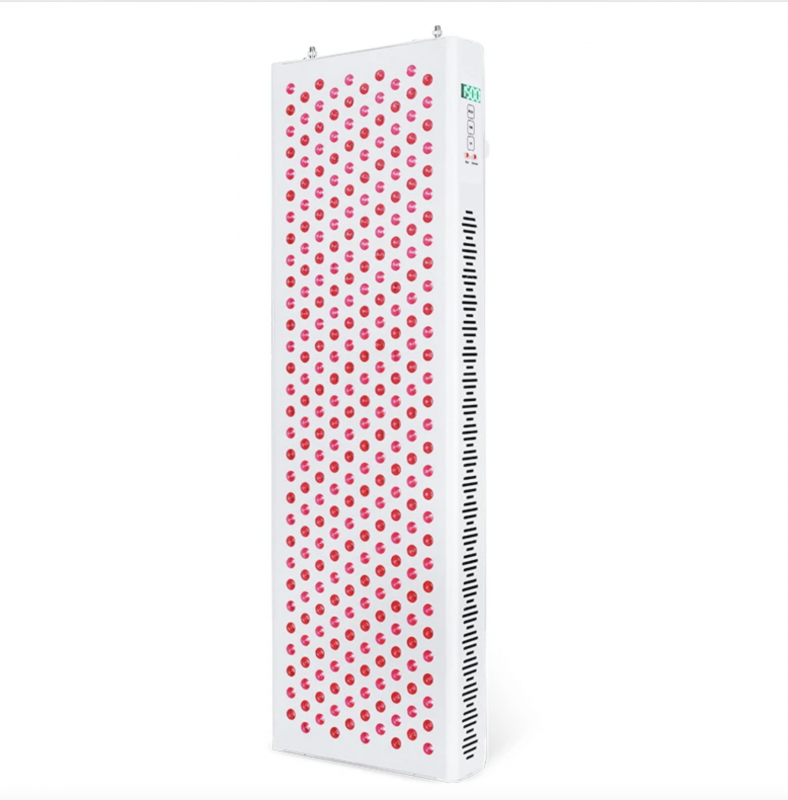
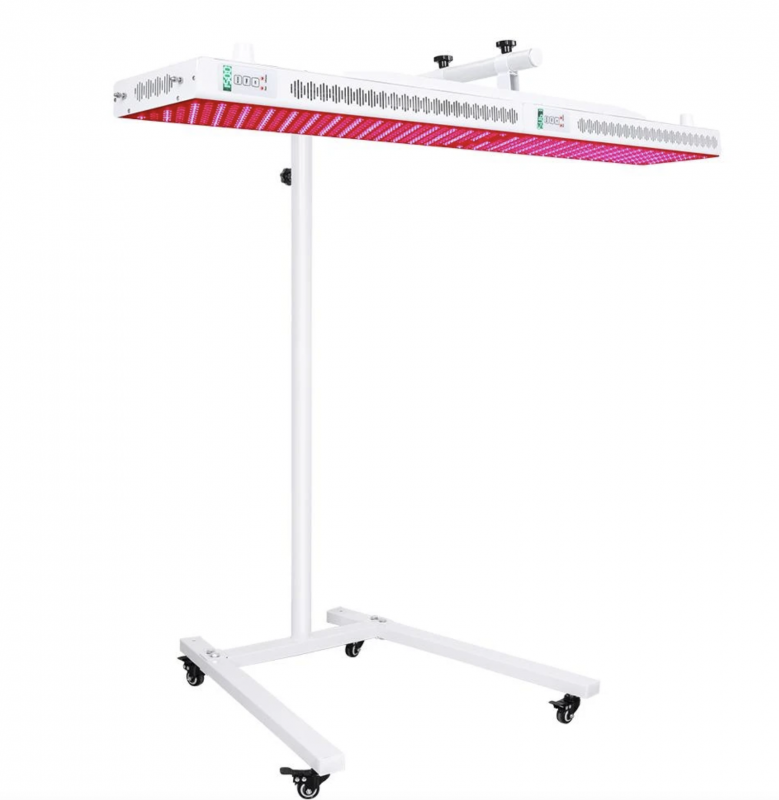
The short answer: The best red light therapy device depends on your goal and budget. For full body treatment, panels from Mito Red, PlatinumLED, and Rouge lead on verified specs. For targeted skin or pain work, a smaller panel like the Rouge Tabletop G4 delivers the same wavelengths for less. Match wavelength, irradiance, and coverage to your use case before price.
Red Light Therapy Devices Compared: Verified 2026 Prices and Specs
Prices and specs below were verified from the brand sites and independent third party testers in October 2026. Prices change with sales, so treat these as the honest baseline, not the checkout price.
| Device | Best for | Wavelengths | Measured irradiance | Price (Oct 2026) | Warranty |
|---|---|---|---|---|---|
| MitoPRO 1500X (Mito Red) | Full body power per dollar | 590, 630, 660, 810, 830, 850nm | >160 mW/cm² at 6 in | $1,299 | 3 years |
| BIOMAX 900 (PlatinumLED) | Spectrum control, clinical grade | 7 bands, 480 to 1060nm | ~90 mW/cm² at 12 in | $1,299 | 3 years |
| Rouge Pro G4 (Rouge) | Wavelength and pulse experimenters | 8 bands, 630 to 1060nm | 59.2 mW/cm² at 6 in (independent tester) | $1,121 (sale; list $1,495) | 3 years |
| Joovv Solo 3.0 (Joovv) | App ecosystem, medical certification | 660 + 850nm | 59.2 mW/cm² at 6 in (independent tester) | ~$1,295 | 2 years |
| Rouge Tabletop G4 (Rouge) | Targeted skin, joints, hair | 8 bands, 630 to 1060nm | Not independently measured | ~$581 | 3 years |
| Hooga PRO 1500 (Hooga) | Budget full body panel | 660 + 850nm | Comparable to MitoPRO 1500 per reviewer testing | ~$399 | 3 years, 60 day trial |
Price and spec sources: Mito Red official product pages (mitoredlight.com); PlatinumLED official variants page ($1,299 BIOMAX 900, 7 wavelengths, FDA Class II); Dr. Axe 2026 independent panel testing (draxe.com) for Joovv Solo 3.0 ($1,295) and Rouge Pro G4 ($1,121 sale, 59.2 mW/cm² measured at 6 in); Sync Therapy G4 review (synctherapy.ca) for Rouge Tabletop G4 (~$581); Lift Big Eat Big Hooga vs Mito Red comparison (shop.liftbigeatbig.com) for Hooga PRO 1500 (~$399, 300 dual chip LEDs, 660/850nm).
One honest note on power claims: independent testers routinely measure far less irradiance than the brands print on the box. Dr. Axe’s tester measured the Rouge Pro G4 at 66% of its claimed output and the Joovv Solo 3.0 at 59.2% of its claim. Judge devices by measured numbers at a stated distance, not by the wattage on the box. For dosing math that works on any device, see our red light therapy best practices guide, and for what the research actually supports, see what the evidence actually says.
Which Device Type Fits You?
Answer with one tap. This narrows the table above to what actually matches your life.
What is your main goal?
For information only, not medical advice. Talk to your doctor before changing anything.
What Owners Actually Say
Specs are marketing until someone lives with the device. These are verified owner reports, quoted with sources, the pattern behind them, and the caveat.
Joint pain: the most consistent win
"Have had terrible arthritis in my knees and shoulders for a number of years. People told me about red light therapy, and I finally gave it a try. It made a significant difference in just a few weeks, and it keeps getting better." (Anne R., MitoPRO 1500 owner, quoted on redlighttherapydigest.com)
Skin: slower, but real for many
"Bought the Mito MIN 2.0 mostly for my skin, which was looking old with wrinkles, fine lines, and age spots. While the results were not immediate, after only a couple of months or less I saw significant benefits." (Miriam, MitoMIN 2.0 owner, quoted on redlighttherapydigest.com)
"I spend 15 mins front and 15 mins back each day and it is such a treat to do. The texture and tone of my skin has drastically changed for the better, and as a real bonus, I am sleeping better." (Lisa S., verified MitoPRO 1500 + 750 owner, mitoredlight.com)
The upgrade effect
"Before this I had the small 300 panel for a couple years; upgraded to the 1500X. It is a huge upgrade. There seems to be some kind of additive effect the more surface area of your body receives the red light. After 10 minutes with it I feel like Superman. I sleep better." (Eric, verified MitoPRO 1500X owner, mitoredlight.com)
The pattern across owner reports: joint pain and recovery respond first, skin takes 2 to 3 months of consistent use, and sleep improvement is the surprise bonus many owners mention. No owner report replaces a trial, which is why the 60 day return windows on most of these panels matter. For the full picture of how this therapy works, read what red light therapy is and how it works.
 What are the health benefits of red light therapy?

Red Light Therapy Device FAQ
How long does red light therapy take to work?
Joint pain owners often report change within 2 to 4 weeks of consistent use. Skin results are slower: most owners and clinical protocols point to 8 to 12 weeks of 4 to 5 sessions per week before judging. If nothing has changed after 3 months of correct dosing, the device is not the problem and the expectation was.
Do you need eye protection?
Yes for panels. Bright red and near infrared light at close range is uncomfortable and not worth the risk. Most quality panels, including the Rouge G4 series, ship with goggles. Masks and wraps with direct skin contact are a different case; follow the manufacturer guidance.
Is more power always better?
No. Red light therapy has a biphasic dose response: too little does nothing, the right amount helps, and far too much can stall results. That is why measured irradiance at a stated distance matters more than the wattage on the box, and why a shorter session on a strong panel beats a long session on a weak one.
Are red light therapy devices FDA cleared?
Read the fine print. Some brands, like Rouge, are FDA listed through contract manufacturers, which is not the same as FDA cleared. PlatinumLED's BIOMAX line is an FDA Class II registered medical device, and Joovv's Solo 3.0 carries IEC 60601 medical electrical equipment certification. Registration and certification are not proof of efficacy, but they are proof of manufacturing standards.
Panel, mask, or handheld: which should you buy?
Match the format to the area. Panels cover large areas fast and dose most predictably. Masks and wraps dose small areas with zero distance math. Handhelds are for spot treatment and travel. If you want one device that does everything, a mid size panel is the honest default.
